Are you wondering whether you can really improve your sperm quality? In many cases, the answer is yes. Targeted changes to your diet and lifestyle can noticeably affect semen quality. According to the guideline of the European Association of Urology (EAU), losing weight, exercising more, quitting smoking, and drinking less alcohol can improve sperm quality and the chance of pregnancy.
Many men worry that their poor semen analysis results are set in stone. That is not true. New sperm take a little over three months to mature. This means that improvements to your lifestyle will show up in a semen analysis after about three months at the earliest.
What affects sperm quality
Many factors affect the quality of your sperm. Some are determined by genetics. Others you can actively control. The good news: When it comes to lifestyle in particular, you have some leeway.
The most important factors you can influence
Diet is an important building block. Sperm are especially vulnerable to oxidative stress and can hardly repair damage to their DNA on their own. A balanced diet rich in antioxidants therefore makes sense.
Lifestyle factors have a more direct effect than many people think. According to a large meta-analysis, smoking is clearly linked to poorer semen parameters. Heavy drinking can lower testosterone levels. Whether stress directly inhibits sperm production, on the other hand, is not clearly proven.
Environmental toxins are the invisible enemy. Pesticides, heavy metals, and other pollutants can impair fertility. Then there are endocrine disruptors: chemicals, such as some plasticizers, that can interfere with the hormone system. If you come into contact with such substances at work, you should talk to a doctor about it.
Factors you cannot influence
Age plays a role. In most men, fertility declines from around age 40: Fewer sperm are produced, and their ability to fertilize an egg may decrease. So the influence of age sets in later than it does in women.
Genetic causes also exist, such as Klinefelter syndrome or Y chromosome microdeletions. In a large analysis cited in the EAU guideline, 2.6% of all men examined had Klinefelter syndrome. Causes like these can’t be “trained away.” But with procedures such as TESE and ICSI, there are still ways to have a child of your own.
Diet and fertility: the evidence
Research on diet and male fertility has grown significantly in recent years. Most of the data come from observational studies. They show associations, but they do not prove that a particular diet improves sperm quality.
Observational studies: key findings
Several observational studies painted a similar picture: Men who eat a healthier diet overall have better semen parameters on average.
What makes up a “healthy diet”? Plenty of fruit, vegetables, and whole grains. Fish and nuts. Little red meat, processed foods, and sugary drinks.
The Mediterranean diet as the gold standard
The Mediterranean diet matches this pattern exactly. In observational studies, it went along with better semen parameters. However, controlled studies showing a direct benefit for the chance of having a child are lacking.
The Mediterranean diet contains plenty of omega-3 fatty acids, antioxidants, and anti-inflammatory compounds. As a foundation while you are trying to conceive, it is a good choice.
One example from a controlled study: Young, healthy men who ate 75 g of walnuts a day for 12 weeks on top of their usual Western diet had better sperm vitality, motility, and shape afterward than the comparison group.
New findings on micronutrients
With micronutrients, the dose makes the difference, and more is not better. For example, taking 50 mg of zinc a day is too much. According to the European Food Safety Authority (EFSA), the upper limit for total intake from all sources is 25 mg per day. The German Federal Institute for Risk Assessment (BfR) recommends no more than 6.5 mg of zinc per daily dose in dietary supplements.
The key nutrients: zinc, selenium, folic acid, omega-3
These four nutrients are the ones most often mentioned in connection with sperm quality. A deficiency can harm sperm production. Whether extra amounts help when your supply is already good is mostly not proven, however.
Zinc: the sperm booster
Zinc is present in high concentrations in the prostate and in semen. It is a component of numerous enzymes and is important for DNA synthesis.
Role for sperm:
- Involved in sperm production
- A deficiency can impair sperm quality
- No proven benefit from extra supplements when intake is already adequate
Dosage: According to the German Nutrition Society (DGE), men need 11 to 16 mg of zinc per day, depending on their diet. Supplements should supply no more than 6.5 mg per day (BfR), and total intake should not exceed 25 mg per day (EFSA). It is best to take zinc with a meal, because on an empty stomach it can cause nausea.
Natural sources: Oysters (the absolute best!), beef, pumpkin seeds, cashews.
Selenium: the antioxidant champion
Selenium is a component of important antioxidant enzymes. It can protect sperm from oxidative stress.
Role for sperm:
- Part of the body’s own protection against oxidative stress
- Important for normal sperm production
- No proven benefit from extra supplements when intake is already adequate
Dosage: The DGE gives an estimated value of 70 µg per day for men. The upper limit for total intake is 255 µg per day (EFSA). More can be harmful!
Natural sources: Brazil nuts (even a few nuts provide a lot of selenium), tuna, eggs.
Folic acid: not just for women
Folic acid is often recommended only to women. Folate plays a role for men too, because it is needed for DNA synthesis during sperm production.
Role for sperm:
- Involved in DNA synthesis
- A deficiency can impair sperm production
- There is no separate recommendation for folic acid supplementation for men
Dosage: The DGE gives 300 µg of folate equivalents per day for adults, which can be covered through diet. For synthetic folic acid from supplements, the upper limit is 1,000 µg per day (EFSA).
Natural sources: Leafy green vegetables, legumes, whole grains.
Omega-3 fatty acids: for sperm that move well
The membrane of sperm contains many polyunsaturated fatty acids, including the omega-3 fatty acid DHA. It provides the necessary flexibility.
Role for sperm:
- Building block of the cell membrane
- Linked to better semen parameters in observational studies
- There is no generally accepted dosage for fertility
Natural sources: Salmon, mackerel, walnuts, flaxseed.
| Nutrient | Requirement and upper limit (adults) | Main role | Good natural sources |
|---|---|---|---|
| Zinc | Requirement for men 11 to 16 mg (DGE), supplements max. 6.5 mg (BfR), total max. 25 mg (EFSA) | Sperm production | Oysters, beef, pumpkin seeds |
| Selenium | Requirement for men 70 µg (DGE), total max. 255 µg (EFSA) | Protection against oxidative stress | Brazil nuts, fish, eggs |
| Folic acid | Requirement 300 µg folate equivalents (DGE), synthetic max. 1,000 µg (EFSA) | DNA synthesis | Leafy greens, legumes |
| Omega-3 | no fixed recommendation for fertility | Cell membrane | Salmon, mackerel, walnuts |
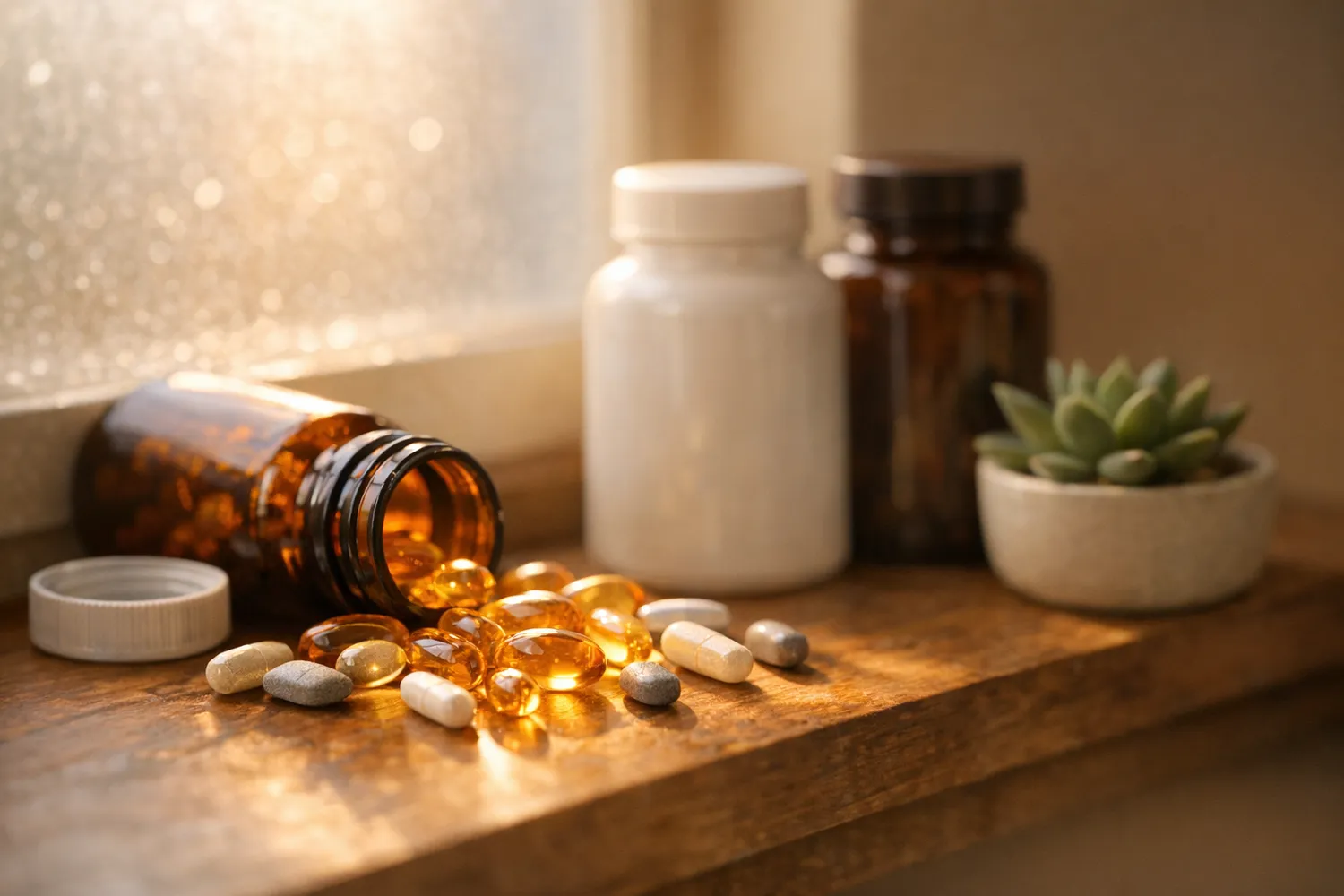
Are dietary supplements worth it?
The dietary supplement industry promises you the world. But what does the science really say?
When supplements make sense
If a deficiency has been proven, a targeted supplement can make sense. A blood test shows which nutrients you are lacking.
On a vegan diet, certain nutrients are critical. Vitamin B12 is found almost exclusively in animal products, and zinc, selenium, and the long-chain omega-3 fatty acids EPA and DHA deserve attention too.
During stressful phases of life, a balanced diet is often hard to maintain. If you work 60 hours a week, you rarely manage to eat optimally.
The limits of supplements
Dietary supplements are not a miracle cure. They can’t make up for a poor diet. The foundation has to be right. If you swallow a handful of capsules every day but keep eating fast food, you are starting at the wrong end.
Quality makes the difference
Not all supplements are the same. Composition and dosage differ greatly. For omega-3 supplements, purity matters too. What common supplements for men contain and what large studies have shown can be found in our guide on male fertility supplements.
What to look out for:
- Reputable manufacturers
- Independent testing
- No overdosed “mega formulas”
- Doses within the recommendations of the BfR and EFSA
Foods that help and foods that harm
Not all foods are the same. Some are considered unfavorable for sperm, others a good choice.
The top foods for better sperm
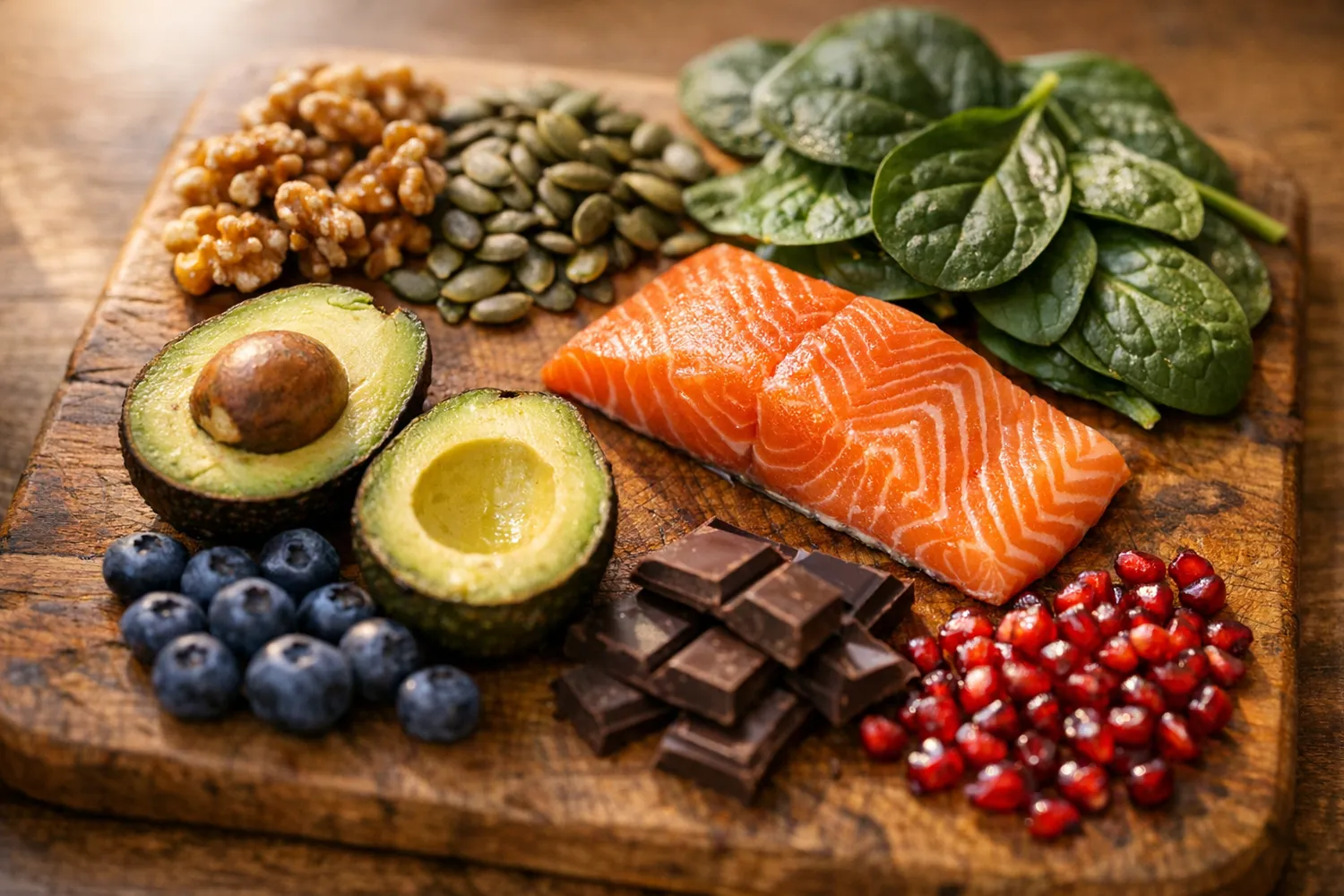
Oysters are among the foods richest in zinc. They also provide B vitamins and selenium.
Walnuts improved sperm vitality, motility, and shape in a controlled study. The men there ate 75 g a day for 12 weeks. Walnuts contain alpha-linolenic acid, a plant-based omega-3 fatty acid.
Dark berries are full of antioxidants. Blueberries, blackberries, and pomegranates are a good addition.
Leafy green vegetables provide folate and vitamin E.
Pumpkin seeds are a good plant-based source of zinc and contain healthy fatty acids.
Foods that harm your sperm
Processed meat such as sausages and salami was linked to poorer semen parameters in observational studies.
Sugary drinks are also part of a dietary pattern that was associated with poorer semen parameters in studies.
Soy products in large amounts can be problematic. The isoflavones have estrogen-like effects and could influence hormone balance.
Trans fats from industrially hydrogenated oils are generally considered unhealthy and promote inflammation.
The 80/20 rule
You don’t have to eat perfectly. The 80/20 rule works here too: 80% healthy foods, and 20% can be “unhealthy” once in a while. That is easier on your mind. And more sustainable in the long run.

Lifestyle factors: exercise, sleep, stress, heat, alcohol
Your lifestyle affects your sperm quality at least as much as your diet does. Here are the most important factors:
Exercise: the right dose is what counts
According to a meta-analysis, regular physical activity is linked to better semen parameters. This held true for moderate as well as more intense recreational activity. Exercise can also improve your hormone balance.
The optimal type of exercise: There isn’t one. What matters is that you are active regularly, for example with a mix of endurance and strength training.
Beware of overheating: Whether very high training volumes are harmful has not been clearly established. But avoid trapping heat in the groin area, for example with tight, warm athletic clothing.
Sleep: recovery for your testicles
Good sleep is part of a healthy lifestyle and supports your hormone balance.
What helps:
- Regular bedtimes
- Getting enough sleep, even during stressful phases
- With shift work, fixed rest periods if possible
It has not been clearly proven whether lack of sleep or jet lag, for example in pilots on long-haul flights, directly worsens sperm quality. But good sleep is always worthwhile for your general well-being.
Stress: the hidden sperm killer
Whether stress directly worsens sperm quality has not been clearly proven. What is certain: Struggling to conceive is itself a heavy burden for many couples.
Stress reduction that really helps:
- Meditation (even 10 minutes a day)
- Regular relaxation breaks
- Exercise as a stress outlet
- Enough social contact
Heat: testicles like it cool
There’s a reason the testicles hang outside the body. For sperm production, they need to stay about 2°C (3.6°F) cooler than normal body temperature, as steadily as possible.
Avoid sources of heat:
- Long hot baths
- Frequent sauna visits
- Laptops on your lap
- Tight pants
- Heated car seats
Alcohol: the dose makes the poison
According to a large meta-analysis, moderate alcohol consumption does not seem to worsen semen parameters. Heavy drinking, on the other hand, does.
The effects:
- Regularly having more than two drinks a day counts as heavy consumption and can lower testosterone levels
- Heavy drinking can harm male fertility
- According to familienplanung.de, the effects are usually reversible after giving up alcohol

Timeline: how quickly changes take effect
This is one of the most common questions about sperm quality: “How long does it take for my sperm to improve?”
The 74-day cycle
The actual process of sperm production (spermatogenesis) is often given as about 74 days in the medical literature. Together with maturation, the process takes a little over three months, according to familienplanung.de. This means that any improvement you make today will show up in a semen analysis after about three months at the earliest.
Rough timeline:
- First few weeks: Usually little to nothing is visible in a semen analysis yet
- After about three months: A follow-up semen analysis shows for the first time whether anything has changed
- After that: Further changes are possible, and a second follow-up may make sense
Individual differences
Not every man responds the same way. Factors that influence the outcome:
- Cause: Lifestyle-related impairments are easier to influence than genetic ones
- Age: From about age 40, sperm quality slowly declines anyway
- Adherence: How consistently do you follow through on the measures?
- Measurement variation: Semen analysis values vary considerably from sample to sample
Realistic expectations
If you get a follow-up semen analysis after just 6 weeks, you will often be disappointed. The reason is the maturation cycle: At that point, a large share of the sperm in the ejaculate still developed under the old conditions.
Plan for at least 3 months. In severe cases, 6 to 12 months may be needed. Patience is essential here.
You can find more medical treatment options in our article on improving male fertility, which also covers hormone therapies and surgical procedures.
What the evidence really says
The science on sperm quality is complex. Here are the most important findings at a glance.
Antioxidants: weak evidence
The current Cochrane review from 2022 includes 90 studies with 10,303 men. The result:
- Antioxidants might increase the live birth rate, but the evidence is of very low quality
- When studies at high risk of bias were left out, no benefit could be shown any longer
- The authors consider the overall body of evidence inconclusive
A US study (MOXI, 171 couples, stopped early) found no improvement in semen parameters or DNA quality from antioxidants compared with placebo in men with impaired values.
Lifestyle interventions: more consistent evidence
The evidence is more consistent here. According to the EAU guideline, being overweight, getting little exercise, smoking, and heavy drinking are linked to poorer semen parameters.
What the guideline concludes:
- Losing weight can improve semen parameters, but the data from controlled studies are contradictory
- Regular exercise is linked to better semen parameters
- Quitting smoking and drinking less alcohol are among the recommended measures
According to the guideline, in men with unexplained impaired semen parameters, these lifestyle changes can improve both sperm quality and the chance of pregnancy.
Dietary supplements: mixed evidence
It gets more complicated here. Many studies are small and methodologically weak. Larger, independent studies such as MOXI show smaller effects or none at all.
What can be said:
- Which substances help most, and at what dose, has not been established, according to the EAU guideline
- More does not automatically mean more benefit, and maximum amounts should be observed
- If a deficiency has been proven, targeted supplementation is most likely to make sense
Limits of current research
Many studies are too short and too small. Long-term data are missing. In addition, often only semen parameters are measured, not the number of pregnancies or births.
What research doesn’t know yet:
- Optimal doses of all nutrients
- Best combinations
- Genetic factors that influence effectiveness
- Long-term effects over 2+ years
Frequently asked questions
How quickly can I improve my sperm quality?
New sperm take a little over three months to mature. A follow-up semen analysis therefore only makes sense after about three months at the earliest.
Patience is important. If you retest after only a few weeks, you will often be disappointed. That is much too early. Plan for at least 3 months, and in severe cases 6 to 12 months.
Which dietary supplements are really worth taking?
Most likely those that make up for a proven deficiency, for example in zinc, selenium, or vitamin D. For antioxidants such as coenzyme Q10 and vitamins C and E, the benefit is not reliably proven, according to the Cochrane review and the EAU guideline.
Stick to the maximum amounts: no more than 6.5 mg of zinc per day in supplements (BfR), while coenzyme Q10 is allowed in dietary supplements in Germany at up to 100 mg per day. Avoid overdosed “men’s vitamins” with 20+ ingredients.
On a vegan diet, vitamin B12 is also essential. Without B12, the body does not make proper use of folic acid.
Does alcohol harm my sperm, and how much is okay?
According to a large meta-analysis, moderate alcohol consumption does not seem to worsen semen parameters. Heavy drinking is the problem: Regularly having more than two drinks a day counts as heavy consumption and can lower testosterone levels.
According to familienplanung.de, occasional small amounts probably do not have a major effect. If you drink alcohol, keep it moderate. And not every day.
Giving up alcohol completely is not necessary, but less is definitely more. As a rule of thumb while you are trying to conceive: if you drink at all, drink little and not every day.
Can exercise increase my fertility?
Yes. According to a meta-analysis, regular physical activity is linked to better semen parameters, both with moderate and with more intense recreational activity. Exercise also helps with losing weight, and that can improve your values further.
Whether very high training volumes are harmful has not been clearly established. Above all, it is important to avoid overheating.
Endurance sports such as jogging, swimming, or cycling are a good choice, ideally combined with strength training. Avoid overheating, and take a cool shower after exercising!
Do you want to improve your sperm quality? With a balanced diet, a healthy lifestyle, and, where needed, targeted correction of a deficiency, you have a good chance of improving your values. For a detailed analysis of your current sperm parameters, take a look at our guide to semen analysis values. Use our Fertility Clinic Finder to find the right fertility clinic near you.
Sources
- EAU Guidelines on Sexual and Reproductive Health: Male Infertility, European Association of Urology, 2026
- Antioxidants for male subfertility, Cochrane Database of Systematic Reviews 2022;5:CD007411 (de Ligny et al.), 2022
- Age, lifestyle, and environment: many factors affect fertility, familienplanung.de (Federal Institute for Public Health), 2026
- Sperm and male fertility, familienplanung.de (Federal Institute for Public Health), 2026
- Male reproductive organs, familienplanung.de (Federal Institute for Public Health), 2026
- Unhealthy lifestyle, Fertility Information Portal (Informationsportal Kinderwunsch, BMFSFJ), retrieved 2026
- Tolerable Upper Intake Levels for vitamins and minerals (Version 11), European Food Safety Authority (EFSA), 2025
- Proposed maximum levels for zinc in foods including dietary supplements, German Federal Institute for Risk Assessment (BfR), 2021
- Coenzyme Q10: What is known about health risks?, German Federal Institute for Risk Assessment (BfR), 2023
- Reference values for zinc, German Nutrition Society (DGE), retrieved 2026
- Reference values for selenium, German Nutrition Society (DGE), retrieved 2026