The same pattern often shows up during a fertility evaluation: A couple seeks help, and both assume that testing begins with the woman. Ultrasound, hormone testing, fallopian tube patency. And the man? He is considered healthy; after all, he has no symptoms.
The reality is different. According to the guideline of the European Association of Urology (EAU), a male factor is involved in about half of all couples facing infertility, and in about one in five it is the sole cause. Even so, the male factor is often the last thing to be examined, sometimes only after months of unsuccessful treatment of the female partner. That makes no medical sense and wastes time, which is especially precious for older couples.
This guide is for men who want to understand how their fertility works, what they can influence, and when they should act. It is also for couples who want to go into fertility treatment well informed, together.
Causes and diagnosis: why it is not working
The causes of male infertility are varied. Roughly speaking, three categories can be distinguished.
The most common: reduced sperm quality with no clearly identifiable cause. Too few sperm, too slow, too many with abnormal shapes, or a combination of all three. This combination is called oligoasthenoteratozoospermia (OAT). In a large analysis cited in the EAU guideline, the cause remained unclear in 30% of men. Genetics, lifestyle, and environmental factors often work together.
The second most common category: anatomical or hormonal causes. A varicocele (a varicose vein at the testicle) affects about 15% of all men, but 35% to 40% of men with fertility problems. Hormonal disorders, such as elevated FSH or low testosterone, can impair sperm production. Blockages of the sperm ducts prevent sperm from reaching the ejaculate at all.
And the third category: azoospermia. No sperm in the ejaculate. In the analysis mentioned, this affected 11.2% of the men who were evaluated because of fertility problems. It sounds like a final diagnosis, but often it is not. Depending on the cause, there are ways to retrieve sperm anyway.
Diagnosis always starts with the semen analysis. But the search for causes can go much deeper: hormone profile, testicular ultrasound, DNA fragmentation test, genetic analyses. Which of these are needed depends on the individual findings.
Male infertility: causes and treatment in 2026
Male infertility: a male factor is involved in about half of all involuntarily childless couples. Learn what causes it and which treatments help.

Increasing fertility: what men can do themselves
Male fertility can be influenced, and significantly. Unlike women, whose ovarian reserve is fixed, men constantly produce new sperm. The entire maturation process of new sperm takes a little over three months. That means: What you change today may show up in your semen analysis in three months.
It makes sense to adjust three levers at the same time.
First: eliminate harmful substances. According to a large meta-analysis, smoking is clearly associated with poorer sperm parameters. Alcohol in larger amounts lowers testosterone levels. Anabolic steroids, including those from the gym, can shut down the body’s own sperm production completely. And certain medications and drugs, such as opioids or cannabis, can disrupt hormone balance. Before any treatment, a medication check with an andrologist is worthwhile.
Second: optimize your physical basics. Being overweight is an independent risk factor for poor sperm parameters. Fat tissue converts testosterone into estrogen, which inhibits sperm production. Losing weight can improve the results, although controlled studies on this are contradictory. According to a meta-analysis, regular exercise is associated with better sperm parameters, and this also applies to more intense recreational activity.
Third: avoid heat. The testicles hang outside the body for good reason. An elevated testicular temperature goes along with poorer sperm parameters (EAU). Whether loose underwear improves fertility is unclear, according to the British NICE guideline. Whether giving up the sauna, hot baths, heated seats, or the laptop on your lap improves fertility is not proven.
How quickly you see results varies. The maturation process of new sperm takes a little over three months. Realistic results show up after 3 to 6 months of consistently applying these changes.
Improve male fertility: medical options in 2026
Improve male fertility naturally? The most effective strategies for better sperm quality at a glance, with medical options for 2026.

Targeted ways to improve sperm quality
Beyond lifestyle changes, there are targeted measures that may make sense depending on the findings.
Dietary supplements
The evidence is mixed. According to the EAU guideline, it is not possible to say which products help at which dose, and a Cochrane review rates the evidence for antioxidants as low. Zinc and selenium are important for sperm formation, and a deficiency should be corrected. L-carnitine, coenzyme Q10, and vitamin E are used as antioxidants to reduce oxidative stress. Folic acid plays a role in DNA synthesis during sperm formation.
Expensive combination products from the internet are generally unnecessary. If anything, single supplements at normal doses are usually enough. Taking more does not help more, and some products exceed the recommended maximum amounts.
Hormone treatment
If the hormone profile shows abnormalities, treatment can be targeted. In secondary hypogonadism (the pituitary gland sends too little signal to the testicles), hCG, together with FSH if needed, can stimulate the body’s own production. Clomiphene is used in men only off-label. Important: Exogenous testosterone, meaning testosterone from outside the body, is contraindicated when trying to conceive. It shuts down the body’s own sperm production. If testosterone gel is prescribed despite trying to conceive, the semen analysis afterward may show zero.
Varicocele treatment
If a palpable varicocele is present and the semen analysis is impaired, the results usually improve after surgery, according to the EAU guideline. A Cochrane review also found a higher pregnancy rate than without treatment. The procedure (microsurgical varicocelectomy) can usually be done on an outpatient basis. It takes up to two cycles of sperm production for the results to improve, and in studies a spontaneous pregnancy usually occurred six to twelve months after the procedure.
How to improve sperm quality: 7 proven methods in 2026
How to improve sperm quality through diet and lifestyle, and what the evidence really shows. Seven methods in 2026, explained clearly.
Semen analysis: the central test
The semen analysis is to the andrologist what the blood count is to the internist. A single sample says a great deal about male fertility. Provided you know how to interpret the results correctly.
The most important parameters
The World Health Organization (WHO) published updated reference values in 2021. A semen analysis evaluates three main parameters:
Concentration: How many sperm are present per milliliter? The WHO reference value is at least 16 million per milliliter. In addition, there is a separate reference value for the total number: at least 39 million in the entire ejaculate. If the value is below this, it is called oligozoospermia.
Motility (movement): How many sperm move forward? At least 30% should be progressively motile, meaning they travel in a directed way. If fewer do, asthenozoospermia is present.
Morphology (shape): How many sperm have a normal head and tail shape? The reference value here is only 4%. That sounds alarmingly low, but it is normal. Most sperm deviate from the norm in some way.
What many people do not know
A single semen analysis is a snapshot. The results fluctuate naturally, sometimes considerably. A recent illness, especially one with fever, or an unusually short or long abstinence period can affect the results, according to the WHO. That is why an abnormal result is repeated after about 3 months, no earlier than 11 weeks. If sperm are absent or very few, the repeat test should take place as soon as possible. If the first result is normal, no repeat is needed (WHO 2025, NICE 2026).
Also important: The WHO reference values are not a dividing line between “fertile” and “infertile.” A man with 14 million sperm per milliliter is below the reference value, but can still become a father naturally. Conversely, results in the normal range do not guarantee a pregnancy. The values provide statistical guidance, nothing more.
Normal sperm count: WHO 2021 reference values explained
Normal sperm count by WHO 2021: concentration from 16 million/ml, motility from 42%, morphology from 4%. All semen analysis values explained clearly.
What does a semen analysis cost?
This section applies to Germany only.
To evaluate infertility, the statutory health insurance fund in Germany pays for the test in full. As a self-pay patient, the lab analysis costs €23 to €30 under the German fee schedule for physicians, and around €37 to €47 including a consultation. The Fertility Information Portal (Informationsportal Kinderwunsch) lists €80 to €200 for the privately billed test including evaluation and consultation. In Austria, a semen analysis is generally covered by health insurance when a doctor refers you. In Switzerland, the lab analysis is valued at CHF 130.50 in the official Analysis List (Analysenliste), and the medical consultation is added on top.
What many people do not know: The simplest route is often to see a urologist or go directly to a fertility clinic. Many fertility centers routinely perform semen analyses and bill the insurance fund directly. A separate appointment with an andrologist is not strictly necessary for the first semen analysis.
More advanced testing such as a DNA fragmentation test or genetic analyses costs extra. As a self-pay patient, ask for a cost estimate in advance. These tests are only useful for certain findings, however, not as standard practice.
Semen analysis cost 2026 in Germany, Austria & Switzerland
What does a semen analysis cost at the urologist? About €40 to €200 self-pay; insurance pays for medical reasons. Prices for Germany, Austria, Switzerland.
TESE: when there are no sperm in the ejaculate
A diagnosis of azoospermia is a shock for most men. No sperm in the ejaculate. That sounds like the end of all hope. In fact, though, it is often the beginning of a solution, because in many men the testicles do produce sperm after all. They just do not make it into the ejaculate.
Obstructive vs. non-obstructive azoospermia
First, the cause has to be clarified. In obstructive azoospermia, there is a blockage of the sperm ducts. Sperm production in the testicle works normally, but the transport routes are blocked. Causes include a previous vasectomy, congenital malformations of the vas deferens, or scarring after infections. The prognosis here is very good: Because sperm are produced, sperm can generally be retrieved, often enough for several ICSI cycles.
In non-obstructive azoospermia, sperm production itself is impaired. This can have genetic causes (Klinefelter syndrome, Y chromosome microdeletions), be due to hormonal disorders, or be the result of testicular surgery, chemotherapy, or radiation. Here, according to familienplanung.de, sperm retrieval succeeds in roughly 50% of cases, sometimes more and sometimes less depending on the procedure and cause.
Conventional TESE vs. micro-TESE
In conventional TESE, several small tissue samples are taken from the testicle under local anesthesia or brief general anesthesia. In the lab, a biologist searches these samples for sperm. The procedure is comparatively short and usually outpatient.
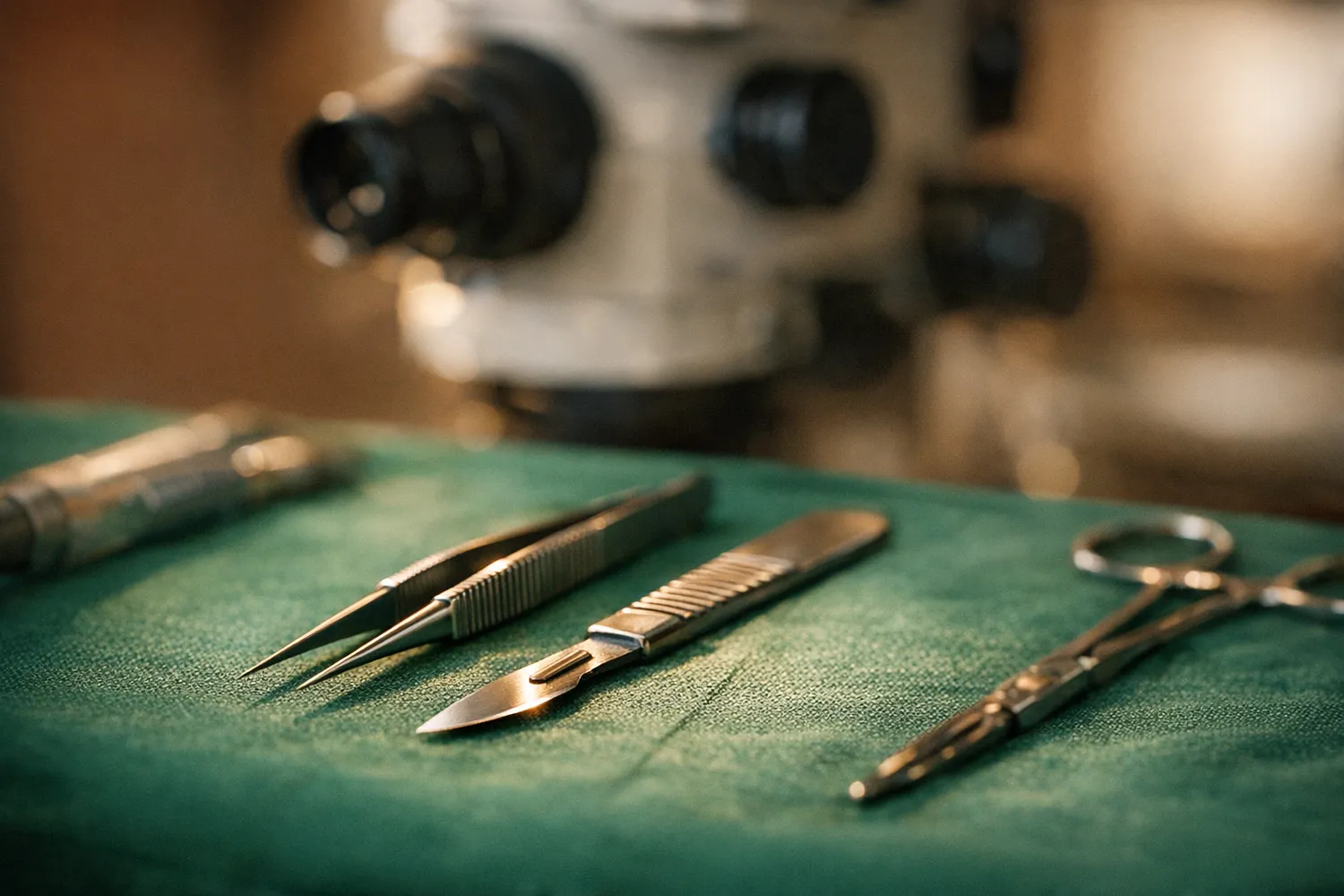
Micro-TESE (microdissection testicular sperm extraction) is more involved, but more precise. Under an operating microscope, the testicle is opened and the tubules most likely to contain sperm are searched for specifically. Under the microscope, these tubules look different from empty ones: They are thicker and more opaque. Whether micro-TESE actually finds sperm more often is disputed: One meta-analysis found 52% versus 35% for conventional TESE, while another found no difference (about 46% in each). The advantage in terms of tissue is clear: Less is removed, and bruising and scarring are less common.
The sperm obtained are used for fertilization by ICSI. Excess sperm can be cryopreserved, so that no repeat TESE is needed if you want to have a child later.
In Germany, a TESE costs €800 to €2,000, according to familienplanung.de. For married couples, the statutory health insurance fund may contribute half. It pays for TESE including freezing in full only before a therapy that damages germ cells, such as chemotherapy.
TESE and micro-TESE in Germany, Austria & Switzerland
TESE: sperm retrieval from the testicle in azoospermia. Procedure, costs (€800 to €2,000, familienplanung.de), success in Germany, Austria & Switzerland.
Lifestyle and fertility: what the research says
Over the last 20 years, research on male fertility has grown considerably. Much of what used to be a gut feeling is better studied today, even though much of the data comes from observational studies.
Nutrition
A Mediterranean diet (lots of vegetables, fruit, fish, olive oil, few processed foods) was associated with better sperm parameters in observational studies. One possible explanation: Antioxidants may protect sperm DNA from oxidative stress.
What is harmful: Highly processed foods, trans fats, excessive sugar consumption. Important to know: You do not need to go on a radical diet. But eating well on purpose for three months can make a difference.
Sleep and stress
Whether sleep deprivation and stress directly worsen sperm quality has not been clearly established scientifically. But good sleep and a more relaxed daily life are good for hormone balance and help you cope better with the strain of trying to conceive.
Environmental factors
Pesticides, plasticizers (phthalates), bisphenol A (BPA) in some plastics and thermal paper: These substances act as endocrine disruptors and can affect hormone balance and thus sperm production. Not everything is clearly proven, but simple precautions do no harm: Use BPA-free containers, wash fruit and vegetables thoroughly, and minimize contact with thermal paper receipts.
When should you see an andrologist?
Many men are unsure when the right time is to see a doctor. As a rule of thumb:
See an andrologist right away in these cases: a known history (undescended testicle, varicocele, testicular surgery, mumps orchitis in childhood), use of testosterone or anabolic steroids, or after cancer treatment with chemotherapy or radiation.
After 12 months of trying without success: From then on, the EAU guideline recommends that both partners be evaluated. If your partner is older, an earlier evaluation makes sense, because time is then more precious.
As a preventive check without having tried to conceive: Guidelines provide for a semen analysis in cases of infertility, not as a preventive check (EAU 2026, WHO 2025). If you still want to know, you pay for it yourself: under the German fee schedule, from about €37 including a consultation.
Important: Testing in men is much less involved and invasive than in women. A semen analysis is quick to do. A woman’s complete basic workup can take weeks to months. It makes no medical sense to wait on the simple test and go down the complex path first instead. Our guide to infertility explains which causes are possible in both partners.
Frequently asked questions
How does a semen analysis work?
You provide a semen sample, either at the clinic (in a private room) or at home, if you can get the sample to the lab within 30 to 60 minutes. Before providing the sample, you should have no ejaculation for 2 to 7 days, according to the WHO; familienplanung.de gives 3 to 5 days. When the result is available depends on the practice and the lab.
Can dietary supplements really help?
Yes, but with realistic expectations. Antioxidants and micronutrients showed improvements in some studies, but the quality of the studies is very low, and a US study (MOXI, 171 couples, ended early) found no benefit for sperm parameters. They are most likely to make sense when a deficiency has been proven. You should not expect miracles. They are one building block among others, not a replacement for a medical evaluation.
Does cycling cause male infertility?
Normal cycling: no. Regular exercise is even associated with better sperm parameters. Whether very intensive cycling training worsens the results has not been clearly settled; pressure and heat in the crotch are considered possible factors. A padded saddle and regular breaks do no harm. Recreational cyclists do not need to worry.
How long does it take for sperm parameters to improve?
The maturation process of new sperm takes a little over three months. Improvements from lifestyle changes or treatments show up after 3 months at the earliest. For a reliable assessment, a further follow-up semen analysis after 6 months can make sense.
Can male infertility be cured?
That depends on the cause. A varicocele can be corrected surgically. Hormonal disorders can be treated with medication. Lifestyle factors can be changed. With genetic causes or severe azoospermia, natural conception is often not possible, but TESE and ICSI still offer realistic paths to a child of your own.
Does age affect male fertility?
Yes, although less dramatically than in women. Usually from around age 40, fewer sperm are produced, and their ability to fertilize may decrease. DNA fragmentation increases, and genetic errors in sperm raise the risk of miscarriage. Whether a DNA fragmentation test makes sense is something the andrologist decides case by case.
Can stress affect sperm quality?
Possibly, but it is not clearly proven. One idea under discussion is that stress hormones affect hormone balance. Reducing stress is still not a luxury: It mainly helps you cope better with the strain of trying to conceive.
What is the difference between a urologist and an andrologist?
A urologist treats the entire spectrum of the urinary tract and male reproductive organs, from kidney stones to the prostate. An andrologist specializes in male reproductive medicine, meaning specifically fertility, hormonal disorders, and trying to conceive. For a first semen analysis, a urologist is enough. If the results are abnormal or targeted treatment is needed, an andrologist is the better place to go.
Sources
- WHO laboratory manual for the examination and processing of human semen, 6th edition, World Health Organization, 2021
- EAU Guidelines on Sexual and Reproductive Health: Male Infertility, European Association of Urology, 2026
- Antioxidants for male subfertility, Cochrane Database of Systematic Reviews 2022;5:CD007411 (de Ligny et al.), 2022
- Fertility tests in men, familienplanung.de (Federal Institute for Public Health), 2026
- Fertility disorders in men: physical causes, familienplanung.de (Federal Institute for Public Health), 2026
- Age, lifestyle, and environment: many factors affect fertility, familienplanung.de (Federal Institute for Public Health), 2026
- Sperm and male fertility, familienplanung.de (Federal Institute for Public Health), 2026
- Male reproductive organs, familienplanung.de (Federal Institute for Public Health), 2026
- TESE (testicular sperm extraction), familienplanung.de (Federal Institute for Public Health), 2026
- Tests in men, Fertility Information Portal (BMFSFJ), retrieved 2026
- Analysis List (Analysenliste), July 1, 2026 edition, Federal Office of Public Health (FOPH), 2026
- Fertility problems: assessment and treatment (NG257), recommendations 1.17.1 to 1.17.4, National Institute for Health and Care Excellence (NICE), March 31, 2026
- Fertility problems: assessment and treatment (NG257), recommendation 1.11.1, National Institute for Health and Care Excellence (NICE), March 31, 2026
- WHO guideline on the prevention, diagnosis, and treatment of infertility, Human Reproduction 2026;41(1):25-38, World Health Organization (WHO), published online November 28, 2025