
In Germany, more than 130,000 assisted reproduction treatment cycles are carried out every year. Even so, the subject is unfamiliar to most people the first time they sit down for a fertility consultation. Which method fits? What does it cost? How high are the chances?
This guide explains the three common procedures, what they cost, and how to find the right path for your situation.
What is assisted reproduction?
Assisted reproduction, known in medical terms as “assisted reproductive technology,” covers every procedure in which medicine actively helps with fertilization. It starts with simple insemination and extends to complex in vitro fertilization in the lab.
Many couples equate “assisted reproduction” with IVF. That is not quite right. There are three main procedures, and they differ considerably in effort, cost, and chances of success:
- IUI (intrauterine insemination): Prepared sperm is placed directly into the uterus. The simplest procedure, with the lowest cost.
- IVF (in vitro fertilization): Eggs are retrieved and brought together with sperm in the lab. Fertilization takes place outside the body.
- ICSI (intracytoplasmic sperm injection): Like IVF, but a single sperm is injected directly into the egg. The most precise procedure.
Which method is right depends on the diagnosis. Not every couple needs ICSI right away. Sometimes IUI is enough. Sometimes there is no way around IVF. Couples often start treatment with the wrong expectations. They either underestimate the effort or overestimate the risks.
IVF: in vitro fertilization
Louise Brown was born in England in 1978, the first “test-tube baby.” A lot has changed in IVF since then, especially in culture media and embryo selection. But the basic principle has stayed the same.
How IVF works
First, your ovaries are stimulated with hormones so that several eggs mature at the same time. After about 10 to 14 days, the mature eggs are retrieved by puncture under light sedation. In the lab, prepared sperm are then brought together with the eggs.
From here on, everything happens without further intervention: the sperm have to penetrate the egg on their own, just as in the body. After 2 to 5 days of culture, the best-developed embryo is transferred into your uterus.
According to the German IVF Registry (Deutsches IVF-Register, D.I.R.), the clinical pregnancy rate per embryo transfer with IVF is around 39% to 43% in women under 35. From age 35 it declines, and from age 40 it drops markedly.
IVF process: 7 steps of in vitro fertilization in 2026
The IVF process explained step by step: from stimulation to transfer. Find out what to expect during in vitro fertilization and its 7 steps.

What does IVF cost?
An IVF cycle in Germany costs between €3,000 and €5,000. Medication adds another €1,000 to €2,000 per cycle. Prices in Austria and Switzerland are similar, although Switzerland tends to be more expensive.
Many couples need several attempts. The total cost of a successful IVF treatment is therefore often between €10,000 and €20,000.
IVF cost in Germany 2026: price per cycle and insurance
An IVF cycle in Germany costs €3,500 to €6,500, medication included. What insurance pays, which 9 German states offer funding, and what is tax deductible.

ICSI: intracytoplasmic sperm injection
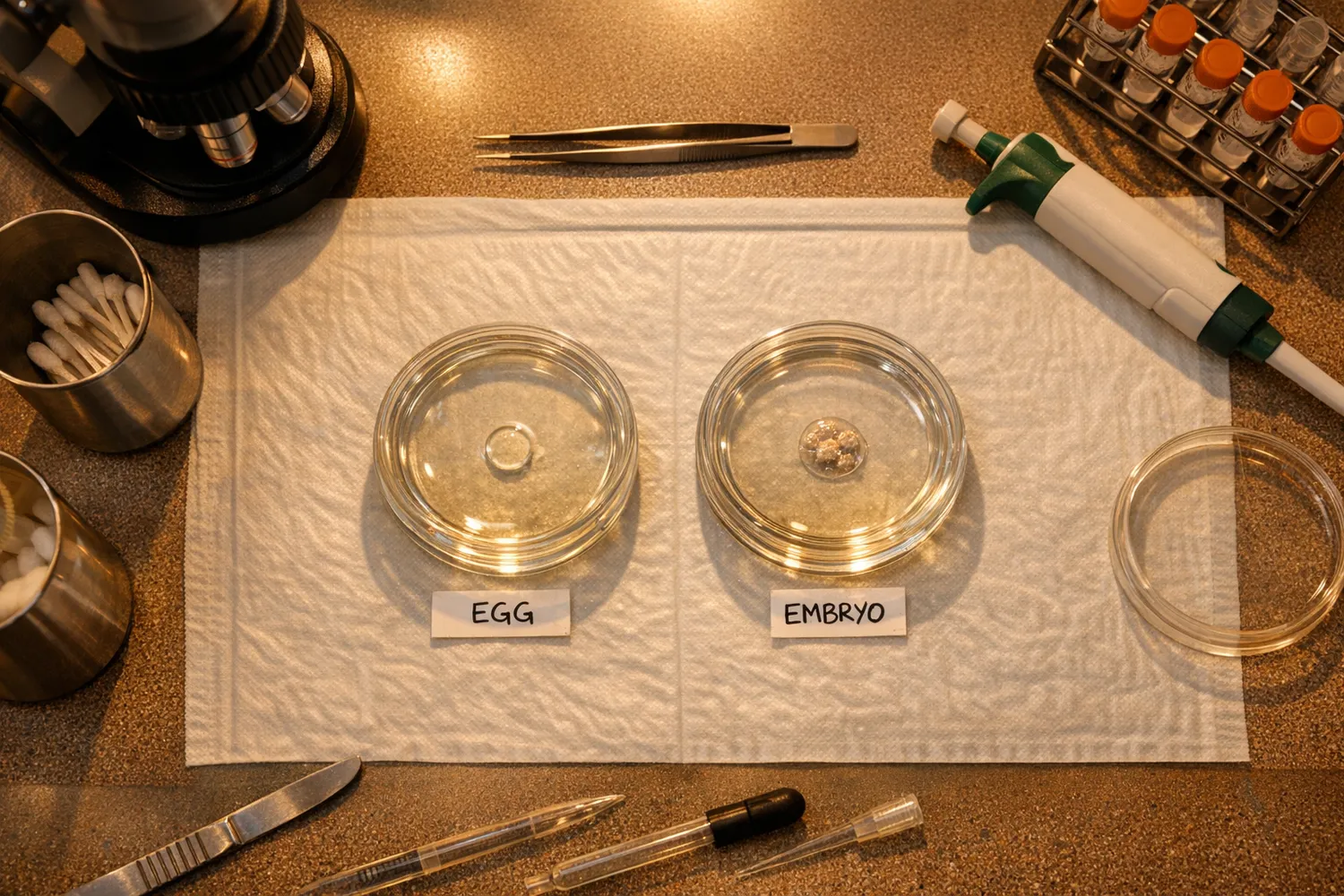
Around two thirds of fresh cycles with fertilization in Germany are now done as ICSI (66.5% according to the German IVF Registry 2024). The difference from conventional IVF: instead of adding the sperm to the eggs and hoping for natural fertilization, the embryologist selects a single sperm and injects it directly into the egg.
When is ICSI recommended?
ICSI is used mainly when sperm quality is reduced. Specifically in cases of:
- Severely reduced sperm count (fewer than 5 million progressively motile sperm)
- Reduced sperm motility
- Abnormal sperm shape
- After surgical sperm retrieval (TESE)
- After repeated IVF failure with no fertilization
Many clinics, however, also choose ICSI when semen analysis results are normal. The reason: the fertilization rate is somewhat more reliable because the element of chance in natural fertilization is eliminated. Whether that always makes sense is debated among experts.
The success rates of ICSI and IVF are comparable when sperm quality is good. When sperm quality is reduced, ICSI has clear advantages.
ICSI vs IVF: differences, studies and how to decide
ICSI vs IVF: difference, studies and guidelines, when ICSI makes sense, success rates by age and what insurance pays in Germany, Austria and Switzerland.
What does ICSI cost?
ICSI costs about €500 to €1,500 more than conventional IVF because the lab work involved is greater. Per cycle, you should plan on €4,000 to €6,500 plus medication.
ICSI cost 2026 in Germany, Austria, and Switzerland
ICSI cost in Germany, Austria & Switzerland: usually €4,500 to €5,500 per cycle with medication, €1,500 to €2,000 more than IVF. Insurance, hidden costs.

IUI: intrauterine insemination
IUI is the gentlest assisted reproduction procedure. It is suitable for couples who have no serious fertility problems but are not conceiving naturally.
How IUI works
Your partner’s semen (or a donor’s) is prepared in the lab and placed directly into your uterus at the right time. This shortens the sperm’s path and improves the odds.
The procedure takes a few minutes, does not hurt, and needs no anesthesia. IUI is often combined with mild hormonal stimulation so that ovulation can be timed better.
10% to 15% per cycle: that sounds low. But for comparison, the natural pregnancy rate per month in healthy couples is only 20% to 25%. After 3 to 6 IUI cycles, about 30% to 40% of couples become pregnant.
IUI success rate by age in Germany, Austria & Switzerland
IUI success rate by age from the German registry: about 10% pregnancy per insemination, far lower from age 40. For Germany, Austria, and Switzerland.
What does IUI cost?
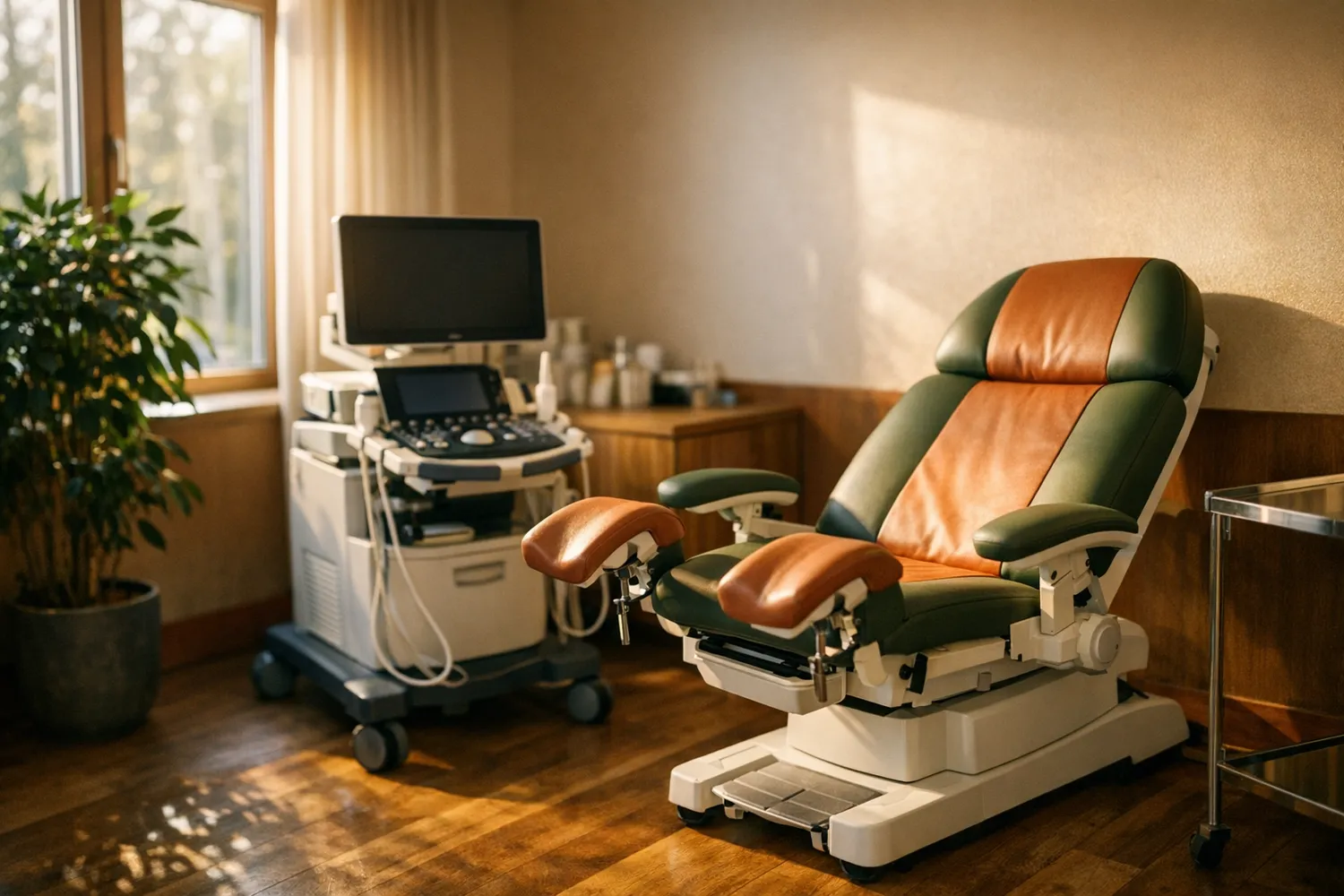
At €300 to €800 per cycle, IUI is considerably cheaper than IVF or ICSI. With hormone medication and monitoring, the total cost is €500 to €1,500 per attempt.
IUI cost 2026 in Germany, Austria and Switzerland
IUI cost in Germany, Austria, and Switzerland: about €800 to €900 per cycle plus medication for self-pay patients. What health insurance covers.

Hormone treatment as the foundation
Almost every form of assisted reproduction begins with hormone treatment. With IUI it is optional; with IVF and ICSI it is a required part of the process.
Which hormones are used?
The goal of stimulation: your ovaries should mature several eggs at the same time instead of just one, as in a natural cycle. Three groups of medication are combined for this:
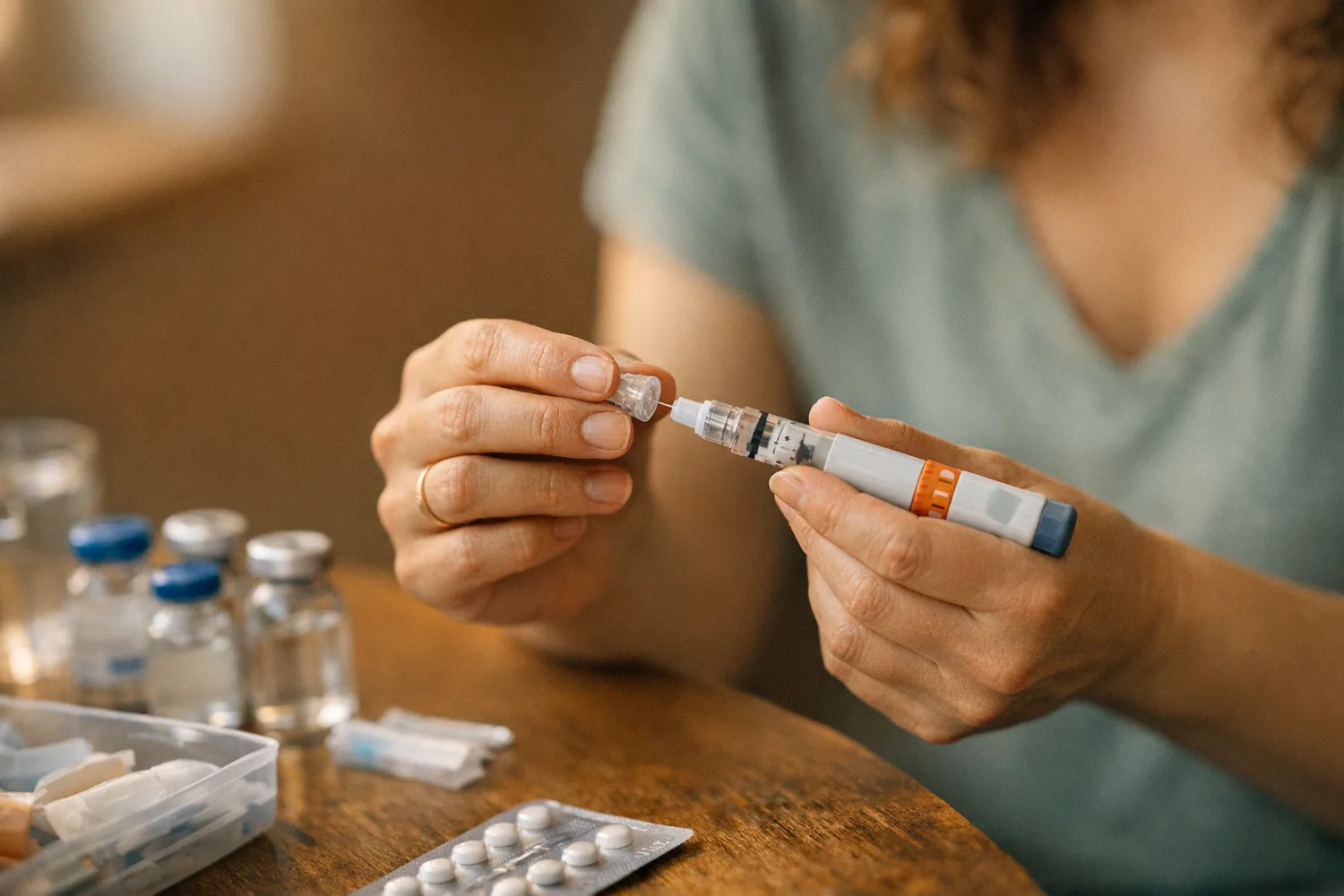
FSH (follicle-stimulating hormone) drives follicle growth. GnRH antagonists prevent your body from triggering ovulation too early. And at the end, an hCG injection sets ovulation in motion at exactly the right time.
For 8 to 14 days, you inject FSH every day. Every 2 to 3 days, an ultrasound and a blood draw check how the follicles are growing. The dose is adjusted based on these values.
Side effects and risks
What you will notice during stimulation: your lower abdomen feels full, your mood swings, and you may gain 2 to 4 lb (1 to 2 kg). This is normal and goes away after egg retrieval.
Important to know: sometimes the ovaries react too strongly. This condition, known as ovarian hyperstimulation syndrome (OHSS), can cause abdominal pain, nausea, and fluid buildup. Since antagonist protocols became the standard, however, OHSS has become much less common. According to the German IVF Registry 2024, the severe form occurred in about 0.2% of stimulations.
Fertility drugs: hormone treatment explained for 2026
Fertility drugs and hormone treatment explained: process, chances and risks. Learn how hormone stimulation can help when trying to conceive.
IVF long term effects: risks of hormone treatment 2026
What are the long-term effects of hormone therapy when trying to conceive? The current evidence, explained clearly, with decision aids.

Costs at a glance
This section applies to Germany, Austria, and Switzerland.
What assisted reproduction will cost you in practice depends on the method, the clinic, and your treatment plan. Here are the guideline figures:
| Method | Cost per cycle | Medication | Total per attempt |
|---|---|---|---|
| IUI | €300 to €800 | €100 to €500 | €500 to €1,500 |
| IVF | €3,000 to €5,000 | €1,000 to €2,000 | €4,000 to €7,000 |
| ICSI | €4,000 to €6,500 | €1,000 to €2,000 | €5,000 to €8,500 |
Couples with statutory health insurance in Germany are entitled to coverage under certain conditions: for married couples, the statutory health insurance fund covers 50% of the approved costs for up to three IVF or ICSI attempts. Both partners must be at least 25 years old, the woman must not yet have reached her 40th birthday and the man not yet his 50th, and only the couple’s own egg and sperm cells may be used. In some German states, there are also funding programs from the federal government and the state that can further reduce the out-of-pocket cost. However, the funds are limited, and the funding must be applied for before treatment begins.
In Austria, the IVF Fund (IVF-Fonds) covers 70% of the costs for up to four attempts, medication included. A specific medical indication is required (tubal factor infertility, endometriosis, polycystic ovary syndrome (PCOS), or male infertility), and the woman must also be younger than 40 and the man younger than 50 at the start of the attempt. In Switzerland, mandatory basic health insurance (Grundversicherung) does not pay for IVF or ICSI; couples bear these costs themselves. Only inseminations are covered (a maximum of three cycles per pregnancy, subject to the deductible and co-insurance).
Infertility treatment cost: Germany, Austria & Switzerland
Cost per cycle in Germany, Austria & Switzerland: IUI from €200, IVF €3,500 to €6,000, ICSI €4,500 to €7,000. What insurers pay, state funding, and tax.

Preimplantation genetic testing (PGT)
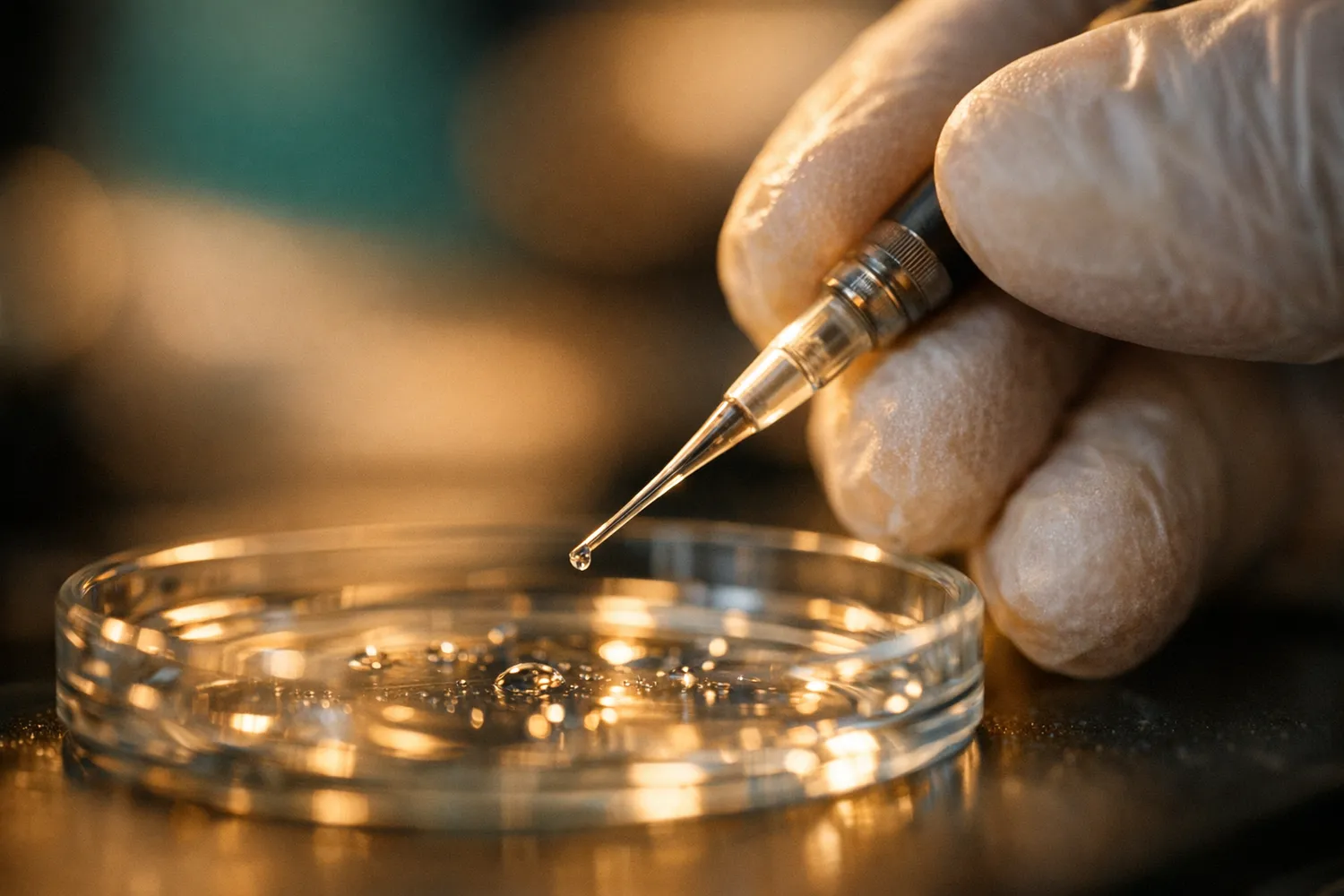
After repeated miscarriages or in cases of known genetic risk factors, PGT may be an option. The embryos are tested for chromosomal abnormalities before transfer.
In Germany, PGT has been permitted since 2011 only under strict conditions, and every individual case must be approved in advance by an ethics committee. Couples bear the costs themselves. Plan on €2,000 to €5,000 in addition to the IVF/ICSI treatment. Whether PGT makes sense in your situation is best clarified in genetic counseling before you start the cycle.
PGT-A cost 2026 in Germany, Austria & Switzerland
What does embryo genetic testing cost? PGT-A about €2,500 to €4,500 on top of IVF, PGT in Germany up to €20,000. Law in Germany, Austria, and Switzerland.
Finding the right clinic
Choosing a clinic is almost as important as the treatment itself. There are considerable differences in success rates between centers. This comes down to the lab, the doctors’ experience, and the quality of embryo culture.
What to look for when choosing a clinic:
Ask about clinic-specific pregnancy rates, broken down by age group. The German IVF Registry (D.I.R.) publishes data every year that you can view online. Pay attention to how many cycles the clinic performs per year, because experience in the lab counts. Ask specifically about the blastocyst rate, because it tells you how well the lab is performing. Also find out whether you will have a dedicated point of contact or whether someone different sits across from you at every appointment. And: some clinics have waiting lists of several months. Ask early.
You can find all fertility clinics in Germany, Austria, and Switzerland, with location search and filters by services, in the clinic directory.
Assisted reproduction from age 35 and from age 40
Age is the most important factor in the success of fertility treatment. That is not an empty phrase but biological reality.
The numbers speak for themselves
Clinical pregnancy rate and live birth rate per embryo transfer by age (fresh IVF cycles 2019 to 2023, German IVF Registry, Yearbook 2024):
| Age | Pregnancy rate per transfer | Live birth rate per transfer |
|---|---|---|
| Up to 29 | 43.1% | 34.8% |
| 30 to 34 | 39.0% | 30.9% |
| 35 to 39 | 31.9% | 22.8% |
| 40 | 24.1% | 14.5% |
| 41 to 44 | 17.1% | 9.3% |
From age 45, the live birth rate in 2023 was only 0.4% per transfer.
Treatment from age 35 or 40 is definitely not pointless. But you will probably need more attempts, and you should keep your expectations realistic.
Women aged 35 and older should not wait too long. Every six months counts. As a rule of thumb: if you are over 35 and have been trying unsuccessfully to get pregnant for 6 months, get advice early from a fertility clinic. From age 40, you should seek medical advice even sooner.
Getting pregnant at 40, 42, 45: chances by age
Chances, miscarriage risk, IVF live birth rates, and insurance rules for ages 35 to 45, with German IVF Registry data. For Germany, Austria & Switzerland.

Chances of success and statistics
What are your chances, specifically? That depends on your age, your diagnosis, the number of eggs retrieved, embryo quality, and your clinic’s experience.
Cumulative success rates
A single IVF cycle does not always lead to pregnancy. What many people do not know: the probability rises noticeably with each attempt.
According to the German IVF Registry, the cumulative clinical pregnancy rate (2020 to 2023) was 33.8% after one transfer, 53.0% after two, 63.6% after three, and 69.0% after four. The values depend heavily on age.
In Germany, the statutory health insurance fund also contributes to up to three attempts. Whether a change of strategy makes sense after that is best discussed with your center.
Factors that influence success
Besides age, the following factors play a role again and again:
Your AMH level (anti-Müllerian hormone) tells you how many eggs your ovaries can still provide. Above 1.0 ng/ml is favorable; below 0.5 ng/ml, it gets more difficult. Your BMI also plays a role: being severely underweight or overweight lowers your chances. Smoking lowers the chances of success. Underlying conditions such as endometriosis, PCOS, or blocked fallopian tubes change the prognosis. And if sperm quality is reduced, ICSI instead of IVF improves the fertilization rate.
The process step by step
Whether IUI, IVF, or ICSI: the basic process is similar. Here is what a typical treatment cycle looks like:
It starts with diagnostics: a detailed medical history, blood tests, ultrasound, and a semen analysis. This takes 2 to 4 weeks. After that, the clinic draws up your treatment plan with medications and a timeline.
With IVF and ICSI, hormonal stimulation follows: 8 to 14 days of daily injections, with a checkup at the clinic every few days. Then comes egg retrieval, an outpatient procedure under light sedation that takes about 15 to 20 minutes. Fertilization then takes place in the lab, and the embryos grow for 2 to 5 days.
During embryo transfer, the best embryo is placed in your uterus. It is painless and needs no anesthesia. Then come the hardest 12 to 14 days: waiting for the pregnancy test. During this time, implantation is supported with progesterone.
From the first appointment to the test result, about 2 to 3 months pass in total.
Frequently asked questions
What is the difference between IVF and ICSI?
With IVF, eggs and sperm are brought together in the lab, and fertilization takes place without intervention. With ICSI, a single sperm is injected directly into the egg. ICSI is used mainly when sperm quality is reduced.
How painful is assisted reproduction?
Most women find the daily hormone injections unpleasant but not painful. Egg retrieval takes place under sedation, so you feel nothing during it. Embryo transfer is painless. Overall, the process is less painful than many people fear.
How many attempts do people need on average?
There is no fixed number. According to the German IVF Registry, the cumulative clinical pregnancy rate is 63.6% after three transfers and 69.0% after four. How many attempts you need depends mainly on your age and diagnosis.
Does health insurance pay for assisted reproduction?
In Germany, statutory health insurance funds cover 50% of the approved costs for up to three IVF or ICSI attempts, but only for married couples using their own egg and sperm cells. With private health insurance, the individual contract is decisive. In Austria, the IVF Fund covers 70% for certain indications. In Switzerland, mandatory basic health insurance does not pay for IVF or ICSI, only for inseminations (a maximum of three cycles per pregnancy).
Is there a maximum age for assisted reproduction?
In Germany, there is no legal age limit for the treatment itself. However, the statutory health insurance fund only contributes if both partners are at least 25 years old and the woman has not yet reached her 40th birthday and the man not yet his 50th. Many clinics also treat older women but then recommend thorough counseling about realistic chances of success: from age 45, the live birth rate per transfer most recently stood at 0.4%.
What is the risk of a multiple pregnancy?
Because only a single embryo is now transferred more often (single embryo transfer, SET), the rate of multiples has dropped markedly. According to the German IVF Registry, it was 8.0% in 2023, compared with 22.0% in fresh cycles in 2017. After a single transfer in young women with a good prognosis, it was only 1.6%.
What side effects does hormone treatment have?
Common side effects are a feeling of fullness, mood swings, and slight weight gain. Severe ovarian hyperstimulation syndrome (OHSS) is rare: according to the German IVF Registry, it occurred in about 0.2% of stimulations in 2024. Modern protocols have reduced this risk markedly.
Can you take a break between cycles?
Yes, that is no problem at all. Many couples take a break of 1 to 2 months between cycles to recover physically and emotionally. There is no medical necessity to do the cycles back to back.
How do I choose the right fertility clinic?
Look at the success rates (available from the German IVF Registry), the number of cycles performed per year, the lab equipment, and the personal support. A no-obligation first consultation at 2 to 3 clinics helps with the decision.
Are there alternatives to assisted reproduction?
Depending on the diagnosis, hormonal support of the natural cycle, surgical treatment (e.g., endometriosis surgery), or a lifestyle change can be the first step. Assisted reproduction is not always the first and only path.
Sources
- Yearbook 2024, German IVF Registry (D.I.R.), 2025
- Section 27a, Social Code Book V (Sozialgesetzbuch V, SGB V): Assisted reproduction, Federal Ministry of Justice (gesetze-im-internet.de), 2026
- Financial support for fertility treatment, Fertility Information Portal (Informationsportal Kinderwunsch), Federal Family Ministry, 2026
- IVF Fund Act (IVF-Fonds-Gesetz), version Federal Law Gazette I No. 129/2021, RIS Austrian Federal Chancellery, 2021
- Health Care Benefits Ordinance (Krankenpflege-Leistungsverordnung, KLV), Annex 1, Federal Office of Public Health (BAG), 2026
- Section 3a Embryo Protection Act (Embryonenschutzgesetz): Preimplantation genetic testing, Federal Ministry of Justice (gesetze-im-internet.de), 2011