
Egg freezing is no longer a niche topic. The German IVF Registry (Deutsches IVF-Register, D.I.R.) recorded more than 4,200 egg freezing cycles in Germany for 2024, significantly more than the year before. And the questions have changed. It used to be mostly about what egg freezing even is. Today, many women are well informed: they have listened to podcasts, read articles, and talked it over with friends. What they are looking for is an honest assessment. Is it worth it for me? What does it really cost? And what exactly happens?
This guide answers exactly these questions. Not as advertising for a method, but as a guide for your decision. With concrete numbers, up-to-date medical knowledge, and no sugarcoating.
What is egg freezing?
Elective egg freezing, also called social egg freezing, means freezing unfertilized eggs and storing them for later. The word “social” sets the procedure apart from medically indicated cryopreservation. If a woman freezes her eggs before chemotherapy, that is medical fertility preservation. If she does it because she wants to postpone having children, it is elective egg freezing. The technical process is the same in both cases.
The technology behind it is called vitrification: an ultra-fast freezing method that has become the standard. Unlike the earlier slow freezing, it does not form ice crystals that could damage the egg. According to familienplanung.de, up to 90% of eggs survive thawing; in studies, the survival rate was between about 74% and 94%, depending on the lab.
Three groups of women mainly consider egg freezing. First: women in their early to mid-30s who currently have no partner and want to take the pressure off, so they do not have to enter a relationship under time pressure. Second: women who are in a phase of their career where a pregnancy does not fit right now, but who know they want children. Third: women who are still unsure whether they want children at all and want to keep the option open.
What they all have in common: they do not want biology to make the decision for them.
Who is egg freezing worth it for?
The honest answer: for some women, egg freezing is a sensible precaution. For others, it is wasted money. And the line does not fall where many people assume.
Women between 28 and 35 benefit the most. At this age, egg quality is still good, the ovaries respond reliably to stimulation, and you usually retrieve enough eggs per cycle. If you freeze at 30, you often need only a single stimulation cycle to reach 10 to 15 mature eggs. That is efficient and comparatively inexpensive.
Egg freezing is less sensible for women over 38. Not because it would be technically impossible, but because the math often does not add up. From 38 on, egg quality declines noticeably. You need more cycles, retrieve fewer eggs, and the later success rate is lower. Costs are also higher. If you are thinking about it at 39, egg freezing can still be an option. But expectations should stay realistic, and a conversation with a doctor clarifies whether trying to conceive right away would make more sense.
It makes no sense at all for women who are already actively trying to get pregnant. In that case, the energy should go into fertility treatment, not into freezing eggs.
AMH level and ultrasound show roughly how many eggs per cycle you can expect. The section Egg freezing at 35 and older shows how strongly age affects your chances.
Cost: what egg freezing costs
You usually pay for egg freezing yourself: on top of the stimulation cycle with medication, retrieval, and vitrification, there are annual storage fees and, later, the costs of thawing, fertilization, and embryo transfer. Statutory health insurance covers freezing only if a medical condition has to be treated with a therapy that damages germ cells, such as chemotherapy. What the individual items cost, how many cycles you should plan for, and how prices differ across Germany, Austria, and Switzerland, you can find out in the article on egg freezing costs.
Egg freezing cost 2026 in Germany, Austria & Switzerland
Egg freezing cost in Germany, Austria, and Switzerland: €2,500 to €4,500 per cycle plus €270 to €600 storage per year. Total cost by age and ways to save.

Does insurance cover egg freezing in Germany? AOK and IVF
What does the AOK pay for in Germany? 50% for IVF and ICSI, egg freezing only with cancer or another germ cell-damaging therapy. All 2026 conditions.

Process: from consultation to vitrification
The entire process takes about three to four weeks, from the initial consultation to freezing. Here is how it usually goes.
Step 1: Consultation and diagnostics
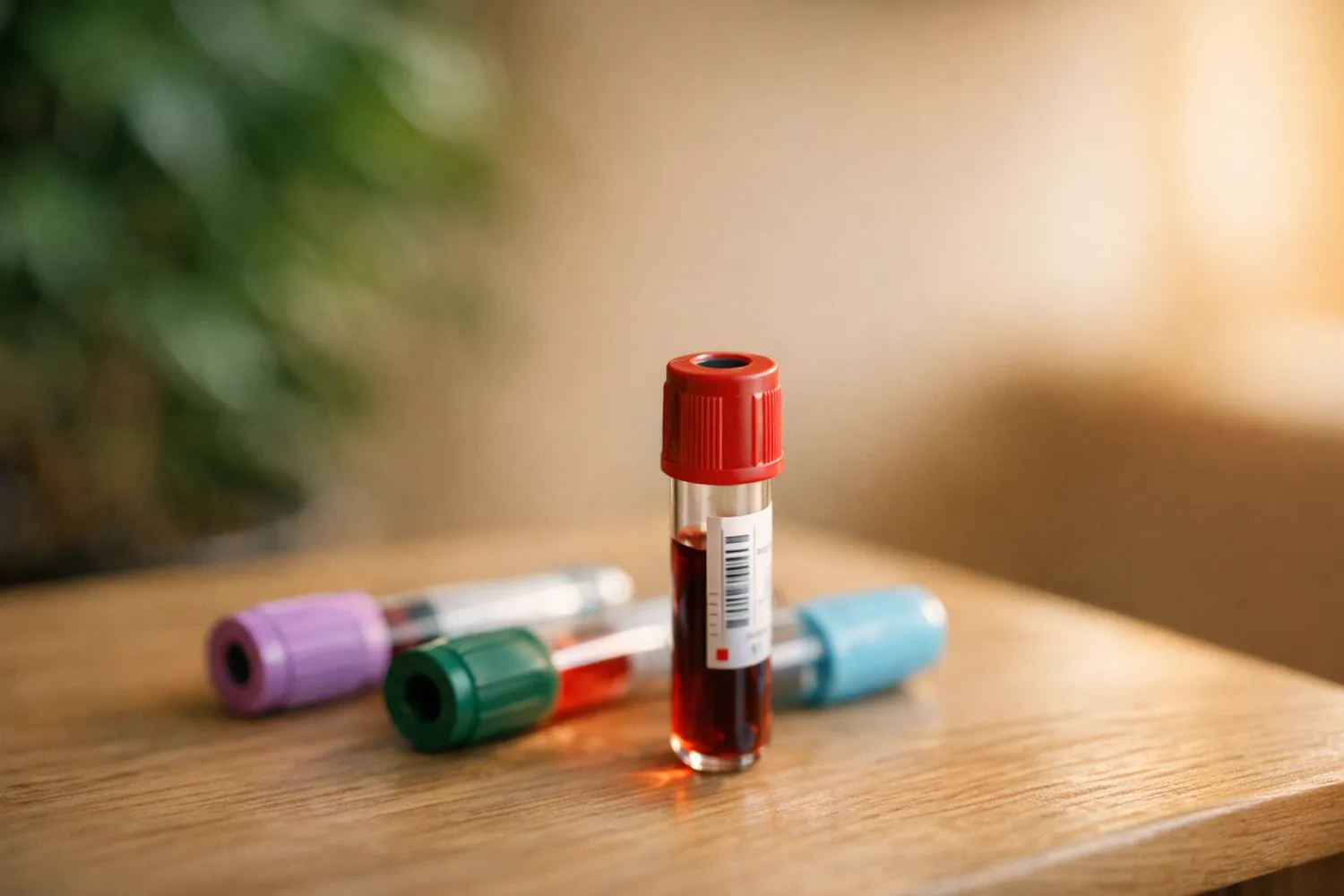
The first appointment covers your motivation, your age, and your expectations. Diagnostics follow: a blood draw for the AMH level (anti-Müllerian hormone) and other hormone levels such as FSH, plus an ultrasound to count the antral follicles.
The AMH level helps with planning. It shows roughly how many eggs can be retrieved with stimulation. In the German IVF Registry, the average was 4.6 eggs per retrieval with an AMH below 1.0 ng/ml, 9.3 at 1.0 to 3.5, and 12.4 above 3.5 ng/ml (2024 yearbook). AMH says little about egg quality or the chance of having a child; age is more decisive for that (ASRM 2020). How AMH levels are distributed among women your age is shown in the AMH Chart by age, and your doctor interprets your results.
These values help estimate how many eggs per cycle you can realistically expect and whether one cycle or several are likely to be needed.
Preparation: what you can plan ahead
You do not have to prepare much. If you are already thinking about conceiving anyway, it is worth a look at folic acid and other vitamins. For coenzyme Q10, a benefit in healthy women has not been shown, according to the German Federal Institute for Risk Assessment (BfR).
Organization matters more. During stimulation, you need flexible appointments for about two weeks, because monitoring visits usually take place in the morning. For the day of the retrieval: arrive fasting (the clinic will tell you the exact times), wear comfortable clothing, and plan for someone to accompany you home. It is best to take the day after off.
Step 2: Hormonal stimulation (10 to 14 days)
From cycle day 2 or 3, you start the daily hormone injection. The medication (an FSH preparation) prompts your ovaries to mature several follicles at the same time. Normally, only one follicle matures per cycle. With stimulation, it can be 8, 12, or even 20.
Every two to three days, you come in for monitoring: an ultrasound to follow follicle growth and a blood draw to check your hormone levels. Based on these results, the dose is adjusted if needed.
You give yourself the daily injections, usually in the abdomen. It sounds worse than it is. The needles are thin, and most women get used to it after the second or third time. Physically, you will probably notice that something is happening in your lower abdomen: a feeling of pressure, mild bloating, sometimes mood swings. This is normal and goes away again after the retrieval.
Step 3: Egg retrieval (follicular aspiration)
When the follicles have reached the right size, a final injection (the so-called trigger shot) induces ovulation. The retrieval follows 36 hours later.
You receive brief sedation, so you are not under general anesthesia, but not awake either. A thin needle, inserted vaginally under ultrasound guidance, is used to remove the follicular fluid containing the eggs. This takes 15 to 20 minutes.
Afterward, you rest in the clinic for about an hour and can then go home. Most women describe the day after as similar to a rough first day of a period: a pulling feeling in the lower abdomen, tiredness, mild discomfort. By two days after the retrieval, most women feel normal again.
Step 4: Vitrification and storage
In the lab, embryologists assess the retrieved eggs. Only mature eggs (at the so-called MII stage) are suitable for freezing. Of 12 retrieved eggs, that is typically 8 to 10.
These are then vitrified: cooled within fractions of a second to minus 196°C (minus 321°F) and stored in liquid nitrogen. In this state, no biological decay takes place. The eggs keep the quality they had at the time of freezing. An egg you freeze at 32 therefore stays biologically 32, even if you do not use it until years later.
Later: thawing, fertilization, and embryo transfer
When your wish for a baby becomes concrete, the eggs are thawed and used like fresh eggs for IVF or ICSI (familienplanung.de). In ICSI, a single sperm is injected directly into the egg. In a US study, 68.8% of thawed, surviving eggs could be fertilized this way (Blakemore et al., 2021).
From the fertilized eggs, embryos develop in the lab and are then transferred into the uterus. From this point on, the process is the same as in a regular fertility treatment. Because not every egg survives thawing, not every egg is fertilized, and not every embryo implants, the number of frozen eggs matters so much.
Experiences: what women really go through
For many women, the biggest hurdle is not the treatment itself. It is the decision beforehand.
Many women put the topic off for months. They research, weigh the pros and cons, talk with friends. The moment they book the appointment at the clinic is the hardest for many. Afterward, most describe significant relief, because they have finally taken action instead of just thinking about it.
The physical experience during stimulation varies a lot. Some women barely feel anything except a mild feeling of pressure. Others have noticeable bloating, feel puffy, and are more emotionally unstable than usual. This depends strongly on the medication dose, which in turn depends on age and ovarian reserve.
Thanks to the sedation, the retrieval itself is not a big issue. What surprises many: how quickly it is all over. From lying down on the table to the moment you are sitting dressed again in the recovery room, often only 30 minutes pass.
In the long term, research shows that the vast majority of women do not regret their decision. In a US study, 95% of women felt good about having taken their family planning into their own hands; only 9% showed moderate to strong regret (Jaswa et al., 2023). And that is despite the fact that only a minority actually use the frozen eggs: in the first years, studies usually find that fewer than 10% of women come back (Cobo et al., 2016; Kasaven et al., 2022); after 10 to 15 years, it was 38% in a US study (Blakemore et al., 2021). Many become pregnant naturally in the meantime. Just knowing that you have this option can reduce the pressure considerably.
Egg freezing journey: what women experience in 2026
What women typically experience on their egg freezing journey: the process, emotions and results of elective egg freezing, backed by studies.

Fertility testing before freezing: what AMH and ultrasound show
Before stimulation for freezing, an ultrasound examination and a blood test are part of the process. They show roughly how many eggs per cycle you can expect. Not every 32-year-old has the same ovarian reserve; the values of women the same age vary widely (see the AMH Chart by age). But these values alone do not answer whether egg freezing is worth it for you: for the chance of having a child, what counts most is age at freezing (ASRM 2020).
The two most important tests are:
The AMH test (anti-Müllerian hormone): A simple blood draw that can be done at any point in the cycle. The AMH level is related to the number of eggs that can be retrieved with stimulation. With a low level, several cycles are therefore more likely to be needed to freeze enough eggs. The birth control pill can lower the level; you should mention this when your blood is drawn.
The antral follicle count (AFC): Using a vaginal ultrasound, the small follicles in your ovaries are counted at the start of the cycle. The number helps estimate how the ovaries will respond to stimulation. Your doctor interprets the result.
How much time you have to decide cannot be read from AMH and follicle count. The values help your doctor plan the dose and the number of cycles. Whether and when you freeze depends mainly on your age and your life plans (ASRM 2020).
Fertility test for women in Germany, Austria & Switzerland
Home test, gynecologist or fertility clinic: what a fertility test for women shows and what it costs. Insurance rules for Germany, Austria, Switzerland.
Egg freezing at 35 and older: is it still worth it?
Many women ask themselves this question. And the answer is more nuanced than “yes” or “no.”
Egg quality declines with age, and the number of eggs also decreases. According to a widely cited model, at age 25 there are on average about 65,000 immature eggs per ovary, at 35 about 16,000. By 40, only about 3% of the original maximum remains (Wallace and Kelsey, 2010). The differences between individual women are very large. In practice, many women freeze rather late: according to the German IVF Registry, the average age at elective egg freezing in 2024 was 35.3 years.
Still, “after 35 it is too late” is not true. For orientation, here is a calculation model from a Boston fertility center (Goldman et al., 2017). It gives the chance of at least one child by the number of mature eggs. The authors point out that the values may be rather too optimistic:
| Age at freezing | 10 eggs | 20 eggs | Eggs for about 75% |
|---|---|---|---|
| Up to 35 | 69% | 90% | 12 |
| 36 | 60% | 84% | 16 |
| 37 | 50% | 75% | 20 |
| 38 | 45% | 69% | 25 |
| 39 | 39% | 63% | 30 |
| 40 | 30% | 51% | 40 |
| 42 | 20% | 37% | 70 |
How many cycles that takes depends on the number of eggs per retrieval (German IVF Registry 2024: on average 11.2 eggs in egg freezing). The table shows two things. First: younger is clearly better. Second: even at 36 or 37, egg freezing can still make sense if enough eggs are retrieved, but the chances are noticeably lower.
Success chances by number of eggs
How strongly age and egg count work together is shown by a Spanish analysis (IVI, 1,468 women, of whom 137 returned). It reports the cumulative live birth rate of the women who later used their frozen eggs, that is, the chance of at least one child (Cobo et al., 2016):
| Age at retrieval | 5 eggs | 8 eggs | 10 eggs | 15 eggs |
|---|---|---|---|---|
| Up to 35 years | 15.4% | 40.8% | 60.5% | 85.2% |
| 36 years and older | 5.1% | 19.9% | 29.7% | 35.6% (plateau from 11 eggs) |
In this study, women who froze up to age 35 and used 10 eggs had a chance of about 61% of having a child; with 15 eggs, about 85%. At 36 and older, it was just under 30% with 10 eggs and did not rise above a little over a third even with more eggs. The analysis is based on 137 women who returned (9.3% of all women who had frozen eggs). At 38, according to the American Society for Reproductive Medicine (ASRM), about 25 to 30 eggs are needed for a realistic chance of having a child.
As a rule of thumb, the best time is before 36. Between 36 and 38, the chances per egg drop significantly, and you should expect two to three cycles. From 38 on, the cost-benefit ratio gets much worse. That does not mean egg freezing is generally inadvisable at that point. But a very open conversation about realistic expectations is especially important then.
A blanket “too late” is therefore rare. Whether it is still worth it at 38 depends mainly on age at freezing. Ovarian reserve determines how many eggs per cycle are realistic. A conversation with a doctor, using the AMH level and ultrasound, clarifies this.
Getting pregnant at 40, 42, 45: chances by age
Chances, miscarriage risk, IVF live birth rates, and insurance rules for ages 35 to 45, with German IVF Registry data. For Germany, Austria & Switzerland.

Risks and side effects
Every medical treatment has risks. With egg freezing, these are comparatively low, but you should know them.
During stimulation
Hormonal stimulation is the most intense part. Common side effects: a feeling of fullness and bloating from the enlarged ovaries, mood swings from the rise in hormones, and a temporary weight gain of two to four pounds (one to two kilograms) (which goes away again after the retrieval).
The most serious risk is ovarian hyperstimulation syndrome (OHSS). Here the ovaries react excessively to the hormones: severe swelling, fluid buildup in the abdomen, and, in rare cases, circulatory problems. Since antagonist protocols became standard, severe OHSS cases have become rare. The German IVF Registry most recently put the OHSS risk at 0.2%. Mild symptoms usually subside within a few days.
During the retrieval
Egg retrieval is a minor procedure, but it is still a procedure. Slight bleeding after the retrieval is common. Serious complications are rare; the German IVF Registry reports 0.6%: bleeding from the needle insertion site, infections, injuries to nearby structures.
Sedation can cause nausea and drowsiness. That is why you must not drive yourself afterward and should not plan anything for the rest of the day.
Long-term risks
Many women wonder whether stimulation increases the risk of cancer. According to current knowledge, there is no reliable evidence for this.
Egg freezing does not use up eggs that you could otherwise have used. In a natural cycle, only one egg matures to ovulation anyway. The remaining follicles that had grown in that cycle are lost. Stimulation essentially only “rescues” these follicles from their natural demise.
One risk is less physical than psychological: false security. Egg freezing is an option, not a guarantee. Frozen eggs do not automatically lead to a pregnancy. Anyone who overlooks this and therefore puts off having a baby for too long can still end up disappointed.
Egg freezing in Germany, Austria, and Switzerland
This section applies to Germany, Austria, and Switzerland.
The three countries differ significantly in legal terms: in Germany and Switzerland, egg freezing is possible; in Austria, it is currently not possible without a medical indication.
Germany
Egg freezing is legal and widespread. There is no legal age limit for freezing. The storage duration is not limited. When the eggs are used later, the Embryo Protection Act (Embryonenschutzgesetz) applies: a maximum of three embryos may be transferred per treatment cycle.
In large cities such as Berlin, Munich, or Hamburg, you will find numerous specialized fertility clinics that offer egg freezing. In rural regions, the selection may be more limited, so you may need to plan for longer travel.
Austria
In Austria, eggs may currently only be frozen if an illness or its treatment seriously endangers fertility (Section 2b of the Austrian Reproductive Medicine Act, Fortpflanzungsmedizingesetz). The Austrian Constitutional Court (Verfassungsgerichtshof) did overturn the ban on elective egg freezing as unconstitutional in October 2025, but the repeal only takes effect at the end of March 31, 2027. Until then, egg freezing without a medical indication is not permitted in Austria. From April 1, 2027, the ban no longer applies; exactly what the new rules will look like is still open. Even then, only couples who are married, in a registered partnership, or in a cohabiting partnership may use their own eggs (Section 2 of the Reproductive Medicine Act).
The IVF Fund (IVF-Fonds) does not pay anything toward elective egg freezing anyway. Eggs frozen for medical reasons may be stored until revocation or until the woman’s death.
Switzerland
The Swiss Federal Act on Medically Assisted Reproduction (Reproduction Medicine Act, RMA; German: Fortpflanzungsmedizingesetz, FMedG) does not prohibit freezing your own eggs, but it limits storage: initially for a maximum of five years, extendable on request by a maximum of five more years, so a total of at most ten years. Longer storage is only possible if medical treatment or one’s occupation can endanger fertility. You may later use the eggs only as a couple and in cases of infertility (Arts. 3 and 5 RMA). You should take this into account in your planning.
In terms of price, Switzerland is above the German level; you can find the comparison in the cost article. Zurich, Basel, and Bern are the main locations.
Frequently asked questions
How many eggs should you freeze?
That depends on age. Under 35, about 10 to 15 mature eggs are considered a good benchmark, which can usually be reached with one cycle, sometimes two. Between 35 and 37, 15 to 20 eggs make more sense, which more often takes two to three cycles. At 38, about 25 to 30 eggs are needed, according to the ASRM. Fewer than 8 to 10 eggs are possible, but the chances then drop significantly. If you want two children, you should plan for correspondingly more eggs. If you retrieve fewer eggs in the first cycle than planned, a second cycle is normal and not a sign of a problem.
What is the ideal age for egg freezing?
Between 28 and 34. At this age, egg quality is high, stimulation works reliably, and costs stay manageable because one cycle is usually enough. Before 28, it is not yet necessary in most cases. From 35 on, it becomes more expensive and more involved, but it still makes sense.
Up to what age can you freeze eggs?
In Germany, there is no legal age limit for freezing. Medically, it becomes difficult from 40: you need more cycles for fewer eggs, and the chance of a child per egg drops significantly. From the late 30s on, very individual counseling is therefore important. Sometimes trying right away with IVF or ICSI makes more sense than freezing.
Is there an age limit for using frozen eggs?
In Germany, there is no legal age limit for using your own frozen eggs, but many clinics have internal age limits. The Swiss Reproduction Medicine Act also names no fixed limit. It does require, however, that, given their age and personal circumstances, the couple will probably be able to care for the child until the child comes of age.
Does egg freezing harm natural fertility?
No. The eggs that mature during stimulation would have been lost in the natural cycle anyway. In every cycle, about 15 to 20 follicles begin to grow, but only one matures to ovulation. The rest die off. Hormonal stimulation rescues these eggs from natural demise. Your overall reserve is not used up faster.
How long can eggs stay frozen?
Technically, a very long time. At minus 196°C (minus 321°F) in liquid nitrogen, no biological decay takes place; according to familienplanung.de, frozen cells can last for decades. Legal limits exist in Switzerland: at most five plus five years, so ten years, longer only if a treatment or one’s occupation endangers fertility. In Germany, there is no legal maximum duration; in Austria, eggs may be stored until revocation or death. What is decisive for your chances is your age at freezing, not the length of storage.
Can you also freeze fertilized eggs?
Yes, according to familienplanung.de, fertilized eggs and embryos can also be frozen. But that is not elective egg freezing: fertilized eggs are created as part of IVF or ICSI, that is, with sperm from a partner or donor. In egg freezing, unfertilized eggs are frozen, and you alone decide later how they are used. Ovarian tissue can also be frozen; that is a separate procedure.
What is the success rate with frozen eggs?
That depends heavily on age at the time of freezing and on the number of eggs. In a Spanish study of women who later used their frozen eggs, the chance of a child at up to age 35 was about 41% with 8 eggs, about 61% with 10, and about 85% with 15. For women aged 36 and older, it was about 30% with 10 eggs, and even with more eggs no more than about 36% (Cobo et al., 2016). The full values are in the table above. Important: these are statistics. Your individual result depends on many factors, especially on egg quality.
Is egg freezing painful?
Most women find the daily hormone injections unpleasant but not painful. The egg retrieval takes place under sedation, and you feel nothing during it. Afterward, there may be a pulling feeling in the lower abdomen and a feeling of pressure, comparable to severe period pain. This subsides within one to two days.
Can I go back to work right after egg freezing?
Most women take the day of the retrieval and the day after off. The stimulation phase before that is compatible with normal daily life and work; you only have to go to the clinic for monitoring every few days for 30 minutes. You should avoid maximal athletic exertion in the last days of stimulation and for a week after the retrieval.
What happens if I never use the eggs?
It is up to you. The options are: keep storing them (as long as you pay the storage fees) or have them destroyed. Egg donation to other women is not permitted by law in Germany and Switzerland. In Austria, egg donation is legal but tied to strict conditions: among other things, eggs for donation may only be retrieved up to the donor’s 30th birthday. Important: studies show that only a few women regret freezing, even if many end up not needing the eggs.
Do I need a referral for egg freezing?
No. You can contact a fertility clinic or a reproductive medicine center directly and make an appointment. A referral from your gynecologist or family doctor is not required. Most clinics offer a non-binding initial consultation in which your individual situation is discussed.
How do I find the right clinic for egg freezing?
Ask specifically about experience with egg freezing, not just with fertility treatment in general. How many vitrification cycles does the clinic perform per year? What is the survival rate after thawing? Is the stimulation protocol adjusted individually? Does the clinic have its own cryo lab or does it store eggs externally, and how are the emergency power supply and temperature monitoring handled? Reputable clinics will also give you a written cost estimate up front, including medication, monitoring, and sedation. You will find an overview of egg freezing providers in Germany, Austria, and Switzerland on Fertilio.
Conclusion
Egg freezing can give women more time for family planning, but it is not a guarantee of a child. What matters most are age at freezing and the number of eggs retrieved. Plan for several thousand euros per cycle plus storage and later use; statutory health insurance only pays in the case of a therapy that damages germ cells. Also keep the legal situation in mind: in Austria, egg freezing without a medical indication is currently prohibited; in Switzerland, storage is limited.
Sources
- D·I·R Yearbook 2024, German IVF Registry, 2025
- Cryopreservation, familienplanung.de / Federal Institute for Public Health, 2026
- Cryopreservation Guideline (Kryo-RL), Federal Joint Committee (G-BA), 2022
- Planned oocyte cryopreservation to preserve future reproductive potential, Ethics Committee of the American Society for Reproductive Medicine (ASRM), 2023
- Goldman RH et al.: A novel oocyte-specific model to predict live birth after elective egg freezing, Human Reproduction 2017;32(4):853-859
- Testing and interpreting measures of ovarian reserve, Practice Committee of the ASRM, Fertil Steril 2020;114:1151-1157
- Decision regret among women considering planned oocyte cryopreservation, Jaswa et al., Journal of Assisted Reproduction and Genetics, 2023
- Oocyte vitrification as an efficient option for elective fertility preservation, Cobo et al., Fertility and Sterility, 2016
- Planned oocyte cryopreservation: 10-15-year follow-up, Blakemore et al., Fertility and Sterility, 2021
- Reproductive outcomes from ten years of elective oocyte cryopreservation, Kasaven et al., Archives of Gynecology and Obstetrics, 2022
- Human ovarian reserve from conception to the menopause, Wallace and Kelsey, PLOS ONE, 2010
- Coenzyme Q10: What is known about health risks?, German Federal Institute for Risk Assessment (BfR), 2023
- Section 1 Embryo Protection Act (ESchG): Misuse of reproductive techniques, Federal Ministry of Justice, as of 2026
- Federal Act on Medically Assisted Reproduction (FMedG), Swiss Confederation (Fedlex), as of 2026
- Reproductive Medicine Act (FMedG), Austrian Federal Legal Information System (RIS), as of 2026
- Federal Law Gazette I No. 61/2025: Promulgation of the repeal of Section 2b (1) FMedG, Republic of Austria, 2025