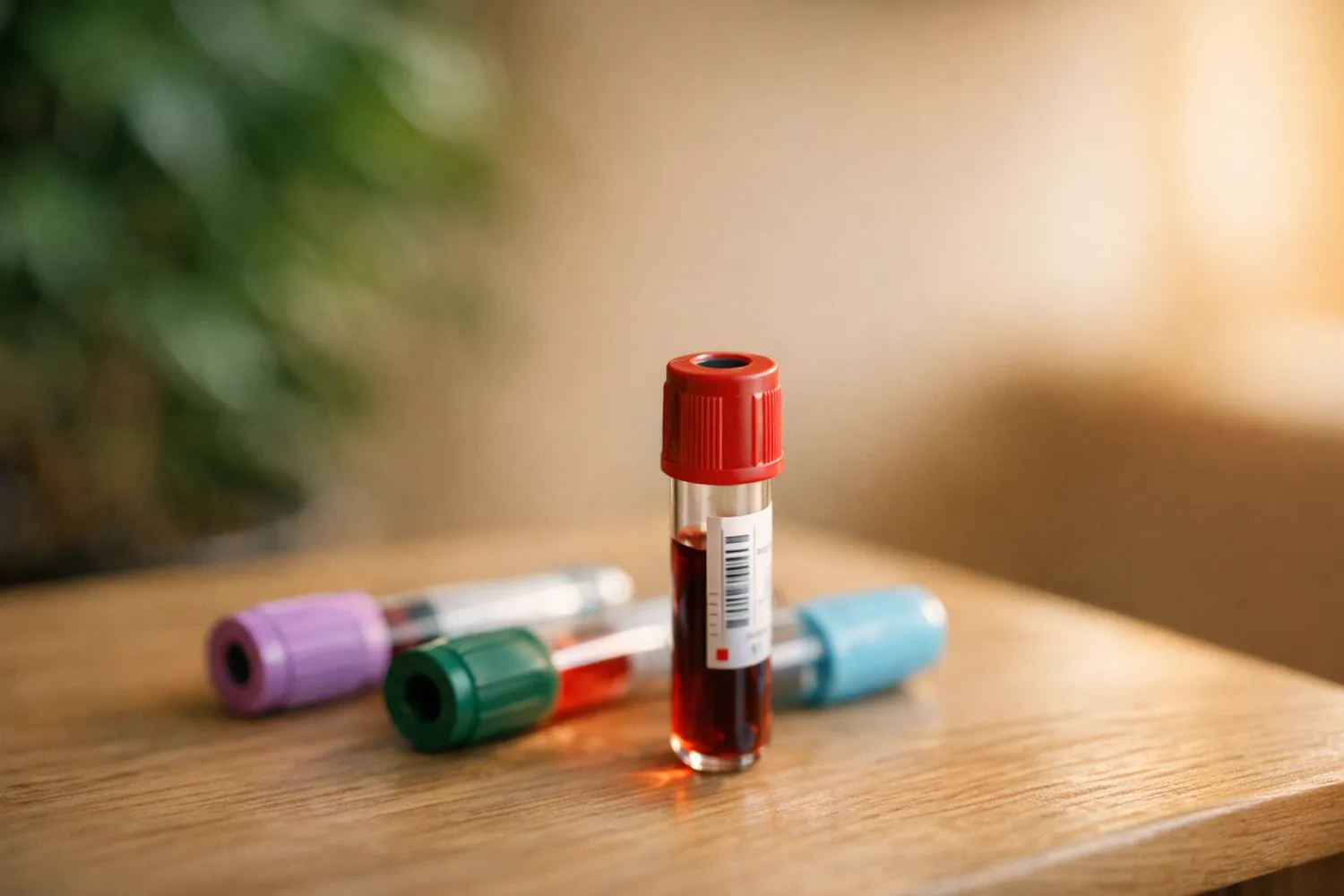
Egg freezing is no longer a niche topic. The German IVF Registry (Deutsches IVF-Register, D.I.R.) recorded more than 4,200 elective egg freezing cycles in Germany for 2024 alone. The reasons are often similar: building a career, the right partner is slow to appear, or the financial situation is not yet right for a child.
But what is it really like? What do women experience during treatment, what emotions do they go through, and what happens afterward? This article summarizes what women typically experience, from first considering it to actually using their frozen eggs. It is based on studies, surveys, and professional information, not on invented individual stories.
Why women choose egg freezing
The reasons for freezing eggs are more varied than many people think. Studies and surveys point above all to three main motivations. They often overlap.
The unfulfilled wish for a partnership
The most common reason is not a career but the lack of a partner. In a survey of women in the United States and Israel, 85% said they had their eggs frozen because they had no partner (Inhorn et al., 2018). Many want to avoid panicking in their late 30s because of the biological clock alone and entering a relationship under time pressure.
Many women feel this pressure especially from their late 20s on. They watch friends become pregnant. They themselves are still looking. Freezing their eggs buys them time and peace of mind.
Career and timing
Building a career often collides with the optimal time for pregnancy. In the very years when careers are decided, taking time off for a baby does not fit into many women’s plans.
Women feel especially under pressure in male-dominated industries. They want to establish themselves before they are “out of action.” Egg freezing gives them the chance to pursue both life goals, just at different times. To put this in perspective: In studies, career as the sole reason plays a smaller role than is often assumed. Usually it is a mix of life circumstances.
Medical reasons as a catalyst
Sometimes health factors speed up the decision, for example a planned surgery for endometriosis when it is unclear how it will affect fertility. Many women then see freezing as a kind of insurance.
A cancer diagnosis or a family history can also be the trigger. In these cases, it is less a lifestyle choice and more a genuine medical precaution.
The process from the patient’s perspective
Many women are surprised at how structured and predictable the whole process is. Still, every experience is individual. And often more emotionally intense than expected.
The first consultation
Many women go into the first appointment nervous. It usually lasts 60 to 90 minutes. The medical prerequisites, the process, and the chances of success are discussed. Good counseling leaves room for all questions, including the ones that feel uncomfortable.
Some women arrive with unrealistic ideas. They think egg freezing is a guarantee of later pregnancies. Honest information is essential here: It is an option. Not an insurance policy. Research also shows how important this is: Women who felt sufficiently informed before treatment were much less likely to regret their decision later (Jaswa et al., 2023).
Preliminary tests and cycle planning
After the decision come the preliminary tests. Blood work, ultrasound, anti-Müllerian hormone (AMH). Every woman hoping to have a baby knows these. What surprises many: the wait for the optimal cycle.
Anyone who wants to start right away often has to be patient for a while. In fact, stimulation usually does not begin until the next cycle. This wait can be used well for detailed counseling, for instance about possible long-term effects of hormone treatment.
Preparing emotionally
Most women approach the topic very thoughtfully. They have done their research. Read personal accounts. Developed realistic expectations.
Still, many underestimate the emotional side. Suddenly your thoughts revolve around hormones, follicles, and eggs, and the subject takes up more of your mind than expected.

Stimulation and egg retrieval: what to really expect
Hormone treatment is the most intense part of the whole process. This is often where theory and practice part ways. Many women are surprised by their physical and emotional reactions.
The first days of stimulation
At the beginning, many women feel nothing at all and start to wonder whether the medication is working. This is normal. During the first 3 to 4 days, usually little is noticeable.
From day 5, that changes quickly. The ovaries swell and the abdomen feels tight. Some women feel bloated, as if after a large meal. Others feel a pulling pain in the lower abdomen.
Monitoring and adjustments
What many underestimate: the frequent monitoring appointments. An ultrasound and blood draw every 2 to 3 days, usually early in the morning before work. This is often more stressful than expected, and not every woman wants to explain at work why she keeps arriving late.
The hormone dose often has to be adjusted along the way. Response too weak? Increase the dose. Too strong? Reduce or pause. This flexibility is important, but it is often unsettling for women.
The last days before egg retrieval
Shortly before egg retrieval, many women feel like a balloon about to burst. The ovaries are now clearly enlarged. The follicles are mature. Many women can only walk carefully and sleep poorly.
The timing of the trigger shot has to be exact. Egg retrieval takes place 36 hours later. This precision puts many under pressure. The worry of forgetting the shot or taking it too late is widespread.
The egg retrieval itself
Most women find egg retrieval much less alarming than they feared. They receive light anesthesia and sleep through the procedure, which takes 15 to 30 minutes. Afterward: a short period of observation, and then home.
The first hours are often marked by relief. Finally done. The abdomen is still swollen, but the tension of the past weeks falls away.

Number of eggs retrieved by age
One of the first questions after egg retrieval: How many eggs were retrieved? The number of eggs depends heavily on age. But not only on age. The following values are guidelines, and in an individual case the result can differ considerably. For comparison: According to the German IVF Registry, elective egg freezing in 2024 yielded an average of 11.2 eggs per egg retrieval.
| Age | Average number of eggs | Quality (mature eggs) | Recommended cycles |
|---|---|---|---|
| 25 to 29 | 15 to 20 | 80% to 85% | 1 |
| 30 to 34 | 12 to 18 | 75% to 80% | 1 to 2 |
| 35 to 37 | 8 to 15 | 65% to 75% | 2 |
| 38 to 40 | 6 to 12 | 55% to 65% | 3 to 4 |
| 41 to 42 | 4 to 8 | 40% to 55% | often more than 4 |
Reality check: what the numbers mean
After the first egg retrieval, 15 eggs look to many women like a safe reserve for several children. The reality is more sobering: Not all eggs survive freezing and thawing. Not all can be fertilized. Not all become embryos.
As a guide, for women up to 35, at least 8 to 10, preferably 10 to 15 mature eggs are considered necessary for a good chance of having a child (Cobo et al., 2016). With increasing age, this number rises considerably: At age 38, about 25 to 30 eggs are needed, according to the American Society for Reproductive Medicine (ASRM).
Individual differences
Individual differences are enormous. Example: A 38-year-old can very well have 18 eggs retrieved, while a 28-year-old has only 6. The AMH level gives clues. But there are no guarantees.
It is especially disappointing when your own yield is well below that of friends. Why one woman ends up with 16 eggs and another with only 7 has many causes: genetics, lifestyle, pre-existing conditions. Studies also show that having fewer eggs than expected is among the factors associated with later regret (ASRM, 2023). Realistic expectations beforehand therefore help.
The question of quality
More is not always better. In very young women under 28, more than 25 follicles sometimes grow, and then there is a risk of ovarian hyperstimulation syndrome (OHSS). Better 12 good eggs than 20 mediocre ones: That sums up the principle.
Quality only shows in the lab. Are the eggs mature? Do they have the right structure? Women usually get this information the day after egg retrieval.
The emotional side: relief vs. uncertainty
What brochures rarely say: Egg freezing is an emotional roller coaster. From first considering it to actually using the eggs, women go through different emotional phases.
The phase after the decision
After the consultation, many women mainly feel a sense of new beginnings: finally doing something for their own future, proactively and self-determined. In a study of women who had frozen their eggs, 95% said they felt good about having taken their family planning into their own hands (Jaswa et al., 2023).
At the same time, doubts creep in: Am I too early? Too late? Might I meet the right partner tomorrow? This ambivalence is completely normal. It helps to talk openly about these feelings, with people you trust or in psychosocial fertility counseling.
During treatment
Hormone treatment amplifies emotional swings. Some women are close to tears over small things and in the next moment euphoric. A real hormonal roller coaster.
Many feel very vulnerable during this time. The body changes. Control seems to be gone. The relief is correspondingly great when this phase is over.
After egg retrieval: mixed feelings
The first hours after egg retrieval are usually marked by relief. But then doubts often set in: Were there enough eggs? Did they survive? Was it the right age?
Many describe a feeling somewhere between liberation and emptiness: freed from time pressure, but also empty because there is nothing left to do now. Such mixed feelings are common. In the study by Jaswa et al., 20% of the women were disappointed with the result of their cycle, and 19% worried more about their fertility afterward than before.
The time afterward: living with the “insurance”
Things get interesting in the months after egg freezing. Some women experience a new calm about dating because the pressure eases.
Others paradoxically develop more time pressure: Those who have bought themselves time want to use it, and then sometimes search even more frantically for the right partner.
In the long run, only a minority regret the decision. In the study by Jaswa et al., 9% of the women who had frozen their eggs showed moderate to strong regret, compared with 51% of those who had decided against it. Nearly half of the women (46%), however, regretted not having frozen their eggs earlier.
Costs and whether it is worth it
This section applies to Germany, Austria, and Switzerland.
The question of cost occupies almost every woman considering egg freezing. Understandably so: Egg freezing is an investment with no guarantee of success. Here are the honest numbers for 2026:
Costs in Germany, Austria, and Switzerland
| Country | Stimulation + egg retrieval | Freezing (one-time) | Storage (per year) | Total cost (3 years) |
|---|---|---|---|---|
| Germany | €2,500 to €4,000 | €500 to €800 | €200 to €400 | €3,600 to €6,000 |
| Austria | not permitted | not applicable | not applicable | not applicable |
| Switzerland | €3,500 to €6,000 | €600 to €1,000 | €300 to €500 | €5,000 to €8,500 |
In Austria, egg freezing without a medical indication is currently prohibited. The Austrian Constitutional Court (Verfassungsgerichtshof) has overturned the ban, but the repeal does not take effect until the end of March 31, 2027. In Switzerland, storage is limited to a maximum of five plus five years.
Hidden costs
Many women are surprised to find on the first bill that the medication is not included in the base price. The hormone medications cost an additional €800 to €1,500 per cycle. Sometimes two cycles are needed.
Travel costs add up as well. With 6 to 8 monitoring appointments plus egg retrieval, this can become significant if you have to travel farther. Possible missed work days come on top of that.
Financing and insurance
The statutory health insurance funds pay for freezing only if a condition has to be treated with a therapy that damages germ cells, such as chemotherapy. In that case, they also cover storage, for women up to their 40th birthday. Egg freezing remains a self-pay service. You can find more details in our overview of coverage by health insurance.
Some women finance the treatment through installment payments. Example: With an installment of €200 a month, the burden becomes predictable and is spread over a longer period.
Is it financially worth it?
A comparison helps put this in perspective: An IVF attempt at age 42 costs €4,000 to €6,000. With 3 to 4 attempts, that quickly becomes more expensive than egg freezing. And success rates are significantly better with young eggs.
Still, there is no guarantee. That is why many women see egg freezing as a kind of insurance: You pay for it even though you hope never to need it.

When the eggs are actually used
One of the most interesting questions: How many women actually use their frozen eggs? The answer surprises many.
What studies show about use
Only a minority later actually go back to their frozen eggs. In the first years after freezing, studies usually show fewer than 10% of women returning: 9.3% in a large Spanish study (Cobo et al., 2016), 9.7% on average 3.7 years after freezing in a British analysis (Kasaven et al., 2022). The share rises over longer periods: After 10 to 15 years, 38% had used their eggs in a US study (Blakemore et al., 2021). Sounds low? But it makes sense.
Many still find a partner in the years after freezing and get pregnant naturally. Others consciously decide against having children. Egg freezing took the time constraint and the pressure off them. Mission accomplished.
Typical scenarios for use
The classic case: a late partnership
Example: A woman has her eggs frozen at 34. At 37, she gets married and first tries to get pregnant naturally. If that does not work after a year, she can fall back on her frozen eggs. Without egg freezing, she would have fewer options at that age.
Medical necessity
Some women develop health problems after egg freezing. Endometriosis gets worse, early menopause sets in, or the partner has fertility problems. In these cases, the frozen eggs are often a lifeline.
A deliberate decision at 40+
Some women use egg freezing deliberately for late motherhood. They freeze at 32. Build their careers. Plan to start a family at 42. A completely new model for life.
What happens to unused eggs
“What if I never need my eggs?” Many women ask themselves this question. In Germany, there is no statutory maximum storage period. In the US study by Blakemore et al., 47% of the women still had their eggs in storage after 10 to 15 years, and just under 12% had had them discarded.
Options are generally: continue storing them or have them discarded. Donating eggs to others is prohibited in Germany and Switzerland. In Austria it is allowed, but eggs for donation may only be retrieved there up to the donor’s 30th birthday.

Success rates with later use
The most important question for all women: What are the chances of a baby with frozen eggs? The following study data serve as a guide:
Success rates by age at freezing
The chances of success depend primarily on age at egg retrieval. Not on age at use. The table shows the cumulative live birth rate, meaning the chance of having a child, by number of eggs used (Cobo et al., 2016, 1,468 women, of whom 137 later used their eggs):
| Age at freezing | 5 eggs | 8 eggs | 10 eggs | 15 eggs |
|---|---|---|---|---|
| Age 35 or younger | 15.4% | 40.8% | 60.5% | 85.2% |
| Age 36 or older | 5.1% | 19.9% | 29.7% | 35.6% (plateau from 11 eggs) |
Reality check: what these numbers mean
Women who froze their eggs young and with enough eggs have good chances. Still, part of the reality is this: Even then, not every use of the eggs leads to a child. At age 36 and older, the chance in the study stayed at just over a third even with many eggs.
That is why several transfers are often needed. If it does not work the first time, it becomes very emotionally taxing.
Factors beyond age
Age is not everything. Egg quality varies enormously from person to person. Women who smoke have lower success rates. Even at the same age. Pre-existing conditions such as polycystic ovary syndrome (PCOS) or endometriosis can reduce the chances.
The partner also plays a role. If the eggs are good but the semen analysis is poor, even the best egg freezing helps only to a limited extent.
Multiple pregnancies
An often overlooked aspect: In IVF and ICSI, one or two embryos are transferred. In Germany, the multiple birth rate in 2023 was 8.0% overall. How strongly this depends on the number of embryos transferred is shown by registry data for women up to 35 in their first cycle: With one embryo, the multiple birth rate was 1.6%; with two embryos, it was 31.7%.
Twins are a gift, but also a big challenge, especially if only one child was actually planned. Every woman should know about this risk.
Frequently asked questions
Can I still get pregnant naturally after egg freezing?
Absolutely! The belief that you cannot is a widespread myth. Hormone treatment and egg retrieval do not impair natural fertility.
The eggs that are retrieved would have been lost in this cycle anyway. The hormones merely rescue them from natural cell death. Your remaining eggs stay completely untouched.
Does egg freezing still make sense at 40?
This is one of the most difficult questions about egg freezing. At 40, both the number and the quality of eggs are significantly reduced. Already at 38, according to the ASRM, about 25 to 30 eggs are needed for a realistic chance of having a child, and at 40 probably even more. This usually means several treatment cycles.
Some women choose it anyway because they want to have at least tried, even if the chances are slim. Others deliberately decide against it and look at alternatives such as egg donation, which is prohibited in Germany but allowed in Austria.
How long can eggs stay frozen?
A very long time. Eggs do not age while deep-frozen at -196°C (-321°F), and according to familienplanung.de, frozen cells can last for decades. However, there are legal limits depending on the country: In Switzerland, storage is limited to a maximum of five plus five years, while in Germany there is no statutory maximum.
The annual storage costs of €200 to €400 add up over the years. That is why many women set their own deadline. In the US study by Blakemore et al., women who had their eggs discarded were just over 47 years old on average.
What happens in a power outage or equipment failure?
This worry is usually unfounded. Reputable fertility clinics have multiple safety systems: backup generators, alarm systems, and emergency plans. Tanks of liquid nitrogen can be kept running for days without power.
Still, you should pay attention to these safety standards when choosing a clinic. In our fertility clinic guide, you will find important criteria for choosing one.
Egg freezing is more than a medical treatment. It is a life decision. The experiences of many women and the research evidence show: It can take pressure off and open up new possibilities. But it is not a guarantee.
If you are thinking about freezing your eggs, get thoroughly informed. Talk to doctors, get advice on your individual chances, and listen to your gut feeling. You can find more information in our complete egg freezing guide.
Would you like to find out which fertility clinic is right for you? Start our free Fertility Clinic Finder now or contact us for a personal conversation.
Sources
- Elective egg freezing and its underlying socio-demography: a binational analysis with global implications, Inhorn et al., Reproductive Biology and Endocrinology, 2018
- Decision regret among women considering planned oocyte cryopreservation: a prospective cohort study, Jaswa et al., Journal of Assisted Reproduction and Genetics, 2023
- Planned oocyte cryopreservation to preserve future reproductive potential, Ethics Committee of the American Society for Reproductive Medicine (ASRM), 2023
- Reproductive outcomes from ten years of elective oocyte cryopreservation, Kasaven et al., Archives of Gynecology and Obstetrics, 2022
- D·I·R Yearbook 2024, German IVF Registry, 2025
- Cryopreservation, familienplanung.de / Federal Institute for Public Health, 2026
- Oocyte vitrification as an efficient option for elective fertility preservation, Cobo et al., Fertility and Sterility, 2016
- Planned oocyte cryopreservation: 10-15-year follow-up, Blakemore et al., Fertility and Sterility, 2021
- Federal Law Gazette I No. 61/2025: Promulgation of the repeal of Section 2b para. 1 of the Austrian Reproductive Medicine Act (Fortpflanzungsmedizingesetz, FMedG), Republic of Austria, 2025
- Federal Act on Medically Assisted Reproduction (Fortpflanzungsmedizingesetz, FMedG), Swiss Confederation (Fedlex), as of 2026