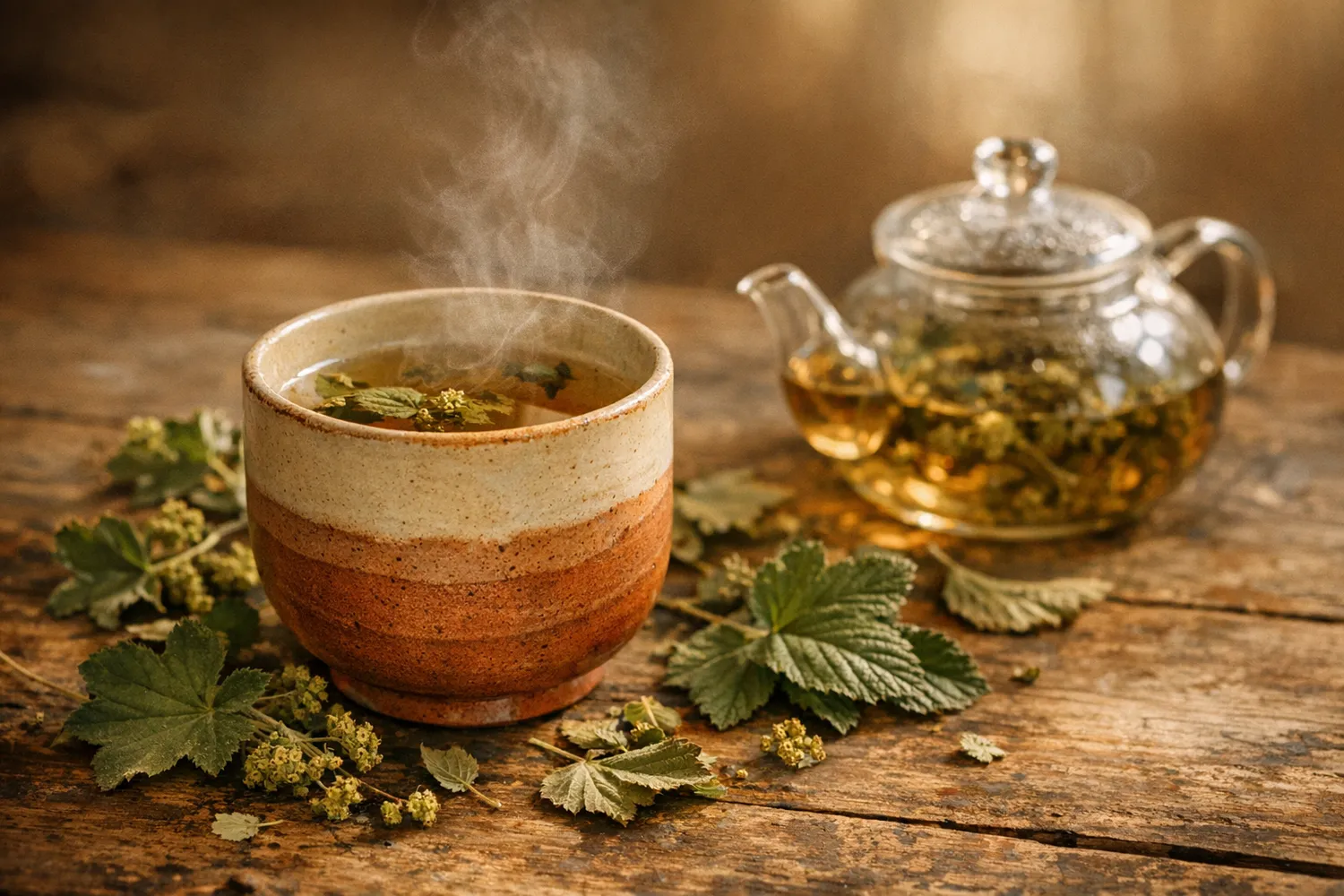
Lady's mantle tea, raspberry leaf tea, chasteberry: if you are hoping to have a baby, these plants quickly end up on the shopping list. Lady's mantle tea is the classic fertility tea, often passed down as an old “women's herb.” Likewise, in a survey of 95 patients at a US fertility practice, some women took chasteberry (also called chaste tree or vitex) and raspberry leaf to boost their fertility (Friedman 2022).
The evidence is sobering. For chasteberry and raspberry leaf, the Committee on Herbal Medicinal Products (HMPC) of the European Medicines Agency (EMA), the EU's medicines regulator, explicitly states that no data on fertility are available (HMPC 2014, 2018). There is no EU herbal monograph for lady's mantle (EMA, as of October 4, 2026). The ESCOP monograph names no use for the menstrual cycle or fertility (ESCOP 2013), and our PubMed search in October 2026 found no human studies on it.
That does not mean you have to put your teacup away. A warm cup in the evening can be a quiet moment for you, in a time that often consists of waiting. But it does not replace a medical workup if getting pregnant is taking a long time. And if you take raspberry leaf before conception, you also take it in the first weeks of pregnancy, while the pregnancy is still undetected. There are hardly any safety data for that time (HMPC 2014).
Herbs when trying to conceive at a glance
The table summarizes what authorities and professional associations say about the best-known plants. Details and sources are in the sections below.
| Plant | Recognized use | Fertility data | Pregnancy |
|---|---|---|---|
| Lady's mantle | No EU monograph. ESCOP: nonspecific diarrhea, gastrointestinal complaints. Commission E (1986): mild diarrhea | No human studies, only animal and cell data | Not assessed by the HMPC |
| Raspberry leaf | Traditional: mild menstrual cramps, mild inflammation of the mouth and throat, mild diarrhea | No data (HMPC) | Not recommended, safety not established |
| Chasteberry | Premenstrual syndrome (PMS), mild symptoms before a period | No data (HMPC) | Not recommended |
| Maca | No EMA monograph | Studies only on semen quality, no established effect | No assessment found |
“Traditional” means, to the EMA, that the use is recognized because of long-standing use, not because of clinical studies (HMPC 2014).
Lady's mantle tea: effect and tradition
Lady's mantle (Alchemilla vulgaris) is known in folk medicine as a “women's herb,” and the herb is used for tea. The HMPC has not published an EU monograph for lady's mantle, and it is not listed in the EMA's list of herbal substances (as of October 4, 2026).
What is established about the effect of lady's mantle
The European phytotherapy association ESCOP lists only nonspecific diarrhea and gastrointestinal complaints as therapeutic indications in its 2013 monograph. According to ESCOP, clinical data in humans exist only for small mouth ulcers. The German Commission E of the former Federal Health Office (Bundesgesundheitsamt) assessed lady's mantle herb in 1986, and only for mild, nonspecific diarrheal illnesses (Commission E 1986).
Menstrual cycle, fertility, or trying to conceive are not among the substantiated indications. The use as a women's herb comes from folk medicine (ESCOP 2013).
Lady's mantle tea when trying to conceive: what the research shows
A PubMed search in October 2026 found no clinical studies in humans on lady's mantle and fertility, menstrual cycle, or pregnancy. The most recent data come from the lab:
- Rat study (Korun 2025): The animals had artificially induced polycystic ovary syndrome (PCOS) and received 50 mg of lady's mantle extract per 100 g of body weight daily for 35 days. The researchers describe beneficial effects in the animal model.
- Cell experiments (Krstić 2026): Lab study with an extract from a related species, Alchemilla alpina.
No effect in humans can be derived from this. If you are looking into lady's mantle because of PCOS, the article Getting pregnant with PCOS explains which treatments are backed by evidence.
How safe is lady's mantle tea?
There is no EU monograph, and the 1986 Commission E assessment covers only mild diarrhea. There is no current regulatory assessment of use during pregnancy and breastfeeding. As for most dried herbal teas in the EU, a maximum level of 200 µg of pyrrolizidine alkaloids per kilogram applies to lady's mantle tea (Regulation (EU) 2023/915). We explain what these substances are further below, in the section on pyrrolizidine alkaloids.
Raspberry leaf tea when trying to conceive
Raspberry leaf (Rubus idaeus) is mostly associated with preparing for birth, and that is also where most of the studies are. There are no data on fertility and hardly any on early pregnancy.
What the EMA recognizes
In its 2014 monograph, the HMPC recognizes only traditional uses that are based on long-standing use, not on clinical studies. They apply to adults only:
| Use | Preparation according to the monograph |
|---|---|
| Relief of mild cramps during menstruation | Dry extract, 113 to 226 mg up to 3 to 4 times daily |
| Mild inflammation of the mouth and throat | for gargling |
| Mild diarrhea | Tea: 1.5 to 8 g in 150 ml of boiling water, 3 times daily |
Trying to conceive, pregnancy, and preparation for birth are not recognized indications (HMPC 2014). In its scheduled review, the HMPC screened 224 new literature references from 2012 to 2022. It found no data that would change the monograph, and no new safety signals in the European adverse-reaction database EudraVigilance. The 2014 version remains valid (HMPC 2023).
A raspberry leaf capsule with an aqueous dry extract is now registered as a traditional herbal medicinal product in 12 EU countries. Its indication and dosage match the monograph, meaning menstrual cramps, not trying to conceive or pregnancy (HMPC 2023).
Raspberry leaf tea in pregnancy
According to the HMPC, safety during pregnancy and breastfeeding has not been established, and because of insufficient data, use is not recommended. No data on fertility are available. Adequate tests for reproductive toxicity were not carried out, nor were tests for genetic damage and cancer risk (HMPC 2014).
In its assessment report, the HMPC advises pregnant women to avoid raspberry leaf for safety reasons where possible. If they do use it, it should be under the supervision of medical professionals and not as self-medication. The assessment included 153 pregnancies with and 147 without raspberry leaf, from one retrospective study and one randomized study, with no statistical differences in the outcomes (HMPC 2014).
What the studies on pregnancy show:
| Study | Who was studied | Result |
|---|---|---|
| Simpson 2001, only randomized placebo-controlled trial | 192 healthy, low-risk first-time mothers, from week 32 of pregnancy, 1.2 g of raspberry leaf tablets twice daily or placebo | No adverse effects for mother or baby. First stage of labor not shorter. Second stage shorter by 9.59 minutes on average, forceps deliveries 19.3% versus 30.4%, neither statistically significant |
| Bowman 2021, systematic review | 13 studies from 1941 to 2016 (lab, animal, human) | Raspberry leaf acts on smooth muscle, including the uterus. Human studies showed neither harm nor benefit, and the evidence is weak |
| Bowman 2024, observational study | 91 women in Australia, 44 of them using raspberry leaf | Medication to support labor was used less often. According to the authors, not generalizable, and a lack of concerns is not proof of safety |
| Muñoz Balbontín 2019, systematic review | 74 studies, about 1.07 million women | Raspberry leaf, taken to induce or shorten labor, was associated with cesarean delivery (adjusted odds ratio 3.47; 95% confidence interval (CI) 1.45 to 8.28). The finding comes from a single study with only 34 women who took raspberry leaf. An association, not proof of a cause |
The authors of the Simpson study describe the shorter second stage of labor as clinically meaningful, though it was not statistically significant (HMPC 2014, Bowman 2021). The authors of the most recent observational study consider a randomized trial urgently needed (Bowman 2024). The conclusion of the large review: herbal remedies in pregnancy and the postnatal period should not be recommended as long as reliable safety data are lacking (Muñoz Balbontín 2019).
Why this matters even before pregnancy
If you take raspberry leaf before conception, you also expose your early pregnancy, when the organs are forming, to this plant. There are hardly any safety data for that: The only randomized trial did not begin until week 32, and in one retrospective study, women took raspberry leaf for varying lengths of time, from 1 to 32 weeks. In its report, the HMPC cites a textbook that therefore considers use acceptable at most in the second and third trimesters. The HMPC itself does not recommend use during pregnancy (HMPC 2014).
There are also data from an animal experiment. In a study of 40 rats pregnant for the first time, some of the animals received raspberry leaf (10 mg per kg of body weight per day) from the first day of gestation until birth, while the other groups received the plant compounds kaempferol or quercetin, or nothing. With raspberry leaf, gestation lasted significantly longer. There was a trend toward fewer successful pregnancies (78% versus 100% in the control group), and the female offspring reached puberty significantly earlier. The authors urgently called for further safety testing (Johnson 2009, cited in the HMPC report 2014). Animal data cannot be applied directly to humans, but there are no human data on fertility.
A US database of herbal remedies that was used in a study from a fertility practice rates raspberry leaf without direct medical supervision as “likely unsafe in pregnancy” (Friedman 2022). The rating comes from this database, not from studies of its own.
Getting pregnant with chasteberry (vitex): what is established
Chasteberry (Vitex agnus-castus) is available as a powder, tincture, or dry extract. The 2018 EU monograph recognizes a single indication: premenstrual syndrome (PMS). One specific dry extract, 20 mg once daily for 3 months, is considered a well-established medical use for this. The other preparations count only as traditional remedies for mild symptoms in the days before a period (HMPC 2018).
Trying to conceive, menstrual cycle disorders, and luteal phase defect are not recognized indications, and according to the HMPC there are no data on fertility (HMPC 2018). The monograph is currently under review; the call for new data ran in 2024. A revised version has not yet been published, and the 2018 version remains in force (EMA, as of October 4, 2026).
What the often-cited studies show
- Luteal phase defect (Milewicz 1993): 37 women with luteal phase defect and slightly elevated prolactin were included in the analysis. Under chasteberry, the second half of the cycle lengthened from 5.5 to 10.5 days, while under placebo it stayed at 3.4 days. Pregnancy was not an endpoint. The HMPC does not consider the study sufficient to justify use for luteal phase defect because of the questionable test method (HMPC 2018).
- Homeopathic blend (Gerhard 1998): a blend that, according to the manufacturer, contains six ingredients, including chasteberry, tested in 96 women with fertility disorders. A composite endpoint was reached more often than with placebo (57.6% versus 36.0%), but the difference was not significant (p = 0.069). In total, 15 women became pregnant. The abstract does not give figures per group, only that in the subgroups with absent periods or luteal phase defect, more than twice as many women became pregnant on the product, without any information on statistical significance. In a later publication, one member of the author team is listed as belonging to the manufacturer's research department (Gorkow 2002).
- Second homeopathic combination product with chasteberry (Bergmann 2000): 67 women. There was no significant effect in the overall group; a difference appeared only in the subgroup with infrequent periods. The birth rate did not differ significantly either.
- Dietary supplement with many ingredients (Westphal 2006): chasteberry, green tea extract, L-arginine, vitamins, and minerals. One member of the author team headed research and development at the manufacturer of the product. After 3 months, 14 of 53 women (26%) were pregnant, compared with 4 of 40 (10%; p = 0.01) on placebo. A small single study with involvement of the manufacturer; the effect cannot be attributed to chasteberry.
- Review (van Die 2013): None of the 12 included randomized trials on chasteberry as a single active ingredient examined infertility.
How chasteberry works is not known, according to the HMPC. In preclinical studies, chasteberry inhibited the release of prolactin. However, it has not been conclusively shown that it lowers elevated prolactin in humans (HMPC 2018).
Chasteberry safety
- Pregnancy and breastfeeding: not recommended. Data in pregnant women are lacking, and the animal studies are not sufficient. During breastfeeding, a risk to the child cannot be ruled out (HMPC 2018).
- Interactions: Interactions with dopamine agonists, dopamine antagonists, estrogens, and antiestrogens cannot be ruled out. Anyone who takes such medications should seek medical advice first (HMPC 2018).
- Caution: talk to a doctor first if you have a history of a pituitary gland disorder or (past) estrogen-sensitive cancer. In prolactin-producing pituitary tumors, chasteberry can mask the symptoms (HMPC 2018).
- Side effects: severe allergic reactions with swelling of the face and difficulty breathing and swallowing, as well as skin rash, acne, headache, dizziness, nausea, abdominal pain, and menstrual disorders, frequency unknown (EMA). According to a review, the side effects were mild and resolved (Daniele 2005).
A case report is of interest for women in fertility treatment: A woman took a combination product containing chasteberry during an IVF cycle without hormone stimulation. Four follicles developed, with signs of mild overstimulation. However, the product contained other plants, and the HMPC sees no evidence that chasteberry was the cause (Cahill 1994, cited in the HMPC report 2018).
The article Luteal phase defect explains what is behind a short second half of the cycle and what is proven to help. How chasteberry fits in alongside folic acid and other nutrients is covered in the article Fertility vitamins.
Other fertility teas and plants
Maca: The studies mostly concern semen quality in men. A systematic review found only 5 small randomized trials on this. In the meta-analysis of 2 of these trials, there was no established effect on sperm concentration compared with placebo (mean difference 2.22; p = 0.4). The remaining results in men with infertility and in healthy men were inconsistent (Lee 2022). We did not find randomized trials on female fertility in our research, and there is no EMA monograph. More on the male side: Male fertility supplements.
Red clover: In our research in October 2026, we found neither an EMA monograph nor human studies on fertility for red clover.
Fennel tea and other herbal teas: In its 2026 recommendations, the Healthy Start network (Gesund ins Leben) advises pregnant women to drink herbal teas, where possible, alternately with other drinks, especially water. This lowers exposure to pyrrolizidine alkaloids and to estragole, which is found in fennel tea, among other things. For herbal medicinal products containing estragole, the HMPC recommends that pregnant and breastfeeding women not use them if this would result in an intake of more than 0.05 mg of estragole per day (Healthy Start network 2026).
Tea blends sold as “fertility tea”: It is worth looking at the ingredient list. Each plant in them has its own body of evidence, and the pregnancy warnings for raspberry leaf or chasteberry apply in a blend too.
Pyrrolizidine alkaloids: what you should look out for in herbal tea
If you drink several cups of lady's mantle or raspberry leaf tea every day, this section is the most important one. In adolescents and adults, intake of pyrrolizidine alkaloids (PA) comes mainly from herbal tea and rooibos tea (BfR 2022).
Why PA matter: Certain PA, the 1,2-unsaturated ones, can damage the liver, and in animal experiments they alter genetic material and cause cancer. There is no safe threshold. That is why the principle is to keep intake as low as reasonably achievable (BfR 2020).
The good news: The levels in herbal, chamomile, and rooibos tea fell markedly between 2015 and 2019. According to the German Federal Institute for Risk Assessment (BfR), the estimated total intake is of little concern, though only barely so for people who consume particularly large amounts (BfR 2020).
What the BfR advises: Pregnant and breastfeeding women should alternate herbal tea and other types of tea with other drinks. This also applies to everyone who meets most of their fluid needs with herbal tea (BfR 2022).
According to the BfR, maximum levels for PA have applied in the EU since July 1, 2022 (Regulation (EU) 2023/915, originally Regulation (EU) 2020/2040):
| Product | Maximum PA level |
|---|---|
| Dried herbal teas, including lady's mantle and raspberry leaf tea | 200 µg/kg |
| Rooibos, anise, lemon balm, chamomile, thyme, peppermint, lemon verbena | 400 µg/kg |
| Dietary supplements containing herbal preparations | 400 µg/kg |
| Teas for infants and young children | 75 µg/kg |
According to the BfR, herbal dietary supplements with high PA levels can account for a large share of total PA intake in adults. They are not included in the 2020 estimate, and their maximum level is twice as high as that for dried herbal tea (BfR 2022). We did not find measured values specifically for lady's mantle or raspberry leaf tea in the BfR's assessments.
What guidelines say about herbs when trying to conceive
None of the guidelines reviewed here recommends lady's mantle, raspberry leaf, or chasteberry when trying to conceive.
- NICE (2026): People who are concerned about their fertility should be told that the effectiveness of complementary therapies for fertility problems has not been adequately studied. Further research is needed before any recommendation can be made (NICE NG257, 1.14).
- ESHRE (2023): For assisted reproduction, acupuncture, Chinese and herbal medicines, and other complementary therapies are not recommended. ESHRE does cite a meta-analysis with low-quality evidence for a possible benefit of herbal remedies on the live birth rate in IVF or ICSI (relative risk 1.34; 95% CI 1.05 to 1.72; 5 trials, 837 participants; Kwon 2020), mostly Chinese herbal medicine. Because robust randomized trials with long follow-up are lacking, the recommendation against remains. ESHRE does not comment specifically on chasteberry, raspberry leaf, or lady's mantle.
- International PCOS guideline (2023): It contains no recommendation for chasteberry, lady's mantle, or other medicinal plants. Complementary therapies appear only in the chapter on inositol: Women who take inositol or other complementary products are encouraged to inform their healthcare provider. At the same time, they should have access to independent information, and their preferences should be respected (Teede 2023). What is known about inositol is covered in the article Myo-inositol and fertility.
- Healthy Start network (2026): Women who are trying to conceive should have their medications reviewed by a doctor. Pregnant women should not take dietary supplements, over-the-counter medications, or “natural products” without talking to a doctor first (Healthy Start network 2026). The recommendations do not specifically name chasteberry, raspberry leaf, or lady's mantle. In our assessment, however, the advice also applies to such products if you keep taking them beyond conception.
Tea, dietary supplement, or medicine: how to read the label
The same plant can be sold as a medicine or as a food. On the package, you can tell by an authorization or registration number, for example with the note “Traditional herbal medicinal product,” or by the label “dietary supplement.”
- Medicines apply only to the indications covered by their authorization or registration. Traditional herbal medicinal products are registered because of long-standing use, not because of proven efficacy. For chasteberry, there are authorized medicines with the PMS dry extract and traditional medicines for mild symptoms before a period; for the registered raspberry leaf capsule, it is menstrual cramps (HMPC 2018, HMPC 2023). None of them includes trying to conceive.
- Foods, meaning teas and dietary supplements without medicine status, may not be advertised under EU law as preventing, treating, or curing a disease (Food Information Regulation (LMIV), Art. 7). The WHO counts infertility among the diseases (WHO). The European Food Safety Authority (EFSA) has generally not yet conclusively assessed health claims on plant substances (“botanicals”) (Regulation (EU) 432/2012, recital 10).
So if a product promises to help you get pregnant, that is not proof that it works. How fertility supplements differ in their ingredients is shown in our comparison of fertility supplements.
Tea as a ritual: what you can do
If a cup of tea in the evening does you good, that is a ritual nobody needs to take away from you. A few points you can keep in mind:
- Alternate: Drink herbal tea alternately with water and other drinks, especially if you could be pregnant (BfR 2022, Healthy Start network 2026).
- Raspberry leaf and chasteberry: Neither is recommended during pregnancy (HMPC 2014, 2018). If you are actively trying to get pregnant, talk to your gynecologist about taking them. Women who are trying to conceive should have their medications reviewed by a doctor anyway (Healthy Start network 2026).
- During fertility treatment: Tell your fertility clinic which teas, plants, and products you take. With chasteberry, interactions with estrogens, antiestrogens, and drugs that act on dopamine cannot be ruled out (HMPC 2018, Teede 2023).
- Capsules and extracts: During pregnancy, take them only after talking to a doctor (Healthy Start network 2026).
And if getting pregnant is taking a long time, a medical workup of both partners is the next step. When it makes sense and which tests are part of it is explained in the infertility guide.
Frequently asked questions
Does lady's mantle tea help you get pregnant?
There is no evidence for that. Human studies on lady's mantle and fertility, menstrual cycle, or pregnancy are lacking, and the most recent data come from rat and cell experiments. ESCOP lists only nonspecific diarrhea and gastrointestinal complaints as indications (ESCOP 2013, Korun 2025, Krstić 2026).
What effect does lady's mantle have?
ESCOP lists only nonspecific diarrhea and gastrointestinal complaints as indications, and human data exist for small mouth ulcers. The German Commission E likewise assessed lady's mantle herb in 1986 only for mild diarrhea. Its use as a women's herb for the menstrual cycle or when trying to conceive comes from folk medicine. There is no EU monograph (ESCOP 2013, Commission E 1986).
Can I drink lady's mantle tea during pregnancy?
There is no current regulatory assessment of safety during pregnancy: The HMPC has not produced an EU monograph on lady's mantle, and the German Commission E assessed only use for mild diarrhea in 1986. For all herbal teas, the Healthy Start network advises pregnant women to drink them alternately with other drinks, especially water. You should take products such as capsules or extracts during pregnancy only after talking to a doctor (Healthy Start network 2026).
Does raspberry leaf tea make sense when trying to conceive?
There are no data on fertility. During pregnancy, the HMPC does not recommend use because safety has not been established. If you take raspberry leaf before conception, you also expose your early pregnancy to this plant, and there are hardly any safety data for that. The only randomized trial did not begin until week 32 (HMPC 2014, Simpson 2001).
Can chasteberry help you get pregnant?
That has not been shown. The EMA lists chasteberry only for premenstrual syndrome and states that no data on fertility are available. Positive studies either tested combination products, some with involvement of the manufacturer, whose effect cannot be attributed to chasteberry, or did not have pregnancy as a goal. Chasteberry is not recommended during pregnancy (HMPC 2018, Westphal 2006).
Which tea is recommended when trying to conceive?
For no herbal tea has it been shown that it increases the chance of pregnancy. NICE points out that complementary therapies for fertility problems have not been adequately studied. If you enjoy tea, alternate herbal tea with water and other drinks to keep your intake of pyrrolizidine alkaloids low (NICE NG257, BfR 2022).
How much herbal tea a day is safe?
The sources reviewed here do not name a maximum number of cups. For pyrrolizidine alkaloids, the BfR knows of no safe threshold and advises keeping intake as low as possible. For most dried herbal teas, including lady's mantle and raspberry leaf tea, an EU maximum level of 200 µg PA per kilogram applies, and 400 µg for some types such as chamomile or peppermint. According to the BfR, anyone who meets most of their fluid needs with herbal tea should alternate with other drinks (BfR 2020, BfR 2022, Regulation (EU) 2023/915).
Can I take herbs during fertility treatment?
Talk to your fertility clinic about it. ESHRE does not recommend herbal medicines in assisted reproduction, and with chasteberry, interactions with estrogens, antiestrogens, and drugs that act on dopamine cannot be ruled out. The PCOS guideline encourages women to tell their healthcare provider about complementary products (ESHRE 2023, HMPC 2018, Teede 2023).
Sources
Monographs and assessments
- Agni casti fructus, herbal medicinal product, overview with HMPC summary, monograph revision 1, European Medicines Agency (EMA), 2018, accessed October 4, 2026
- European Union herbal monograph on Vitex agnus-castus L., fructus, Revision 1 (EMA/HMPC/606742/2017), EMA/HMPC, 2018
- Assessment report on Vitex agnus-castus L., fructus, Revision 1 (EMA/HMPC/606741/2017), EMA/HMPC, 2018
- Rubi idaei folium, herbal medicinal product, overview with HMPC summary, European Medicines Agency (EMA), monograph 2014, accessed October 4, 2026
- Community herbal monograph on Rubus idaeus L., folium (EMA/HMPC/44211/2012), EMA/HMPC, 2014
- Assessment report on Rubus idaeus L., folium (EMA/HMPC/44209/2012), EMA/HMPC, 2014
- Addendum to assessment report on Rubus idaeus L., folium (EMA/HMPC/767595/2022), EMA/HMPC, May 12, 2023
- ESCOP Monographs: Alchemillae herba (Lady's mantle), Summary, European Scientific Cooperative on Phytotherapy (ESCOP), 2013
- List of monographs of Commission E (phytotherapy), including Alchemillae herba / lady's mantle herb, Federal Gazette (BAnz.) No. 173 of September 18, 1986, Federal Institute for Drugs and Medical Devices (BfArM), as of 1994
Guidelines and recommendations
- NICE guideline NG257: Fertility problems, assessment and treatment, recommendation 1.14 Complementary therapy, National Institute for Health and Care Excellence (NICE), March 31, 2026
- ESHRE Add-ons working group: Good practice recommendations on add-ons in reproductive medicine, Hum Reprod 2023;38(11):2062-2104, ESHRE, 2023
- Teede HJ et al.: Recommendations from the 2023 International Evidence-based Guideline for the Assessment and Management of Polycystic Ovary Syndrome, Hum Reprod 2023;38(9):1655-1679
- Nutrition, Physical Activity and Other Health Aspects Before and During Pregnancy: Recommendations by the Healthy Start Network 2026, Geburtshilfe Frauenheilkd 2026;86(6):e60-e97, Healthy Start network (Gesund ins Leben), 2026
Pyrrolizidine alkaloids
- Questions and answers on pyrrolizidine alkaloids in food, German Federal Institute for Risk Assessment (BfR), December 16, 2022
- Updated risk assessment of levels of 1,2-unsaturated pyrrolizidine alkaloids (PA) in food, opinion 026/2020, German Federal Institute for Risk Assessment (BfR), 2020
- Regulation (EU) 2023/915 on maximum levels for certain contaminants in food, Annex I No. 2.4, European Commission, 2023
Law
- Regulation (EU) No. 1169/2011 on the provision of food information to consumers (LMIV), Art. 7, European Parliament and Council, 2011
- Regulation (EU) No. 432/2012 establishing a list of permitted other health claims made on foods, recital 10, European Commission, 2012
- Infertility, Fact sheet, World Health Organization (WHO)
Studies on chasteberry
- Milewicz A et al.: Vitex agnus castus extract in the treatment of luteal phase defects due to latent hyperprolactinemia, Arzneimittelforschung 1993;43(7):752-756
- Gerhard I et al.: Study of a homeopathic combination product containing chasteberry in female infertility, Forsch Komplementarmed 1998;5(6):272-278 (original title includes brand names)
- Gorkow C et al.: Effectiveness of Vitex agnus-castus preparations, Wien Med Wochenschr 2002;152(15-16):364-372 (author affiliation: medical research of the manufacturer)
- Bergmann J et al.: Study of a homeopathic combination product in hormone-related infertility, Forsch Komplementarmed Klass Naturheilkd 2000;7(4):190-199 (original title includes brand names)
- Westphal LM et al.: Double-blind, placebo-controlled study of a nutritional supplement for improving fertility in women, Clin Exp Obstet Gynecol 2006;33(4):205-208 (original title includes brand names; one member of the author team employed by the manufacturer)
- van Die MD et al.: Vitex agnus-castus extracts for female reproductive disorders: a systematic review of clinical trials, Planta Med 2013;79(7):562-575
- Daniele C et al.: Vitex agnus castus: a systematic review of adverse events, Drug Saf 2005;28(4):319-332
Studies on raspberry leaf, lady's mantle, and other plants
- Simpson M et al.: Raspberry leaf in pregnancy: its safety and efficacy in labor, J Midwifery Womens Health 2001;46(2):51-59
- Bowman R et al.: Biophysical effects, safety and efficacy of raspberry leaf use in pregnancy: a systematic integrative review, BMC Complement Med Ther 2021;21:56
- Bowman RL et al.: Raspberry leaf (Rubus idaeus) use in pregnancy: a prospective observational study, BMC Complement Med Ther 2024;24:169
- Muñoz Balbontín Y et al.: Herbal Medicinal Product Use During Pregnancy and the Postnatal Period: A Systematic Review, Obstet Gynecol 2019;133(5):920-932
- Korun ZEU et al.: Beneficial Effects of Alchemilla vulgaris in DHEA-Induced Rat Model of Polycystic Ovary Syndrome, Reprod Sci 2025;32(7):2453-2466
- Krstić S et al.: Bioactivities of Alchemilla alpina L. Extract on Women's Reproductive and Metabolic Health: Antioxidant, Enzyme Inhibitory, Receptor Modulatory Properties and Potential Cytotoxic Effects, Int J Mol Sci 2026;27(7):3025
- Lee HW et al.: Maca (Lepidium meyenii Walp.) on semen quality parameters: A systematic review and meta-analysis, Front Pharmacol 2022;13:934740
- Friedman J et al.: Herbal supplement use among reproductive-aged women in an academic infertility practice, F S Rep 2022;4(1):104-111