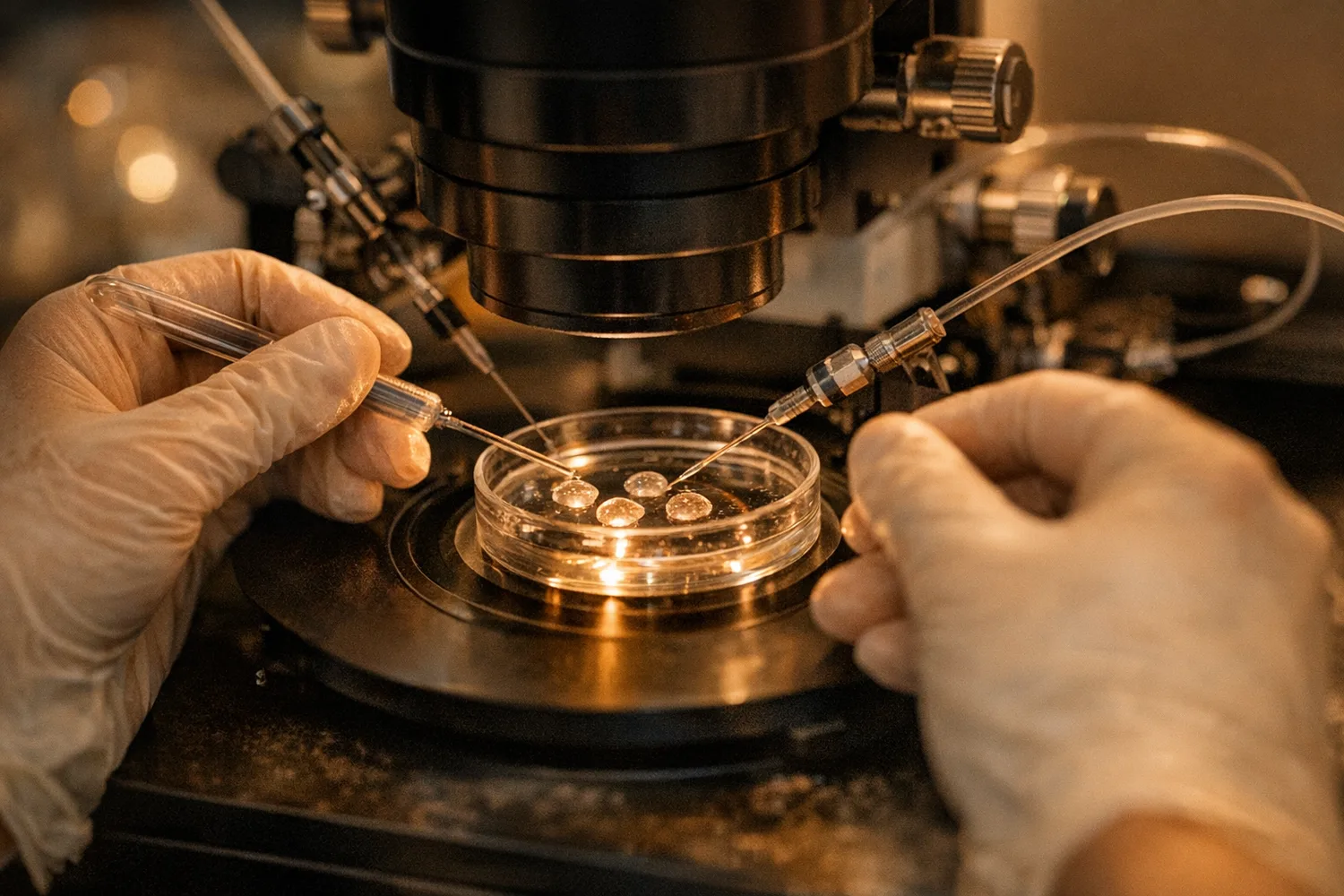
Many women with PCOS ask themselves the same question: “Can I even get pregnant?” The honest answer is: in most cases, yes. It often takes longer than for other couples, and sometimes you need support. According to the WHO, up to 70% of those affected do not know they have PCOS at all. Sometimes it is only noticed when a pregnancy is slow to come.
This guide summarizes what the guidelines recommend today: the international PCOS guideline (2023), the German PCOS guideline of the AWMF (2025), the DACH guideline (Germany, Austria, Switzerland) on diagnostics before fertility treatment (2026), and the first WHO guideline on infertility (2025). Where they contradict each other, we present both views. Every success figure comes with the group it applies to. A live birth rate from a US study with a mean BMI of 35 cannot simply be applied to you.
According to the WHO, PCOS is the most common reason why ovulation does not occur. For an overview of all causes in women and men, see our guide on infertility.
Data box: Treatment steps for PCOS according to the guidelines
A healthy lifestyle always runs in parallel. Step 1 is ovulation induction with pills: Letrozole is the first choice according to the international guideline (2023), the German PCOS guideline (2025), and the WHO (2025); the DACH guideline (2026) names letrozole or clomiphene. Step 2 is hormone injections (gonadotropins) or a laparoscopy with ovarian drilling. Step 3 is IVF.
Letrozole and metformin are not approved in Germany for use when trying to conceive and are prescribed off-label. Clomiphene is approved for it. All three are available only with a doctor’s prescription.
What is PCOS (now PMOS)?

Polycystic ovary syndrome (PCOS) is one of the most common hormonal disorders in women of reproductive age. Depending on the criteria, 10% to 13% of women are affected (international guideline 2023, WHO 2026). The German PCOS guideline gives 8% to 13%. An international consensus in the journal Lancet speaks in 2026 of about one in eight women.
Since May 2026, there has been a new name: Polyendocrine Metabolic Ovarian Syndrome, PMOS for short. 56 organizations settled on it in a global consensus process with 14,360 survey responses. The old name is considered imprecise because it suggests pathological cysts even though they are not true cysts, and because hormones and metabolism are affected (Lancet 2026). A transition period applies. The DACH guideline on fertility diagnostics (2026) already writes “polymetabolic ovarian syndrome (PMOS).” The British agency NICE is developing its new guideline under the new name, with publication expected on January 27, 2027. In this article, we stay with PCOS because that is what most people search for.
The term “cysts” is important: In PCOS, the ovaries are not covered in pathological cysts. On ultrasound, you see many small, immature egg sacs (follicles) of 2 to 9 mm (international guideline 2023).
PCOS affects the whole body. According to the German PCOS guideline, it is associated with overweight, fatty liver disease (MASLD), and sleep apnea, and Hashimoto’s thyroiditis occurs 3 to 4 times as often (AWMF 2025). Depression and anxiety disorders are also more common. The international guideline therefore recommends asking about them specifically.
Diagnosis: Rotterdam criteria and AMH
In adults, PCOS is diagnosed using the updated Rotterdam criteria. Two of three features must be present, and other causes must be ruled out (international guideline 2023, AWMF 2025). Not every woman with PCOS therefore has all the signs.
| Feature | What counts | Note |
|---|---|---|
| Cycle disorder or absent ovulation | Cycles shorter than 21 or longer than 35 days, or fewer than 8 cycles per year, starting 3 years after the first period | Ovulation can also be absent with a regular cycle |
| Too many male hormones (hyperandrogenism) | recognizable by clinical signs or measured in the blood | Together with the cycle disorder, this alone is enough for the diagnosis |
| Typical ovaries on ultrasound or elevated AMH | at least 20 follicles of 2 to 9 mm in at least one ovary (modern probe) | AMH only in adults; do not use both ultrasound and AMH |
Source: international PCOS guideline 2023, recommendations 1.1.1, 1.4.4, 1.5.1 to 1.5.5; AWMF 089-004 (2025), recommendation 1.2.1.
If the ultrasound machine is older or the image is poor, an ovarian volume of at least 10 ml or at least 10 follicles per scan plane counts as abnormal. The German guideline distinguishes by probe: with 8 MHz, at least 20 follicles and/or at least 10 ml; with 5 MHz, at least 12 follicles and/or at least 10 ml (AWMF 2025).
AMH instead of ultrasound: Since 2023, anti-Müllerian hormone (AMH) in the blood may replace ultrasound in adults to describe the typical ovaries. As a stand-alone test for the diagnosis, however, AMH is not suitable. In adolescents, neither AMH nor ultrasound should be used; there, a cycle disorder and hyperandrogenism are needed. If both of these features are present, neither ultrasound nor AMH is necessary in adults either. How AMH levels are distributed by age in studies is shown in our AMH Chart. Your doctor will interpret your own results.
Ruling out other causes: According to the international guideline, this includes TSH (thyroid), prolactin, 17-OH progesterone, and FSH, and if needed further tests for Cushing’s syndrome or tumors of the adrenal gland. LH and FSH help distinguish a lack of regulating hormones from the pituitary gland (hypogonadotropic hypogonadism).
Checking ovulation: Whether ovulation takes place can be determined even with a regular cycle through the progesterone level in the second half of the cycle (international guideline 2023). You can read more about this cycle phase in the article on luteal phase defect.
Insulin and blood sugar: Insulin is not measured routinely for diagnosis because the measurement methods are imprecise. For blood sugar, the 75 g oral glucose tolerance test (oGTT) is the most accurate test, regardless of weight (international guideline 2023).
Can you get pregnant with PCOS?
Yes, in most cases. Long-term studies that followed women over many years show this.
In Sweden, 86.7% of women with PCOS who wanted to get pregnant had given birth to at least one child. In the comparison group without PCOS, it was 91.6%. Of the women with PCOS who had a child, 73.6% had conceived spontaneously (Hudecova 2009, 91 women with PCOS, 87 without, follow-up from age 35).
In a Finnish birth cohort, women with a cycle disorder and increased hair growth had at least one child by age 44 about as often as women without these symptoms: 75.2% versus 79.0%, a difference that was not significant. On average, however, they had fewer children (1.9 versus 2.4) and more often needed fertility treatment (6.1% versus 2.4%). The diagnosis was based on self-reported symptoms, not on a medically confirmed PCOS diagnosis (West 2014, 153 women with symptoms).
The German PCOS guideline sums it up: Women with PCOS who still ovulate usually become pregnant without further treatment. It takes longer to have a first and a second child, and they have fewer children overall. The probability of having a child at all is, however, almost the same (AWMF 2025).
With treatment, it looks like this: In a large US comparison study, 41.2% of women on letrozole became pregnant within up to five cycles (positive pregnancy test), and 27.5% had a baby. At least one ovulation occurred in 88.5%. The study included 750 women in the US with a mean BMI of 35 (Legro 2014).
Regardless of PCOS, age plays a major role. This is clearly seen in assisted reproduction: In the German IVF Registry (Deutsches IVF-Register, D.I.R.), the live birth rate per embryo transfer was 30.9% in women aged 30 to 34 and 9.3% in women aged 41 to 44 (IVF 2019 to 2023, all indications, not only PCOS).
Why PCOS impairs fertility

The most important reason is infrequent or absent ovulation (AWMF 2025). The follicles start to mature but do not grow all the way to ovulation. Without ovulation, no egg can be fertilized. And because ovulation happens only rarely, it usually takes longer to get pregnant.
In the hormone system, this often shows up as an increased release of LH, the luteinizing hormone from the pituitary gland (AWMF 2025). This affects many but not all women with PCOS, and it is not a diagnostic criterion.
Insulin resistance: Many women with PCOS respond less well to insulin. In an Australian study using the most accurate measurement method (clamp test), 75% of lean and 95% of overweight women with PCOS had insulin resistance. Among overweight women without PCOS, it was 62% (Stepto 2013, 40 women with PCOS, 33 without). The body then releases more insulin, and high insulin levels prompt the ovaries to produce more male hormones.
Weight: Excess weight worsens pregnancy, miscarriage, and live birth rates in fertility treatment (international guideline 2023). That is why lifestyle plays a role in all guidelines, more on this below.
When to get evaluated
If you have a regular cycle and no known cause, the usual time limits apply: Under 35, you get evaluated by a doctor after 12 months without pregnancy, from age 35 after 6 months (ASRM 2023). Over 40, the DACH guideline (2026) recommends going straight to a fertility clinic without waiting.
If your cycle is very irregular or your period stops altogether, you do not have to wait a year first. The British guideline NICE (2026) recommends a referral at the very first appointment if a cause is suspected or known. It names irregular or absent periods explicitly as an example. The same applies there to all women from age 36. The German PCOS guideline speaks of infertility after only 3 to 6 months without pregnancy when cycles are longer than 38 days (AWMF 2025).
Before any treatment, the partner is also examined, because a male factor changes the plan (AWMF 2025). According to the international guideline, the basic workup includes a hormone profile and an ultrasound, weight (BMI) and blood pressure, blood sugar by oGTT or HbA1c, the usual routine screening tests, and a semen analysis. Depending on the situation, a test of whether the fallopian tubes are open is added. All women with PCOS who have no known diabetes should be offered an oGTT before a pregnancy or fertility treatment.
Which tests exist and what they cost is explained in our article on the fertility test for women. With a regular cycle, the Ovulation Calculator shows you your fertile days and, if you like, reminds you when an evaluation is due.
Treatment steps at a glance
The guidelines describe a stepwise path. How quickly you move from one step to the next depends on your age, how long you have been trying to conceive, and other findings.
| Step | Treatment | What the guidelines say |
|---|---|---|
| Always in parallel | Healthy lifestyle, weight loss if overweight | AWMF: goal of 5% to 10% weight loss before pregnancy |
| 1 | Ovulation induction with pills | International, AWMF, and WHO: letrozole first. DACH 2026: letrozole or clomiphene. Where letrozole is not an option, clomiphene, according to the WHO preferably together with metformin |
| 2 | Gonadotropin injections or ovarian drilling | WHO prefers gonadotropins, AWMF rates drilling as inferior |
| 3 | IVF or ICSI | if steps 1 and 2 were unsuccessful or additional reasons exist, such as blocked fallopian tubes or a male factor |
Sources: international PCOS guideline 2023, algorithm 2 and recommendations 5.3.1, 5.5.5, 5.6.1, 5.7.0.1; AWMF 089-004 (2025); AWMF 015-085 (2026); WHO 2025.
No guideline provides for a fixed preliminary phase with metformin alone before ovulation is induced. The German PCOS guideline and the DACH guideline do, however, allow metformin as one option for ovulation induction, more on this under metformin. The international guideline adds two points: Gonadotropins (more effective, but more expensive and with more multiples) and metformin (less effective) can also be considered as a first option for well-informed women. And how many cycles a step lasts before you move on is something you decide together with your doctor, depending on age and options. An insemination (IUI) is not a separate step in the treatment algorithm of the international guideline, more on this further below.
Lifestyle and weight

For women who are overweight, weight loss should be advised before pregnancy; according to the German guideline, the goal is 5% to 10% of body weight (AWMF 2025, consensus 18 of 18). The international guideline gives no percentage. It stresses that weight management can bring clinically meaningful improvements and that a healthy lifestyle helps even without weight loss.
A US study shows how much weight loss does for ovulation, though with limitations: 149 women with PCOS and a BMI of 27 to 42 received, for 16 weeks, either the birth control pill, a lifestyle program, or both. In the lifestyle program, weight was lost with meal replacements and additional weight-loss medications (sibutramine or orlistat), on average 6.2% and 6.4% of body weight, respectively. Afterward, all women received clomiphene for up to four cycles. Across these cycles, 60% ovulated after the lifestyle program, 67% after the lifestyle program plus the pill, and 46% after the pill alone. Babies were born to 26%, 24%, and 12%, respectively; the difference was not statistically significant (Legro 2015). The results therefore apply to weight loss with medication followed by clomiphene. Sibutramine has not been approved in the EU since 2010.
Nutrition: no special PCOS diet

Many guides promise a special PCOS diet. The guidelines take a more sober view: There is no evidence that one dietary pattern is superior to another, whether for weight, metabolism, hormones, or fertility (international guideline 2023, conditional recommendation, very low-certainty evidence). The German guideline recommends a generally healthy diet that suits you, for example following the recommendations of the German Nutrition Society, Mediterranean, or vegetarian (AWMF 2025).
A diet with a low glycemic index improved insulin resistance (HOMA-IR), some blood lipids, and total testosterone in one review, but not weight, fasting glucose, or the free androgen index (10 studies, 403 women, cited in AWMF 2025). Nutrition complements treatment; it does not replace it.
Exercise

The international guideline recommends that adults aged 18 to 64 get 150 to 300 minutes of moderate or 75 to 150 minutes of vigorous activity per week. This is supplemented by muscle-strengthening activity on two non-consecutive days. If you want to lose weight, you need at least 250 minutes of moderate or 150 minutes of vigorous activity per week. A particular type of exercise or intensity has not been shown to be better than another. Strength training is therefore a good option but not a must. What matters is what you can keep up long term.
Weight-loss injections and surgery
GLP-1 receptor agonists, often called weight-loss injections, should be used for fertility goals only in studies (international guideline 2023). Reliable contraception is needed during treatment. When you want to conceive, contraception should continue for up to two months after stopping, depending on the drug (AWMF 2025).
Weight-loss surgery (bariatric surgery) can improve ovulation and pregnancy rates. Afterward, contraception is used until weight is stable, according to the international guideline usually about one year, according to the German guideline 12 to 24 months.
Do not forget mental health
PCOS and infertility weigh on many women. An unpredictable cycle, weight issues, and a changed body image often come together. Depression and anxiety disorders are more common in PCOS, and the international guideline recommends targeted screening (highest level of evidence). Bring it up if the situation is weighing on you. Psychological support is part of good care and not a sign of weakness.
Folic acid, vitamin D, and dietary supplements
Folic acid: The Healthy Start network (Gesund ins Leben) recommends in 2026 that you take 400 µg of folic acid daily (or equivalent folates) as soon as you start trying to conceive, until the end of week 12 of pregnancy. If you did not start at least four weeks before conception, you take 800 µg until the end of week 12. The same dose applies if you are overweight. More in our article on folic acid when trying to conceive.
Here the recommendations contradict each other: The international PCOS guideline (2023) names a higher dose at a BMI over 30 without giving a number. The more recent recommendations from Germany (2026) and the UK do not provide for this. According to NICE (2025), no more than 400 µg is needed at a BMI of 25 or above. NICE recommends 5 mg only with additional risk factors for a neural tube defect, such as a personal or family history, certain conditions, or certain medications. Whether such a risk factor applies to you is something you clarify with your doctor.
The international guideline also advises starting the vitamins that are usual in prenatal care when ovulation induction begins.
Vitamin D: Neither the international nor the German PCOS guideline recommends routine measurement of vitamin D levels. In general, that is, not specifically for PCOS, the rule in Germany is: If you cannot form enough vitamin D yourself through the skin, you take 20 µg (800 IU) daily. Only a doctor can diagnose a deficiency (Gesund ins Leben 2026).
Other dietary supplements: The German PCOS guideline advises against dietary supplements and complementary methods because their effectiveness has not been proven (AWMF 2025, consensus 11 of 11). Which vitamins are supported by evidence when you are trying to conceive is explained in our article on vitamins when trying to conceive.
Inositol for PCOS
Inositol is often taken as a supplement. The evidence is weak. The international guideline considers inositol generally an option based on personal preference, with limited harm and possible metabolic benefits, but limited benefit for ovulation, hair growth, and weight. It cannot recommend a specific form or dose. For excess hair growth and abdominal fat, metformin is preferable.
For fertility purposes, the guideline classifies inositol as experimental: Benefits and risks are too uncertain to recommend it as a fertility therapy, and side effects and safety are unknown (international guideline 2023, very low-certainty evidence). The review for the guideline found only limited and inconclusive evidence in 30 studies with 2,230 participants (Fitz 2024). The DACH guideline (2026) considers the data insufficient for a recommendation. Before and during IVF in PCOS, the European professional society ESHRE probably does not recommend myo-inositol (ESHRE 2025). More on forms, doses from studies, and side effects in our guide on myo-inositol and fertility.
Letrozole: first choice for ovulation induction
Letrozole is an aromatase inhibitor. It lowers estrogen production, in response to which the pituitary gland releases more FSH, the hormone that makes follicles mature.
What the guidelines say: The international PCOS guideline recommends letrozole as the first-choice medication for women with PCOS who do not ovulate and have no other fertility problems, with the highest level of evidence (2023). The German PCOS guideline states that letrozole should be the first choice, with clomiphene and/or gonadotropins as the second choice (AWMF 2025). The WHO recommends letrozole before clomiphene or metformin, and specifically alone rather than together with metformin (2025). The DACH guideline (2026), by contrast, names letrozole or clomiphene as equally ranked first-line therapy.
What the studies show: In the 2022 Cochrane review, letrozole led to more births than clomiphene and related drugs (odds ratio 1.72; 1.40 to 2.11; 11 studies, 2,060 women, high-certainty evidence). If the chance of a baby with clomiphene is 20%, that corresponds to 27% to 35% with letrozole. For overstimulation (0.5% each), miscarriages per pregnancy (24% and 25%), and multiples, there was no difference. The WHO’s analysis arrives at a relative risk of 1.52 (1.28 to 1.82) for a live birth with letrozole versus clomiphene.
The most important single study is the US study by Legro (2014) with 750 women:
| Result, up to 5 cycles | Letrozole | Clomiphene |
|---|---|---|
| Ovulation per cycle | 61.7% | 48.3% |
| Women with at least one ovulation | 88.5% | 76.6% |
| Positive pregnancy test (conception) | 41.2% | 27.4% |
| Pregnancy with a heartbeat on ultrasound | 31.3% | 21.5% |
| Pregnancy loss per conception | 31.8% | 29.1% |
| Live birth | 27.5% (103 of 374) | 19.1% (72 of 376) |
| Twins per pregnancy | 3.4% | 7.4% |
Population: women with PCOS aged 18 to 40 (mean 28.9), mean BMI 35, normal uterine cavity, at least one open fallopian tube, partner with at least 14 million sperm per ml, USA. The difference in twins was not significant (relative risk 0.46; 0.13 to 1.58).
Across all studies, then, twins are no less common with letrozole than with clomiphene: In the Cochrane review, the rate of multiples was 1.6% with letrozole and 2.2% with clomiphene, with no reliable difference (Cochrane 2022).
Process and monitoring
In the Legro study, the women took 2.5 mg of letrozole daily for five days starting on cycle day 3, and if ovulation did not occur, the dose was increased up to 7.5 mg. According to the WHO, taking it from cycle day 3 to 7 is usual. Your doctor determines the dose and schedule.
The German PCOS guideline recommends ultrasound monitoring up to ovulation. If several follicles mature at the same time, contraception with a condom or abstaining from intercourse is advised in that cycle to avoid multiples (AWMF 2025). After the ultrasound, ovulation can be triggered with an hCG shot if not too many follicles are maturing. Ovulation then follows about 34 to 36 hours later (AWMF 2025).
Side effects and safety
In the Legro study, women on letrozole had hot flashes less often than on clomiphene (20.3% versus 33.0%), but more often fatigue (21.7% versus 14.9%) and dizziness (12.3% versus 7.6%).
Letrozole must not be taken if a pregnancy might exist (international guideline 2023). On safety for the baby, there are two views: The German prescribing information cites a suspected harmful effect on the fetus because of isolated reports of malformations and rules out taking it during pregnancy. The international guideline sees no higher malformation rate in the studies than with clomiphene or after natural conception. The WHO rates the data as inconsistent and the safety data overall as reassuring.
Approval and cost
This section applies to Germany only.
In Germany, letrozole is approved only for the treatment of breast cancer after menopause. The prescribing information even explicitly names a premenopausal hormonal state as a contraindication, as well as pregnancy and breastfeeding. Using it when trying to conceive is therefore off-label. The European Medicines Agency (EMA) and the US FDA have also not approved letrozole for ovulation induction (WHO 2025). The German PCOS guideline therefore requires counseling about the lack of approval, the benefits, the side effects, and the alternatives, which is documented in writing.
For insurance coverage, this means: Off-label prescriptions are covered by statutory health insurance only in exceptional cases. Letrozole for PCOS is not on the off-label list of the Pharmaceuticals Directive (Arzneimittel-Richtlinie, G-BA, as of June 11, 2026). You therefore usually get it on a private prescription. Whether private health insurance reimburses it is something you clarify in advance with your insurer. Where letrozole cannot be used, the international guideline recommends other agents for ovulation induction.
Clomiphene: approved and reimbursable

Clomiphene acts mainly through estrogen receptors in the hypothalamus, a control center in the brain (WHO 2025). The brain registers what seems like too little estrogen and releases more FSH and LH. As a result, the follicles mature better.
Approval: Clomiphene is approved in Germany to induce ovulation in women who do not ovulate. It is prescription-only and is reimbursed by statutory health insurance (AWMF 2025). According to the German PCOS guideline, however, clomiphene is no longer the first choice in PCOS.
Process according to the prescribing information: Treatment starts with 50 mg daily for five days, on or around cycle day 5 after a natural bleed or one triggered with a progestin. If the period has been absent for a long time, treatment can start at any time. If ovulation does not occur, 100 mg for five days follows in the next cycle. More than 100 mg per day for five days is not provided for according to the prescribing information, nor more than six treatment cycles. Three cycles are considered an adequate treatment duration. In PCOS, the prescribing information recommends a lower dose or a shorter course. Most women who respond ovulate in the first cycle. According to the WHO, clomiphene is usually taken for five days, from cycle day 3 to 7 or from day 5 to 9.
Important: According to the DACH guideline, treatment with progestins alone should not be used to promote pregnancy. Progestins serve here only to trigger a bleed before the actual treatment.
150 mg is off-label: In the Legro study and in other large studies, doses of up to 150 mg were used. That is above the German maximum dose.
Results: In the Legro study, ovulation occurred in 48.3% of cycles on clomiphene. Within up to five cycles, 27.4% of the women became pregnant and 19.1% had a baby (Legro 2014). In an older study over six months, 22.5% of the women on clomiphene had a baby (Legro 2007, 626 women, USA).
Side effects and risks: Hot flashes are common, 33.0% in the Legro study. Vision disturbances are a reason to stop clomiphene. If you had vision disturbances during a previous treatment, you should not take it again. In the clinical trials for approval, 7.9% of pregnancies were multiples (6.9% twins, 2,369 pregnancies). That is why the German guideline recommends ultrasound monitoring up to ovulation. It also points to a slightly increased risk of borderline ovarian tumors after more than 12 cycles (AWMF 2025). According to the DACH guideline, every ovulation induction should be monitored by ultrasound (2026).
Clomiphene plus metformin
According to the international guideline, the combination of clomiphene and metformin leads to more ovulations and clinical pregnancies than clomiphene alone. Whether more babies are also born as a result is not reliably shown: In the Cochrane review, the odds ratio for a live birth was 1.27 (0.98 to 1.65; 10 studies, 1,219 women). Gastrointestinal complaints were markedly more common with the combination (Cochrane 2019). The WHO recommends the combination where letrozole is not permitted, rather than clomiphene or metformin alone. For live birth, it found a relative risk of 1.20 (0.95 to 1.52).
When clomiphene does not trigger ovulation
In the Legro study, 23.4% of the women on clomiphene did not ovulate even once, at doses of up to 150 mg and a mean BMI of 35. The Cochrane review on ovarian drilling cites about 20% without ovulation on clomiphene. Specialists then speak of clomiphene resistance. The next steps are described in the sections on gonadotropins and ovarian drilling.
Metformin for PCOS

At first, metformin sounds surprising when you are trying to conceive, because it is a diabetes medication. It is used in PCOS because it can improve insulin resistance. For ovulation alone, however, it is less effective than letrozole or clomiphene. Here is what the studies on metformin in PCOS really show.
Approval: off-label in PCOS
In Germany, metformin is prescription-only and approved for type 2 diabetes, in adults and children from age 10. It is not approved for PCOS or for trying to conceive; use is off-label (prescribing information for metformin, AWMF 2025). The DACH guideline (2026) also states this explicitly. The WHO likewise points out that metformin is used off-label in PCOS.
In the off-label list of the Pharmaceuticals Directive, metformin appears only with one entry for the prevention of long COVID or post-COVID, not for PCOS (G-BA, as of June 11, 2026). Statutory health insurance therefore generally does not have to pay for it for PCOS. Talk to your practice in advance about how it is prescribed.
Effect on metabolism and cycle
In adults with a BMI of 25 or higher, the international guideline says metformin should be considered to improve weight and metabolic values such as insulin resistance, blood sugar, and blood lipids. This is a conditional recommendation with very low-certainty evidence. With a BMI under 25, it can be considered; the evidence there is limited. Metformin and an active lifestyle change work about equally well.
The German PCOS guideline provides for metformin to support weight loss and to improve ovulation and live birth rates (AWMF 2025, consensus 18 of 18). It cites a meta-analysis according to which women had more regular cycles after six months of metformin plus lifestyle change than with lifestyle change alone. How quickly this shows in an individual woman cannot be determined from the studies.
Does metformin help you get pregnant?
A little, but less than the other agents. The international guideline considers metformin alone possible in women without ovulation, noting that more effective agents exist. According to this guideline, clomiphene is preferable. Here the German PCOS guideline differs: Because of the inconsistent data, it prefers neither of the two and cites as an advantage of metformin that no ultrasound cycle monitoring is needed (AWMF 2025). According to the DACH guideline (2026), metformin can be given alone or together with letrozole or clomiphene to increase the ovulation rate. The WHO, by contrast, advises giving letrozole alone rather than together with metformin, because the combination did not increase the live birth rate (relative risk 1.00; 0.61 to 1.65; WHO 2025). The WHO rates metformin alone as less effective than clomiphene or letrozole alone.
| Comparison | Result for live birth | Study and population |
|---|---|---|
| Metformin alone | 7.2% in 6 months | Legro 2007, USA, 208 women |
| Clomiphene alone | 22.5% in 6 months | Legro 2007, USA, 209 women |
| Metformin plus clomiphene | 26.8% in 6 months | Legro 2007, USA, 209 women |
| Metformin versus placebo | Odds ratio 1.59 (1.00 to 2.51): 19% becomes 19% to 37%, low-certainty evidence | Cochrane 2019, 4 studies, 435 women |
| Letrozole versus metformin | Odds ratio 1.85 (1.02 to 3.45) in favor of letrozole | WHO 2025 |
| Letrozole plus metformin versus letrozole alone | relative risk 1.00 (0.61 to 1.65), no benefit | WHO 2025 |
An odds ratio or relative risk above 1 means more births; the range in parentheses shows the statistical uncertainty. If it extends below 1, the benefit is not certain.
In the Cochrane review (41 studies, 4,552 women), metformin compared with placebo also improved the rate of clinical pregnancies (odds ratio 1.98) and of ovulations (odds ratio 2.64). For the comparison of metformin against clomiphene, the data were inconsistent. In women with obesity, there were fewer births with metformin than with clomiphene (odds ratio 0.30), but the evidence is very low-certainty and rests on only two studies with 500 women. The authors explicitly draw no conclusion from this (Cochrane 2019).
In the 2007 Legro study, there were no multiples with metformin alone (0%); with clomiphene, the share was 6.0%, and with the combination 3.1% of pregnancies.
Dosage and side effects
The international guideline advises starting low and increasing in steps of 500 mg every one to two weeks. Extended-release tablets can reduce side effects. It gives 2.5 g daily as the maximum dose for adults and 2 g for adolescents. The prescribing information for type 2 diabetes allows up to 3 g daily, divided into three doses. Your doctor determines the exact dose.
The most common side effects are gastrointestinal complaints such as nausea, vomiting, diarrhea, and abdominal pain. According to the Cochrane review, they affect an estimated 22% to 40% of women on metformin, versus 10% on placebo (moderate-certainty evidence). The complaints usually occur at the start, depend on the dose, and usually go away on their own. Starting slowly and taking it with meals help. In the long term, the vitamin B12 level can fall. Monitoring is recommended with risk factors, for example after weight-loss surgery or on a vegan diet. In severely impaired kidney function (GFR below 30), metformin must not be taken; the prescribing information names further contraindications.
Metformin in IVF
In IVF, according to the international guideline, metformin can be used with the so-called long agonist protocol to lower the risk of overstimulation and miscarriage (conditional recommendation, low-certainty evidence). The dose is then 1,000 to 2,500 mg daily, stopped at the pregnancy test or when the period starts. The German PCOS guideline also recommends it with the agonist protocol. With the antagonist protocol, ESHRE probably does not recommend metformin routinely (ESHRE 2025).
A Cochrane review with 13 studies and 1,132 women found that metformin may make ovarian hyperstimulation syndrome (OHSS) less common (relative risk 0.46; 0.29 to 0.72): With a 20% risk without metformin, it would be 6% to 14% with metformin. Whether more babies are born remained uncertain in the long protocol (relative risk 1.30; 0.94 to 1.79). In the antagonist protocol, one study even showed fewer births (relative risk 0.48) (Tso 2020).
Metformin during pregnancy
Here the guidelines differ. The international guideline does not recommend metformin routinely in pregnancy. It prevents neither gestational diabetes nor late miscarriages, high blood pressure, preeclampsia, or a very high birth weight. In certain situations, such as an increased risk of preterm birth, it can be considered. The long-term effects on children are unclear. The German PCOS guideline allows treatment that was already started before pregnancy to be continued until the end of week 12 of pregnancy (AWMF 2025).
In the Scandinavian PregMet2 study, 487 pregnant women with PCOS were randomly assigned to metformin or a comparison group, from the late first trimester until birth. Late miscarriages or preterm births occurred in 5% versus 10%; the difference was not significant (odds ratio 0.50; 0.22 to 1.08). Gestational diabetes was equally common (25% versus 24%). In a combined analysis of all three PregMet studies that was not planned in advance, the rate was 5% versus 10% (odds ratio 0.43; 0.23 to 0.79). This is an indication, but not yet proof (Løvvik 2019). Metformin crosses the placenta to the baby. Registry data from more than 1,000 births show no increased risk of malformations (prescribing information for metformin).
Whether you keep taking metformin after a positive test is something you discuss with your doctor.
When pills do not work: gonadotropins
Gonadotropins are hormone injections containing FSH, in some cases combined with LH. The international guideline names them as the second medication choice when pills have not led to success. The WHO recommends them before ovarian drilling (conditional recommendation, low-certainty evidence), and the DACH guideline (2026) also names them as the second choice. An overview of hormone treatments is given in our article on hormone treatment when trying to conceive.
Approval: Gonadotropins are prescription-only. Follitropin alfa is approved in the EU, among other things, for women without ovulation, including with PCOS, when clomiphene has not worked. If you receive gonadotropins after letrozole without a prior clomiphene attempt, this falls outside the wording of the approval.
Process: A low-dose regimen is recommended in which the dose rises only slowly (low-dose step-up). The goal is that only one follicle matures. If more than two follicles grow beyond 14 mm, the cycle should be canceled to avoid multiples and overstimulation (international guideline 2023). Among the available products, there is no reliable difference in effectiveness (Cochrane 2025: live birth relative risk 1.21; 0.83 to 1.78 for recombinant versus urinary FSH).
Results: In the Dutch M-OVIN study, women without ovulation had gone through six cycles of clomiphene with ovulation but without pregnancy. With gonadotropins, 52% had a baby within eight months (167 of 327), with continued clomiphene 41% (138 of 334). Multiples were rare in both groups and equally common (Weiss 2018, 666 women, 48 clinics). Whether this also applies after unsuccessful letrozole was not studied. In the same study, miscarriages may have occurred more often with gonadotropins (relative risk 2.23; 1.11 to 4.47, low-certainty evidence; Cochrane 2025).
For gonadotropins compared with ovarian drilling, the international guideline cites higher birth rates but also higher rates of multiples. Women should be informed about this beforehand.
Ovarian drilling: the surgical option
In laparoscopic ovarian drilling, several small spots on the surface and inside the ovary are cauterized with electrical current or laser during a laparoscopy. How the procedure works is not exactly known. It is assumed that the hormones in the blood and the feedback to the pituitary gland change. The procedure is performed under general anesthesia and usually as an outpatient (WHO 2025).
When it is an option: The international guideline names ovarian drilling as the second choice in clomiphene resistance without other fertility problems. Costs, the surgeon’s required experience, and the surgical risks, which are higher with overweight, have to be considered. The German PCOS guideline rates the procedure as inferior to drug treatment. If a laparoscopy is needed anyway, for example to check the fallopian tubes, the combination can be discussed (AWMF 2025). The WHO prefers gonadotropins, mainly because of the risks of surgery.
What the studies show: Assessments differ here. Compared with all drug methods together, ovarian drilling tended to lead to somewhat fewer births (odds ratio 0.71; 0.54 to 0.92; 9 studies, 1,015 women, low-certainty evidence): If 42% have a baby with medication, that corresponds to 28% to 40% with drilling. When only methodologically good studies were considered, the difference was uncertain (odds ratio 0.90; 0.59 to 1.36). Multiples were clearly less common: With a 5% risk with medication, it would be 0.9% to 3.4% with drilling. Overstimulation occurred very rarely (Cochrane 2020, 38 studies, 3,326 women).
In a direct comparison with gonadotropins, the WHO found probably no difference in live births in the same data (relative risk 0.98; 0.79 to 1.21), but clearly fewer multiples with drilling (relative risk 0.22; 0.09 to 0.54). The international guideline, by contrast, speaks of higher birth rates with gonadotropins. Against letrozole, there is only one small study with 141 women and very low-certainty evidence (odds ratio 2.07; 0.99 to 4.32; an advantage for letrozole is not established; Cochrane 2022).
Risks: These include the risks of anesthesia and surgery, infections, and adhesions. As a possible consequence, the WHO also names damage to the ovarian reserve; the data on this are unclear. The DACH guideline (2026) states that ovarian drilling lowers the ovarian reserve. How long the procedure takes, when the first ovulation follows, and how long the effect lasts cannot be reliably stated from the guidelines.
Insemination (IUI) for PCOS
In an insemination, prepared sperm are placed directly into the uterus at the time of ovulation. It can be combined with ovulation induction. The international PCOS guideline, however, does not provide for IUI as a separate step in its treatment algorithm.
In women without their own ovulation who were not pregnant after six clomiphene cycles with ovulation, and whose partners had a normal semen analysis, IUI brought no clear additional benefit in the M-OVIN study: With IUI, 49% had a baby, without IUI 43% (relative risk 1.14; 0.97 to 1.35, not significant). IUI can make sense if a male factor is also present.
Figures from Germany, for all indications and not specifically for PCOS: From 2020 to 2024, homologous inseminations (with the partner’s sperm) led to the following clinical pregnancy rates per insemination:
| Stimulation | Clinical pregnancy per insemination | Inseminations | Multiples (2020 to 2023) |
|---|---|---|---|
| Natural cycle | 8.6% | 30,646 | not reported |
| Clomiphene only | 8.0% | 11,452 | 6.3% |
| Letrozole only | 11.7% | 6,044 | 3.4% |
| Recombinant FSH only | 14.5% | 9,529 | 9.4% |
| Total with stimulation | 11.2% | 33,739 | not reported |
Source: German IVF Registry, Yearbook 2024, German Insemination Registry (DERI). In 2024, the rate across all homologous inseminations was 10.3% (14,656 inseminations). Births per insemination were analyzed for 2023: 6.3%.
Process, costs, and chances are described in our article on IUI treatment, and the procedure itself on the page on insemination.
IVF and ICSI for PCOS
According to the international guideline, IVF can be offered in PCOS without ovulation if the first and second steps have not led to success (consensus recommendation). This applies if there are no other reasons in favor of IVF from the outset, such as blocked fallopian tubes or impaired sperm quality. The WHO sees it the same way (conditional recommendation, very low-certainty evidence). How IVF and ICSI work and how they differ is explained on our page on IVF treatment and in the comparison ICSI vs. IVF.
The chances: Women with PCOS become pregnant about as often per started cycle in IVF as women without PCOS (odds ratio 1.0; 0.8 to 1.3). They have on average 3.4 more eggs, but treatment is canceled more often (Heijnen 2006, meta-analysis, 458 women with PCOS in 793 cycles, 694 women without PCOS in 1,116 cycles). In a large Chinese study of 1,508 women with PCOS (aged 20 to 34, first IVF cycle, up to two embryos on day 3), the live birth rate after the first transfer was 49.3% with frozen and 42.0% with fresh embryos (Chen 2016).
For comparison, the figures from Germany across all indications, not only PCOS: In 2024, the clinical pregnancy rate per embryo transfer was 30.5% with fresh and 31.5% with thawed embryos. The live birth rate per transfer was 22.5% and 21.9%, respectively, in 2023 (D·I·R 2024). When embryos could be frozen and used, about half of couples had a baby after one fresh and two frozen transfers from one egg retrieval (selected group, all indications). You can look up how the chances develop by age in the registry in the IVF Calculator.
According to the international guideline, assisted reproduction in PCOS does not raise the risk of miscarriage, preterm birth, fetal growth restriction, and cesarean section any further compared with women without PCOS (conditional recommendation, very low-certainty evidence). The pregnancy risks that are generally increased in PCOS are described in the section Pregnancy with PCOS.
Avoiding overstimulation
Women with PCOS often respond strongly to hormone stimulation. The risk of ovarian hyperstimulation syndrome (OHSS) is therefore higher. Before IVF, you should be informed about this, and the clinic should offer preventive measures (international guideline 2023). The guidelines recommend several components for this:
- Antagonist protocol: It allows ovulation to be triggered with a GnRH agonist and all embryos to be frozen without lowering the chance of a baby across all transfers (international guideline 2023; AWMF 2025 “should”; ESHRE 2025 strong recommendation if a strong response is expected).
- Lower starting dose: If a strong response is expected, ESHRE probably recommends a reduced gonadotropin dose of 100 to under 150 IU (2025).
- Agonist trigger and freeze-all: If there is a risk of OHSS, ovulation is triggered with a GnRH agonist, and all embryos are frozen (international guideline 2023 strong recommendation; AWMF 2025 “shall”; ESHRE 2025 strong recommendation). The embryos are transferred later in a frozen embryo transfer.
How much freezing alone achieves is shown by the Chinese study by Chen (2016). With the same stimulation, the OHSS risk without a fresh transfer fell from 7.1% to 1.3%. Pregnancy losses were less common (22.0% versus 32.7%), but preeclampsia occurred more often after a frozen transfer (4.4% versus 1.4%).
For context: Severe OHSS (grade III) was recorded in Germany in 2024 in 148 of 73,784 stimulations, which is 0.2%. With the antagonist protocol, the rate was 0.2%, with the long agonist protocol 0.5% (D·I·R 2024, all indications).
An alternative without OHSS risk is in vitro maturation (IVM), in which immature eggs are retrieved and matured in the lab. The chance of a baby is lower overall, and it should be offered only at experienced centers (international guideline 2023). The German guideline considers IVM possible when the OHSS risk is high. ESHRE does not recommend growth hormone as an add-on in PCOS (2025).
With the transfer of only one embryo, multiples can be minimized (international guideline 2023). The IVF process step by step is described in our article on the IVF process.
Chances of success at a glance
The following table collects the most important figures. The studies are not directly comparable: Countries, weight, number of cycles, and prior treatment differ.
| Treatment | Population | Time frame | Result | Source |
|---|---|---|---|---|
| Long-term course, with and without treatment | PCOS and trying to conceive, Sweden (91 women with PCOS in total) | Follow-up from age 35 | 86.7% of the women who wanted children had at least one child (without PCOS 91.6%) | Hudecova 2009 |
| Letrozole | PCOS, USA, mean BMI 35, 374 women | up to 5 cycles | Live birth 27.5% | Legro 2014 |
| Clomiphene | as above, 376 women | up to 5 cycles | Live birth 19.1% | Legro 2014 |
| Letrozole versus clomiphene | PCOS without ovulation, 2,060 women | varies | 20% becomes 27% to 35% | Cochrane 2022 |
| Metformin alone | PCOS, USA, 208 women | 6 months | Live birth 7.2% | Legro 2007 |
| Clomiphene plus metformin | PCOS, USA, 209 women | 6 months | Live birth 26.8% | Legro 2007 |
| Gonadotropins after clomiphene without pregnancy | Anovulation, Netherlands, 327 women | 8 months | Live birth 52% (continued clomiphene 41%) | Weiss 2018 |
| Ovarian drilling versus medication | Clomiphene-resistant, 1,015 women | varies | 42% becomes 28% to 40% | Cochrane 2020 |
| IUI with letrozole | all indications, Germany, 6,044 inseminations | per insemination | clinical pregnancy 11.7% | D·I·R 2024 |
| IVF, all embryos frozen | PCOS, China, 1,508 women | first transfer | Live birth 49.3% (fresh 42.0%) | Chen 2016 |
| IVF/ICSI, fresh transfer | all indications, Germany | per transfer | Live birth 22.5% (2023) | D·I·R 2024 |
Pregnancy with PCOS
When it has worked, that is a big moment. So that the pregnancy is well supported, PCOS counts in the guidelines as a reason for closer care. The German PCOS guideline recommends caring for pregnant women with PCOS as a high-risk pregnancy (AWMF 2025, consensus 15 of 15). The international guideline advises recording PCOS in prenatal care and monitoring it.
Which risks are increased: According to the international guideline, in PCOS the risk of greater weight gain, miscarriage, gestational diabetes, high blood pressure, preeclampsia, fetal growth restriction, preterm birth, and cesarean section is increased. Not increased are a very large baby, high birth weight, and births with vacuum extraction or forceps.
A meta-analysis of 63 studies quantifies the odds ratios, according to the German guideline, as follows: gestational diabetes 2.89, so about three times as common, high blood pressure in pregnancy 2.62, preeclampsia 1.87, miscarriage 1.59, and induction of labor 2.55. This association was not seen in pregnancies after fertility treatment (Bahri Khomami 2019, cited in AWMF 2025). A smaller study from Mexico with 52 women with PCOS who wanted to conceive and 52 comparable women without PCOS found gestational diabetes in 26.9% versus 9.6% (relative risk 2.8; 1.08 to 7.2). Because of the small groups, the result is uncertain (Reyes-Muñoz 2012).
What prenatal care adds: The international guideline recommends an oGTT even before pregnancy. If it was not done, it follows at the first prenatal visit and again at weeks 24 to 28 of pregnancy. The German PCOS guideline additionally recommends:
- diabetes screening already in the first trimester
- preeclampsia screening in the first trimester and, at a risk above 1 in 100, preventive treatment with acetylsalicylic acid (aspirin), only on a doctor’s prescription and under medical supervision
- with obesity or diabetes, a growth ultrasound at least every three weeks
- a weight gain of at most 25 lb (11.5 kg) with overweight and 20 lb (9 kg) with obesity
The international guideline also recommends offering lifestyle support early in pregnancy. For metformin in pregnancy, see above.
When a pregnancy ends: Miscarriages are somewhat more common in PCOS. After letrozole or clomiphene, about one in four pregnancies in the Cochrane review ended in a miscarriage (24% and 25%), with no difference between the agents. If you have lost an early pregnancy, you will find information in our articles on chemical pregnancy and on getting pregnant after miscarriage.
Costs and insurance coverage in Germany, Austria, and Switzerland
This section applies to Germany, Austria, and Switzerland.
Germany
Ovulation induction: Hormone treatment alone to induce ovulation, without insemination or IVF, is not part of assisted reproduction. The Directive on Assisted Reproduction (KB-RL) explicitly names “fertilization surgery, hormonal stimulation alone” as examples of normal medical treatment (KB-RL No. 1). The conditions for assisted reproduction, such as marriage and age limits, therefore do not apply to it. Clomiphene is approved and reimbursed. You pay the usual copayment: “10 percent of the dispensing price, but at least 5 euros and at most 10 euros” (Section 61 of Book V of the German Social Code, Sozialgesetzbuch V, SGB V). Letrozole and metformin are used off-label in PCOS and are not on the off-label list of the Pharmaceuticals Directive (as of June 11, 2026). Off-label prescriptions are covered by statutory health insurance only in exceptional cases. You therefore usually get both on a private prescription.
Insemination and IVF: For assisted reproduction, statutory health insurance covers 50% of the approved costs (Section 27a SGB V). The requirements are a treatment plan approved in advance, marriage, your own eggs and sperm, and age: Both partners must be at least 25 years old, the woman under 40 and the man under 50. Up to three IVF or three ICSI attempts are paid for, three inseminations after gonadotropin stimulation, and up to eight inseminations in the natural cycle, if applicable with anti-estrogens such as clomiphene (KB-RL Nos. 8 and 10).
Important: The directive does not explicitly name PCOS as an indication. For inseminations, it names among others physical causes and reduced male fertility. For IVF, it names among others blocked fallopian tubes and unexplained infertility when all other treatment options have been exhausted. Before IVF, therefore, check with your practice and your insurance fund whether the treatment plan will be approved.
What an IVF costs and how much of that you pay yourself is explained in our article on IVF cost and in the guide on fertility treatment cost. You can estimate your out-of-pocket cost depending on insurance fund and state with the cost calculator.
Austria
PCOS is explicitly named as an indication in the IVF Fund Act (IVF-Fonds-Gesetz), literally as infertility “of origin caused by polycystic ovary” (Section 4, paragraph 1). The IVF Fund (IVF-Fonds) covers 70% of the IVF costs at contracted medical facilities. At most four attempts per couple are funded, and four again after a successfully achieved pregnancy. At the start of an attempt, the woman must be younger than 40 and the man younger than 50. The first prescription or administration of medication counts as the start of an attempt. Married couples, registered partnerships, and cohabiting couples in a marriage-like partnership are funded. Both must have health insurance coverage.
The law allows the contracted medical facilities to procure and dispense the medications needed for IVF themselves (Section 5a). Ask at the clinic which medication costs are specifically covered. For an overview of the funding, see the brochure “We Would Like a Baby” from the Ministry of Social Affairs.
PCOS plays a major role in Austria: In the 2024 IVF registry, polycystic ovary syndrome was the most common indication on the woman’s side with 2,160 attempts, accounting for 41.0% of the attempts with a female indication. Endometriosis followed with 28.9% and fallopian tube problems with 22.7%. In total, the registry recorded 12,623 attempts. You can read more about the second most common indication under endometriosis and fertility.
For medications on an insurance prescription, you pay a prescription fee of €7.55 per package in 2026. Whether an ovulation induction drug can be prescribed on an insurance prescription depends on the Reimbursement Code (Erstattungskodex).
Switzerland
Mandatory basic health insurance (Grundversicherung) pays for inseminations into the uterus, at most three treatment cycles per pregnancy (Health Care Benefits Ordinance, Krankenpflege-Leistungsverordnung, KLV, Annex 1). The deductible and coinsurance apply as for other benefits. IVF and ICSI are not mandatory benefits. Whether ovulation induction drugs are reimbursed depends on the Specialties List. Supplementary insurance can be worthwhile; check the terms in advance.
There is no fixed statutory age limit. The Federal Act on Medically Assisted Reproduction (Fortpflanzungsmedizingesetz, FMedG), however, requires that the couple, given their age and personal circumstances, will probably be able to “care for and raise the child until the child reaches the age of majority” (FMedG Art. 3).
| Country | Ovulation induction | IVF cost sharing | Age | Special features |
|---|---|---|---|---|
| Germany | normal medical treatment; clomiphene on an insurance prescription, letrozole and metformin usually on a private prescription | 50% for up to 3 attempts | both from 25, woman under 40, man under 50 | married couples only, PCOS not explicitly an indication |
| Austria | prescription fee of €7.55 on an insurance prescription, reimbursement depends on the Reimbursement Code | 70% via the IVF Fund, at most 4 attempts | woman under 40, man under 50 | PCOS explicitly an indication, cohabiting partnership sufficient, contracted medical facilities only |
| Switzerland | according to the Specialties List | none (only IUI, up to 3 cycles per pregnancy) | no fixed statutory limit | child welfare criterion in the FMedG, check supplementary insurance |
How to move forward
Getting pregnant with PCOS often takes patience and sometimes several tries. Do not be discouraged if it does not work right away. The guidelines describe a clear path, and for every step there are studied options. At your first appointment, be ready to share how long your cycles are, whether you have already been treated, and what matters to you.
Our free Fertility Clinic Finder helps you find suitable fertility clinics near you. You will find an overview of all clinics in the clinic directory.
Frequently asked questions
Can you get pregnant with PCOS?
Yes, in most cases. In a long-term Swedish study, 86.7% of women with PCOS who wanted to get pregnant had at least one child, versus 91.6% without PCOS (Hudecova 2009). According to the German guideline, women with PCOS who still ovulate usually become pregnant without treatment, but it often takes longer (AWMF 2025).
How long does it take to get pregnant with PCOS?
Usually longer than without PCOS, because ovulation is rare or absent. There is no universal number of months. In a US study with a mean BMI of 35, 27.5% of the women on letrozole had a baby within up to five cycles (Legro 2014). Your age, your weight, and other findings in you and your partner also matter.
Can I get pregnant with PCOS without medication?
Yes, especially if you still ovulate (AWMF 2025). In the Swedish long-term study, 73.6% of the women with PCOS who had a child had conceived spontaneously (Hudecova 2009). If you are overweight, the German guideline recommends losing 5% to 10% beforehand. There is no special PCOS diet with a proven benefit. If ovulation does not occur, medications such as letrozole or clomiphene are the usual next step.
When should I seek fertility treatment with PCOS?
Early if your cycle is irregular or absent, not only after a year (NICE 2026). The German PCOS guideline speaks of infertility after only 3 to 6 months without pregnancy when cycles are longer than 38 days. With a regular cycle, the usual time limits apply: under 35 after 12 months, from 35 after 6 months (ASRM 2023), over 40 without waiting (DACH guideline 2026).
Letrozole or clomiphene: which is better for PCOS?
According to most guidelines, letrozole. It leads to more births (odds ratio 1.72) without more overstimulation, miscarriages, or multiples (Cochrane 2022). The international guideline, the German PCOS guideline, and the WHO name it the first choice. The DACH guideline (2026) puts letrozole and clomiphene on equal footing. Unlike letrozole, clomiphene is approved in Germany for ovulation induction.
Is letrozole approved for trying to conceive?
Not in Germany. It is approved only for breast cancer after menopause, and the prescribing information even names a premenopausal hormonal state as a contraindication. Using it when trying to conceive is well supported by studies but off-label. That is why documented counseling is required (AWMF 2025).
Does health insurance pay for letrozole in PCOS?
Generally not. Off-label prescriptions are covered by statutory health insurance only in exceptional cases, and letrozole for PCOS is not on the off-label list of the Pharmaceuticals Directive (as of June 11, 2026). You usually get a private prescription. Clomiphene is approved and is reimbursed by the insurance fund.
Does metformin help you get pregnant with PCOS?
Somewhat, but less than letrozole or clomiphene. Alone, metformin led to a live birth in 7.2% of the women in six months in a large US study, versus 22.5% for clomiphene (Legro 2007). Compared with placebo, it may slightly improve the live birth rate (odds ratio 1.59, low-certainty evidence; Cochrane 2019).
Is metformin approved for PCOS?
No. In Germany, metformin is approved for type 2 diabetes and is prescription-only. In PCOS and when trying to conceive, it is used off-label (prescribing information for metformin, AWMF 2025).
What metformin dose is usual in PCOS?
The international guideline advises starting low and increasing in 500 mg steps every one to two weeks, up to a maximum of 2.5 g daily in adults. Gastrointestinal complaints affect an estimated 22% to 40% of women (placebo 10%) and usually go away on their own (Cochrane 2019). Your doctor determines the dose.
Should I keep taking metformin during pregnancy?
The international guideline does not recommend it routinely, because it does not prevent gestational diabetes or preeclampsia. The German guideline allows treatment that was started beforehand to be continued until the end of week 12 of pregnancy. You decide this together with your doctor.
How long does it take for PCOS treatment to work?
With clomiphene, most women who respond ovulate in the first cycle (prescribing information). Three cycles are considered an adequate treatment duration. For metformin and lifestyle changes, there are no reliable figures in weeks. The German guideline cites more regular cycles after six months of metformin plus lifestyle change.
Does changing your diet help with PCOS?
A healthy diet helps with weight and metabolism and complements treatment. A particular diet has not been shown to be superior, however (international guideline 2023). The German guideline recommends a generally healthy, individually suitable diet, such as Mediterranean or vegetarian.
How much weight do I need to lose with PCOS to get pregnant?
If you are overweight, the German guideline gives a goal of 5% to 10% before pregnancy (AWMF 2025). That is no guarantee of ovulation. According to the international guideline, a healthy lifestyle helps even without weight loss.
Does inositol help with PCOS and trying to conceive?
A benefit has not been shown. The international guideline classifies inositol as experimental for fertility, and the German guideline advises against supplements. In IVF, ESHRE probably does not recommend myo-inositol (2025).
What comes next if letrozole does not work?
The second step is gonadotropin injections with ultrasound monitoring or a laparoscopy with ovarian drilling, then IVF. In women who were not pregnant after six clomiphene cycles with ovulation, gonadotropins led to a birth in 52% within eight months, continued clomiphene in 41% (Weiss 2018). After unsuccessful letrozole, this has not been studied specifically.
Is ovarian drilling worth it?
It is a second-step option. Compared with all medications, it tended to lead to somewhat fewer births (odds ratio 0.71, low-certainty evidence); in a direct comparison with gonadotropins, to a similar number of births but clearly fewer multiples (Cochrane 2020, WHO 2025). The WHO nevertheless prefers gonadotropins, and the German PCOS guideline rates drilling as inferior.
What are the IVF chances with PCOS?
Per started cycle, similar to without PCOS (Heijnen 2006). In a Chinese study of 1,508 women with PCOS aged 20 to 34 in their first IVF cycle, the live birth rate after the first transfer was 49.3% with frozen and 42.0% with fresh embryos (Chen 2016). Protection against overstimulation is important.
What is ovarian hyperstimulation syndrome, and why does it affect women with PCOS?
Women with PCOS often respond strongly to hormone stimulation, and the ovaries can overreact. The guidelines therefore recommend the antagonist protocol, an agonist trigger, and, if there is a risk, freezing all embryos. In one study, skipping the fresh transfer alone lowered the OHSS rate from 7.1% to 1.3% (Chen 2016).
Is pregnancy riskier with PCOS?
Yes. Gestational diabetes is about three times as common (odds ratio 2.89), and high blood pressure, preeclampsia, and miscarriages are also more common (Bahri Khomami 2019, cited in AWMF 2025). The German guideline therefore recommends care as a high-risk pregnancy with an early glucose test and preeclampsia screening.
Do you get twins with letrozole or clomiphene?
It is possible, but rare. In the pooled analysis of all studies, the rate of multiples was 1.6% with letrozole and 2.2% with clomiphene, with no reliable difference (Cochrane 2022). Ultrasound monitoring up to ovulation lowers the risk (AWMF 2025).
Is letrozole dangerous for the baby?
Studies show no higher malformation rate than with clomiphene or after natural conception (international guideline 2023). The prescribing information rules out taking it during pregnancy because of isolated reports of malformations. That is why a pregnancy is ruled out before every use.
Do I need more folic acid with PCOS and overweight?
According to the current German and British recommendations, no: 400 µg daily, from the time you start trying to conceive until the end of week 12 of pregnancy, also applies if you are overweight. If you start late, you take 800 µg (Gesund ins Leben 2026, NICE 2025). The international PCOS guideline (2023) names a higher dose at a BMI over 30 without a number. If you have particular risks, you clarify the dose with your doctor.
How is PCOS diagnosed, and is an AMH level enough?
Two of three features must be present: cycle disorder, too many male hormones, and typical ovaries on ultrasound or an elevated AMH, after other causes have been ruled out. AMH alone is not enough for the diagnosis and is not suitable in adolescents (international guideline 2023).
Is PCOS now called PMOS?
Yes. Since May 2026, the international name has been “Polyendocrine Metabolic Ovarian Syndrome,” because it is not about true cysts and because hormones and metabolism are affected (Lancet 2026). A transition period applies. The British agency NICE is already developing its new guideline under the new name. The DACH guideline (2026) uses the abbreviation PMOS but spells it out as “polymetabolic ovarian syndrome.”
Does health insurance pay for fertility treatment in PCOS?
In Germany, plain ovulation induction counts as normal medical treatment. Statutory health insurance pays 50% for IVF and ICSI for married couples from age 25, with the woman under 40 and the man under 50, with an approved treatment plan (Section 27a SGB V). In Austria, the IVF Fund covers 70%, and PCOS is explicitly an indication there. In Switzerland, mandatory basic health insurance pays for up to three inseminations per pregnancy, but not for IVF.
What does PCOS treatment cost?
That depends heavily on the treatment path and the country. In Germany, clomiphene on an insurance prescription costs only the copayment, while letrozole and metformin you usually pay for yourself. For IVF, you will find the costs and subsidies in our article on IVF cost and in the cost calculator.
Sources
Guidelines and position statements
- Teede HJ et al.: Recommendations from the 2023 International Evidence-based Guideline for the Assessment and Management of Polycystic Ovary Syndrome, Hum Reprod 2023;38(9):1655-1679
- Teede HJ et al.: Polyendocrine metabolic ovarian syndrome, the new name for polycystic ovary syndrome: a multistep global consensus process, Lancet 2026;407(10545):2329-2339
- Diagnosis and treatment of polycystic ovary syndrome (PCOS), S2k guideline AWMF 089-004, version 1.1, German Society of Endocrinology (DGE), 2025
- Diagnostics and therapy before medically assisted reproduction treatment, S2k guideline AWMF 015-085, version 2.0, as of April 2026
- Guideline for the prevention, diagnosis and treatment of infertility, World Health Organization (WHO), November 28, 2025
- Polycystic ovary syndrome (Fact Sheet), World Health Organization (WHO), January 22, 2026
- ESHRE Guideline Group on Ovarian Stimulation: Ovarian stimulation for IVF/ICSI, Update 2025, Hum Reprod 2026;41(4)
- NICE NG257: Defining infertility and initial assessment, recommendation 1.16.8, National Institute for Health and Care Excellence, March 31, 2026
- NICE NG247: Maternal and child nutrition, recommendations 1.1.4 to 1.1.6, NICE, January 15, 2025
- NICE: Polyendocrine metabolic ovarian syndrome (PMOS), guideline in development (GID-NG10436), 2026
- Definition of infertility: a committee opinion, Fertil Steril 2023;120(6):1170, ASRM Practice Committee, 2023
- Alaze-Hagemann F et al.: Recommendations by the Healthy Start Network 2026 (Handlungsempfehlungen Netzwerk Gesund ins Leben), Geburtshilfe Frauenheilkd 2026;86(6):e60-e97
Studies and registries
- Legro RS et al.: Letrozole versus Clomiphene for Infertility in the Polycystic Ovary Syndrome, N Engl J Med 2014;371:119-129
- Franik S et al.: Aromatase inhibitors (letrozole) for ovulation induction in infertile women with polycystic ovary syndrome, Cochrane Database Syst Rev 2022, CD010287.pub4
- Legro RS et al.: Clomiphene, metformin, or both for infertility in the polycystic ovary syndrome, N Engl J Med 2007;356:551-566
- Sharpe A et al.: Metformin for ovulation induction (excluding gonadotrophins) in women with polycystic ovary syndrome, Cochrane Database Syst Rev 2019, CD013505
- Weiss NS et al.: Gonadotrophins versus clomifene citrate with or without intrauterine insemination in women with normogonadotropic anovulation and clomifene failure (M-OVIN), Lancet 2018;391:758-765
- Weiss NS et al.: Gonadotropins for ovulation induction in women with polycystic ovary syndrome, Cochrane Database Syst Rev 2025, CD010290.pub4
- Bordewijk EM et al.: Laparoscopic ovarian drilling for ovulation induction in women with anovulatory polycystic ovary syndrome, Cochrane Database Syst Rev 2020, CD001122.pub5
- Chen ZJ et al.: Fresh versus Frozen Embryos for Infertility in the Polycystic Ovary Syndrome, N Engl J Med 2016;375:523-533
- Tso LO et al.: Metformin treatment before and during IVF or ICSI in women with polycystic ovary syndrome, Cochrane Database Syst Rev 2020, CD006105.pub4
- Heijnen EM et al.: A meta-analysis of outcomes of conventional IVF in women with polycystic ovary syndrome, Hum Reprod Update 2006;12:13-21
- Fitz V et al.: Inositol for PCOS: a systematic review and meta-analysis to inform the 2023 update of the international guidelines, J Clin Endocrinol Metab 2024;109:1630-1655
- Legro RS et al.: Randomized Controlled Trial of Preconception Interventions in Infertile Women With Polycystic Ovary Syndrome, J Clin Endocrinol Metab 2015;100:4048-4058
- Løvvik TS et al.: Use of metformin to treat pregnant women with polycystic ovary syndrome (PregMet2), Lancet Diabetes Endocrinol 2019;7:256-266
- Bahri Khomami M et al.: Increased maternal pregnancy complications in polycystic ovary syndrome appear to be independent of obesity, Obes Rev 2019;20:659-674
- Reyes-Muñoz E et al.: The risk of gestational diabetes mellitus among Mexican women with a history of infertility and polycystic ovary syndrome, Fertil Steril 2012;97(6):1467-1471
- Stepto NK et al.: Women with polycystic ovary syndrome have intrinsic insulin resistance on euglycaemic-hyperinsulaemic clamp, Hum Reprod 2013;28:777-784
- Hudecova M et al.: Long-term follow-up of patients with polycystic ovary syndrome: reproductive outcome and ovarian reserve, Hum Reprod 2009;24:1176-1183
- West S et al.: The impact of self-reported oligo-amenorrhea and hirsutism on fertility and lifetime reproductive success, Northern Finland Birth Cohort 1966, Hum Reprod 2014;29:628-633
- Yearbook 2024, German IVF Registry (D·I·R) with the German Insemination Registry (DERI), 2025
- IVF Registry annual report 2024, Austrian National Public Health Institute, 2025
Prescribing information, laws, and insurance rules
- Prescribing information for letrozole 2.5 mg film-coated tablets (generic), sections 4.1, 4.3, and 4.6, as of 09/2019
- Prescribing information for clomiphene 50 mg tablets (generic), sections 4.1 to 4.4, as of 08/2016
- Prescribing information for metformin 1000 mg film-coated tablets (generic), sections 4.1 to 4.8, as of 07/2025
- Product information for follitropin alfa (generic), section 4.1, European Medicines Agency (EMA)
- Pharmaceuticals Directive (Arzneimittel-Richtlinie), Annex VI (off-label use), Federal Joint Committee (Gemeinsamer Bundesausschuss, G-BA), as of June 11, 2026
- Directive on Assisted Reproduction (KB-RL), Federal Joint Committee (G-BA)
- Section 27a SGB V: Assisted reproduction, Federal Ministry of Justice, as of 2026
- Section 61 SGB V: Copayments, Federal Ministry of Justice, as of 2026
- IVF Fund Act (IVF-Fonds-Gesetz), Austria, Federal Legal Information System (Rechtsinformationssystem des Bundes, RIS), version of October 4, 2026
- We Would Like a Baby: IVF Fund coverage, Federal Ministry of Labor, Social Affairs, Health, Care, and Consumer Protection (Austria), 2025
- Prescription fee 2026, Austrian Health Insurance Fund, updated February 3, 2026
- Health Care Benefits Ordinance (Krankenpflege-Leistungsverordnung, KLV), Annex 1, Federal Office of Public Health (BAG), Switzerland, edition of July 1, 2026
- Federal Act on Medically Assisted Reproduction (Fortpflanzungsmedizingesetz, FMedG), Art. 3, Fedlex (Switzerland)