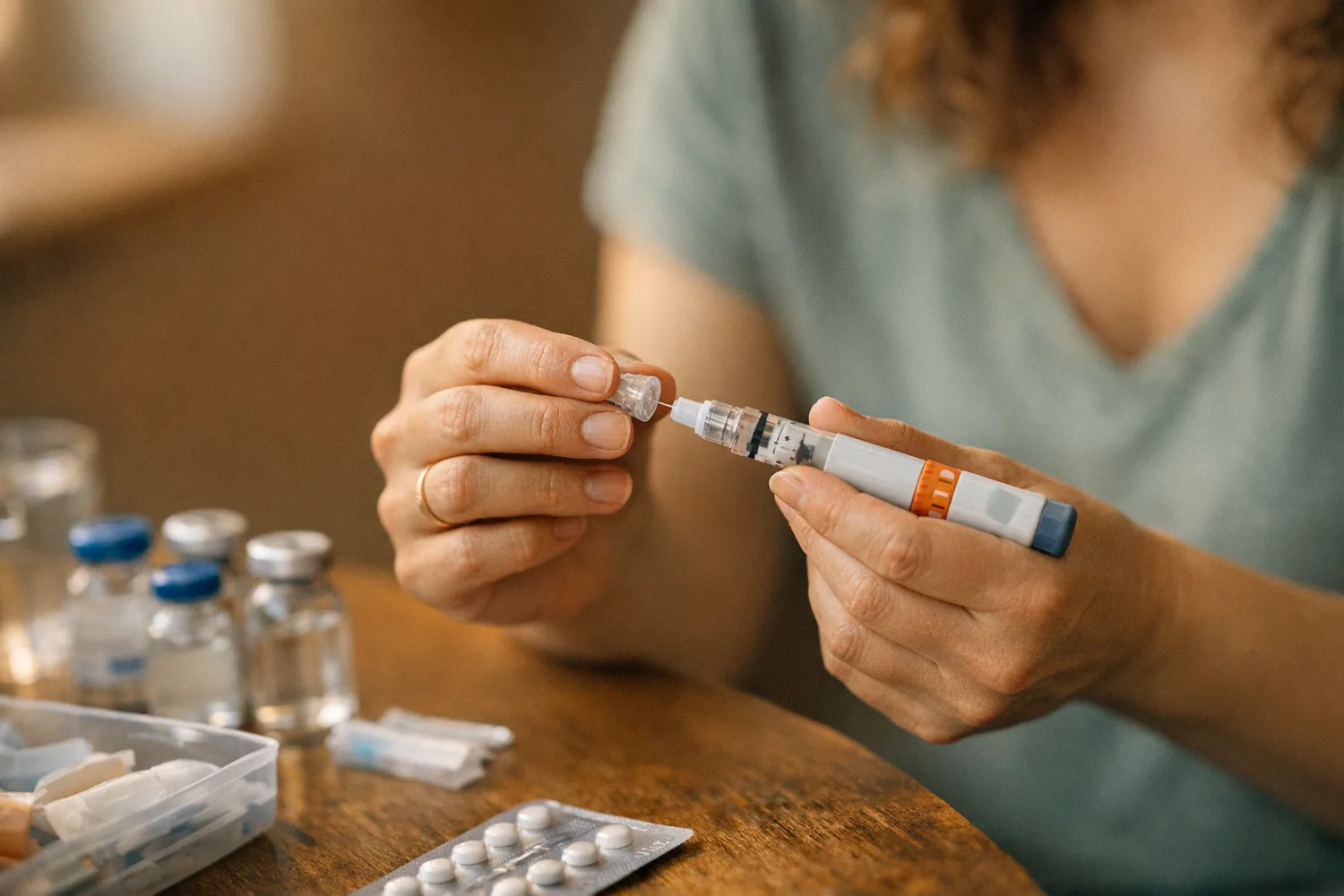
An IVF cycle feels like a roller coaster ride. Months of planning, weeks of hormone injections, one decisive day in the operating room, and then the anxious wait for the result.
Many couples begin treatment with unrealistic expectations and think of IVF as a minor procedure. Far from it. IVF is a complex, multistep process that is physically and emotionally demanding.
But don't worry: When you know what to expect, the whole thing becomes far less frightening. People who are well informed usually go into treatment much more relaxed.
IVF at a glance: timeline from initial consultation to result
IVF takes time. Much more time than most people think. From your first appointment to the pregnancy test, at least 2 to 3 months pass. Often longer.
The treatment itself takes about 6 to 8 weeks. But extensive tests come first. Afterward, possibly further attempts.
The total duration of an IVF cycle
A complete IVF cycle is divided into these phases:
- Preliminary tests: 2 to 4 weeks
- Stimulation: 10 to 14 days
- Egg retrieval: 1 day
- Lab phase: 3 to 5 days
- Embryo transfer: 1 day
- Two-week wait: 14 days
That sounds manageable. But it isn't. There are often waiting periods between the individual phases. Sometimes lab results are missing. Sometimes your cycle doesn't line up. Sometimes the clinic is fully booked.
When do you start stimulation?
The start depends on your natural cycle. Stimulation begins on day 2 or 3 of your period. Beforehand, you are often given the pill or hormones to “synchronize” your cycle.
Some clinics work with long protocols. With those, you start downregulation as early as the month before. Others prefer short protocols, which begin directly with stimulation.
Monitoring and appointments
During stimulation, you are at the clinic every 2 to 3 days. Ultrasound, blood draw, dose adjustment. That means: plan for flexible work hours or days off.
After the transfer, things calm down. Until the pregnancy test, you usually have only one follow-up appointment.
Preparation and preliminary tests
Before you start, everything gets checked. Really everything. Some couples are surprised by how extensive the diagnostic workup is. But every test has its reason.
Tests for women
Your ovaries are the focus. How many eggs are left? How do they respond to hormones? Is your uterus working as it should?
The most important tests:
- AMH level: Shows your ovarian reserve
- Hormone profile: FSH, LH, estradiol on cycle day 3
- Thyroid levels: TSH, fT3, fT4
- Hysteroscopy: Rules out fibroids or polyps
- Tubal patency check: Usually by ultrasound or HSG
The AMH level is especially important. It determines how your ovaries will respond to stimulation. Low levels often mean fewer eggs, but not automatically lower chances.
Tests for men
The semen analysis is standard. But more is often needed. Especially when the values are borderline.
Additional tests can include:
- DNA fragmentation: Shows sperm quality
- Hormone levels: Testosterone, FSH, LH
- Urological exam: If results are very poor
Sometimes it only becomes clear at this point that ICSI rather than IVF is the better option. This happens more often than you might think.
Lifestyle preparation
Three months before IVF, you should optimize your lifestyle. Why three months? That is how long egg maturation takes.
What really helps:
- Folic acid: 400 µg daily, starting no later than 4 weeks before conception (800 µg if you start later)
- Vitamin D: Supplement if you are deficient
- Normal weight: BMI between 18.5 and 24.9
- Quitting smoking: Both partners
- Cutting back on alcohol: Fewer than 2 units per week
Many women overdo it with dietary supplements. A healthy, balanced diet matters more than expensive vitamin cocktails.
Psychological preparation
IVF is emotionally taxing. Almost everyone underestimates that. The hormones make you moody. The uncertainty wears you down. The costs add stress.
Think these questions over beforehand:
- How many attempts can you afford?
- Who will you tell, and who will you not?
- How will you cope with a failed cycle?
Couples counseling before your first IVF cycle can be worth its weight in gold. Many clinics and independent counseling centers offer psychosocial fertility counseling.
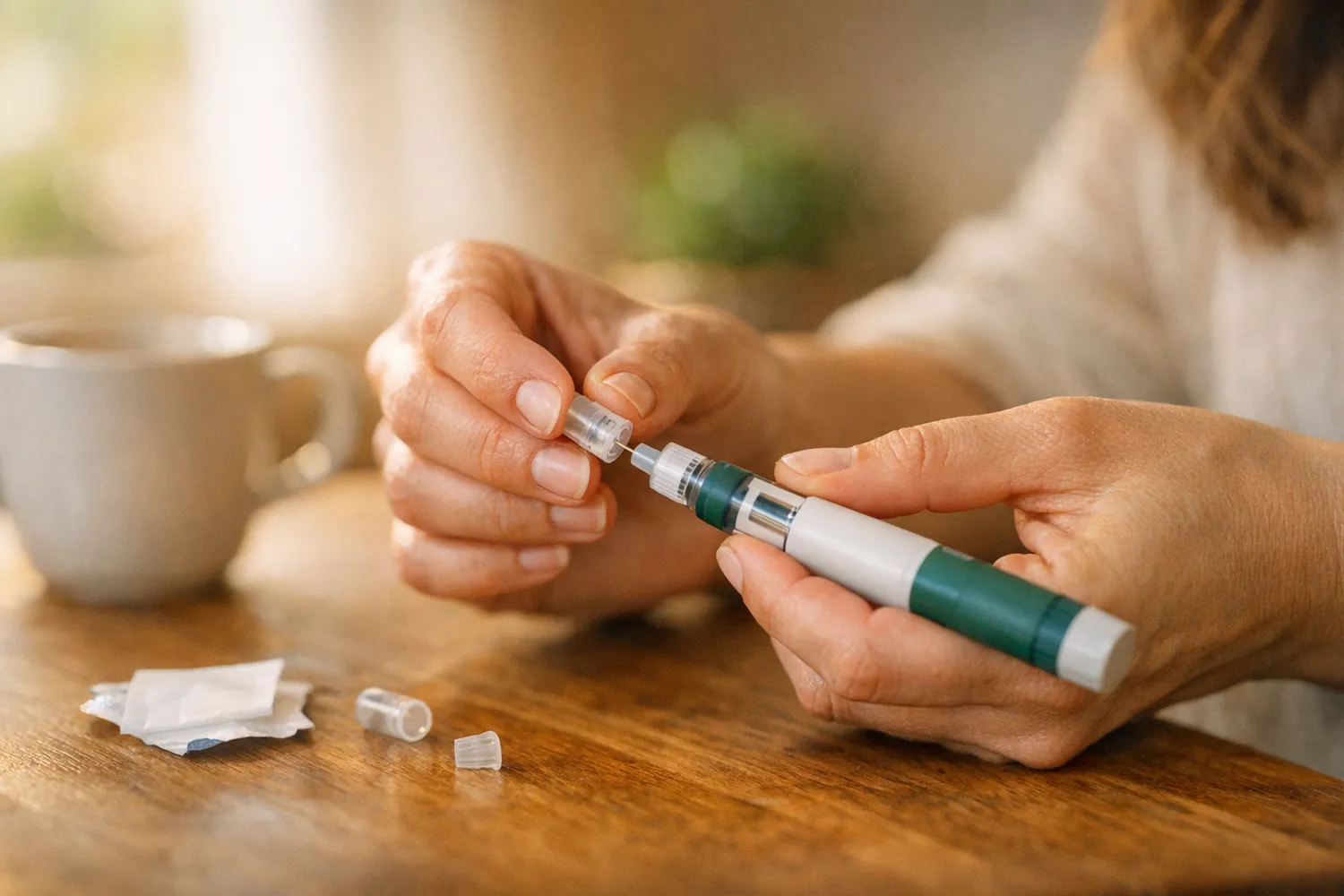
Hormone stimulation day by day
Stimulation is the heart of every IVF cycle. Normally, one egg matures per cycle. With hormones, several are encouraged to grow at once. The more eggs, the higher the chance of pregnancy.
The long protocol
With the long protocol, you start as early as the month before. GnRH agonists suppress your own hormone production. This is called downregulation.
Typical sequence:
- Day 21 of the previous cycle: Start a GnRH agonist
- Wait for your period
- Days 2 to 3: Begin stimulation with FSH/LH
- Daily: Continue both medications
The long protocol gives more control. Your ovaries can't “break through” and ovulate prematurely. On the other hand, it is more involved and more expensive.
The short protocol
Here, you start stimulation right away. From day 6, GnRH antagonists are added. They prevent premature ovulation.
Typical sequence:
- Days 2 to 3: Start FSH (follitropin alfa or beta)
- Day 6: Add a GnRH antagonist (cetrorelix or ganirelix)
- Daily: Both medications until egg retrieval
The short protocol is gentler and less expensive. It is often the first choice when AMH levels are low.
Stimulation medications
FSH (follicle-stimulating hormone):
- Follitropin alfa or follitropin beta
- Stimulates follicle growth
- Dosage: 75 to 450 IU daily
LH (luteinizing hormone):
- Lutropin alfa, also combined with follitropin alfa
- Supports egg maturation
- Only for certain patient groups: The combination with follitropin alfa is approved for women with severe LH and FSH deficiency
GnRH antagonists:
- Cetrorelix or ganirelix
- Prevent premature ovulation
- Starting at a follicle size of 12 to 14 mm
Trigger shot:
- hCG from urine or choriogonadotropin alfa (recombinant hCG), alternatively a GnRH agonist
- Triggers final egg maturation
- Exactly 36 hours before egg retrieval
All of these medications require a prescription (German Prescription Drug Ordinance, Arzneimittelverschreibungsverordnung, Annex 1). Your clinic decides which medications you receive.
Monitoring during stimulation
Every 2 to 3 days, you come in for a check. Ultrasound shows follicle growth. A blood draw measures hormone levels.
What the team looks for:
- Follicle size: Should grow by 2 to 3 mm per day
- Follicle count: 8 to 15 mature follicles is ideal
- Estradiol level: Shows hormone production
- Uterine lining: Should reach a thickness of over 8 mm
If there are too few follicles, the dose is increased. If there are too many, it is reduced or the stimulation is paused. Ovarian hyperstimulation syndrome (OHSS) is rare but dangerous.
Side effects of stimulation
Almost all women feel the hormones. This is normal and no cause for concern.
Common side effects:
- Mood swings
- Breast tenderness
- Bloating
- Mild nausea
- Fatigue
- Weight gain (mostly water retention)
Your ovaries become larger and more sensitive. You should cut back on exercise. Many people choose to abstain from intercourse.
Egg retrieval
Retrieval day is exciting. For most people, it is the first surgical procedure of their IVF treatment. Don't worry: For fertility clinics, it is routine, even if it is new to you.
Preparing for retrieval day
36 hours before: Take the trigger shot Beforehand: Fast; your clinic will tell you exactly how long In the morning: Arrive at the clinic on an empty stomach
Your care team will tell you the exact time for the trigger shot. Timing matters down to the minute. Too early or too late can impair egg quality.
The procedure itself
The retrieval takes 10 to 20 minutes. Depending on the clinic, you receive sedation or a brief general anesthesia.
Step by step:
- Positioning: Like at the gynecologist, only more sterile
- Ultrasound probe: Inserted vaginally
- Needle: Passed through the vaginal wall to the ovaries
- Follicle aspiration: Each follicle is punctured individually
- Flushing: Follicles are flushed if needed
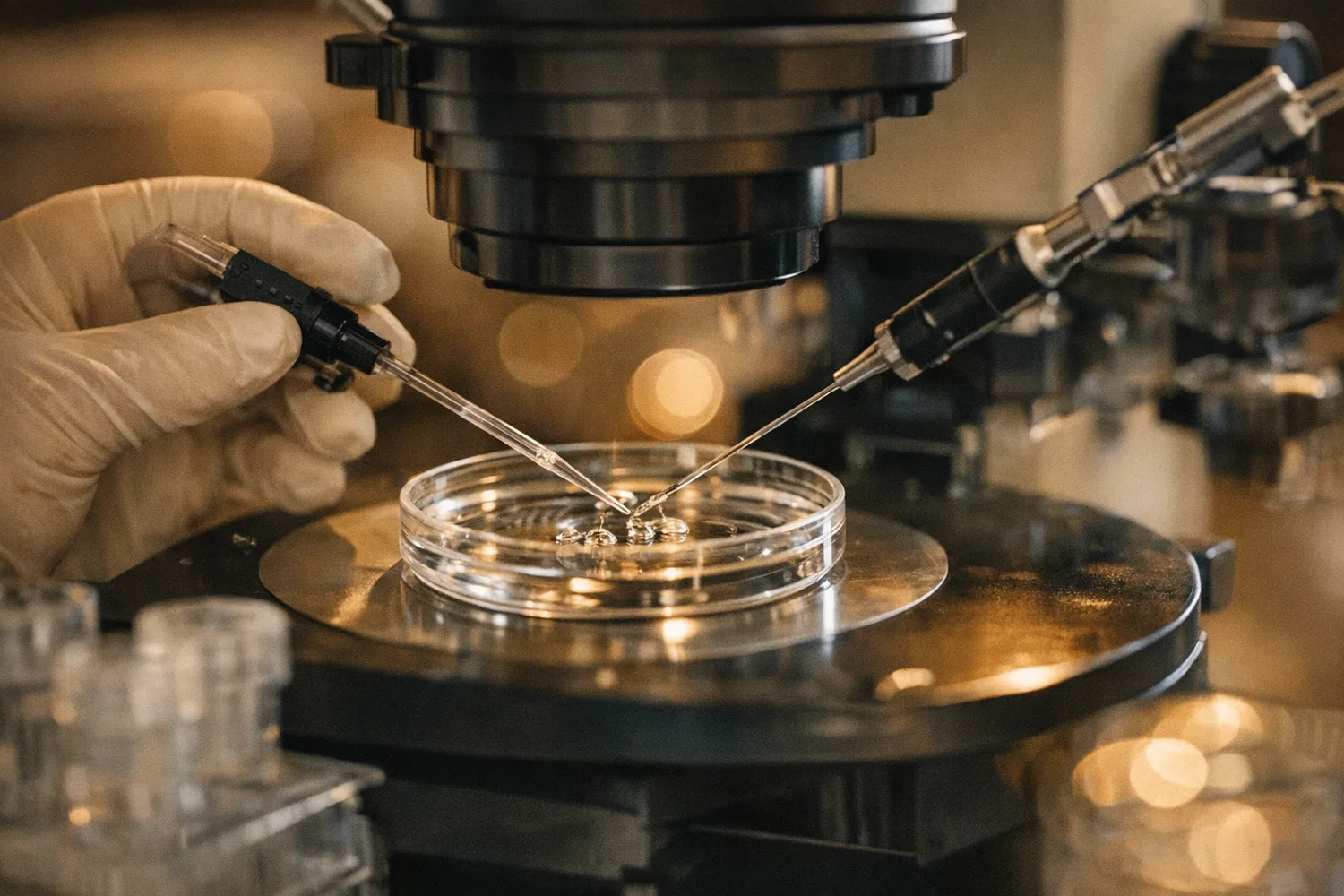
The eggs float in the follicular fluid. It is taken to the lab immediately. There, the embryologist searches for the eggs under the microscope.
Number of eggs retrieved
Not every follicle yields an egg. As a rule of thumb, 70 to 80% of the follicles that are aspirated contain an egg.
Setting realistic expectations:
- With 10 follicles aspirated: 7 to 8 eggs
- With 5 follicles aspirated: 3 to 4 eggs
- With 15 follicles aspirated: 12 eggs
Not all eggs are mature. Only mature eggs can be fertilized. The maturity rate is about 80 to 85%.
After the retrieval
You stay for observation for 1 to 2 hours. The anesthesia needs to wear off. After that, you can go home.
What is normal:
- Light bleeding
- Lower abdominal pain like during your period
- Tiredness from the anesthetic
- A bloated feeling
When to see a doctor:
- Heavy bleeding (more than a period)
- Increasing abdominal pain
- Fever above 100.4°F (38°C)
- Shortness of breath or dizziness
Most people feel normal again the next day. You should still avoid exercise for a few more days.

Fertilization in the lab
While you recover from the anesthesia, the real magic begins in the lab. Fertilization outside the body, in vitro, is a fascinating process.
Deciding between IVF and ICSI
The decision on the fertilization method is made on the day of retrieval. It depends on sperm quality and the number of eggs.
IVF (in vitro fertilization):
- Sperm and eggs are brought together
- The sperm have to penetrate the egg on their own
- Requires at least 50,000 motile sperm per egg
ICSI (intracytoplasmic sperm injection):
- A single sperm is injected directly
- Standard when sperm quality is poor
- Often makes more sense when there are only a few eggs, too
About two thirds of fresh cycles with fertilization in Germany are now performed with ICSI, 66.5% according to the 2024 German IVF Registry (Deutsches IVF-Register, D.I.R.). This shows how often male factors are involved.
The fertilization process
With IVF:
The sperm are prepared and concentrated. For each egg, about 50,000 to 100,000 sperm go into the culture dish. After 16 to 18 hours, the lab checks whether fertilization has taken place.
With ICSI:
Each mature egg is treated individually. A single sperm is injected directly into the egg with an extremely fine needle. This sounds brutal, but it is very gentle.
Fertilization rates
Not all eggs are fertilized. The rates depend on the method and on age.
Fertilization rates in Germany (German IVF Registry 2024):
| Method | Fertilization rate |
|---|---|
| IVF | 56.2% |
| ICSI | 66.4% |
With 8 mature eggs using ICSI, you can therefore expect about 5 fertilized eggs.
Embryo development day by day
The first days after fertilization are crucial. The lab checks every day how the embryos are developing.
Day 1 (16 to 18 hours after fertilization):
- Signs of fertilization visible (2 pronuclei)
- First cell division begins
Day 2:
- 2 to 4 cells
- Cells should be even in size
- Little fragmentation is desirable
Day 3:
- 6 to 8 cells
- Classic transfer day
- Quality is assessed (grade 1 to 4)
Day 5/6:
- Blastocyst stage
- Over 100 cells
- Higher chances of implantation
Assessing embryo quality
Quality determines the chances of the transfer. Labs use standardized grading systems for this.
On day 3:
- Grade 1: Excellent (even cells, no fragments)
- Grade 2: Good (slight irregularities)
- Grade 3: Fair (noticeable fragments)
- Grade 4: Poor (many fragments, uneven)
On day 5 (blastocysts):
- AA: Top quality
- AB/BA: Good quality
- BB: Acceptable quality
- CC and lower: Usually not transferred
Only about 40 to 60% of fertilized eggs develop into blastocysts suitable for transfer.

Embryo transfer
The transfer is the emotional high point of every IVF cycle. After weeks of preparation, the embryos are finally brought “home.” A simple procedure with great symbolic power.
When does the transfer take place?
Timing is crucial. In principle, there are two options:
Fresh transfer (day 3 or 5):
- Directly within the treatment cycle
- 3 or 5 days after retrieval
- The uterine lining is hormonally prepared
Frozen embryo transfer (cryo transfer):
- In a later cycle
- Embryos or fertilized eggs at the pronuclear stage are frozen and thawed later
- Natural cycle with your own ovulation, natural cycle with a trigger shot (hCG), or a hormonally prepared, artificial cycle; if ovulation is irregular, for example with PCOS, also a cycle with ovulation-inducing pills such as letrozole (prescription-only, in Germany approved only for breast cancer after menopause, used off-label in fertility treatment; according to the prescribing information, it is actually contraindicated in women before menopause, so only after your doctor has informed you about it)
Today, more and more transfers are postponed. In 2024, 37.5% of all started treatment cycles in Germany were frozen embryo transfer cycles. In first retrievals with a fresh transfer, embryos were additionally frozen in 32.9% of cases in 2018 and in 47.4% in 2024 (German IVF Registry, Yearbook 2024, pp. 24 and 33).
Freeze-all, meaning freezing all embryos without a fresh transfer, lowers the risk of ovarian hyperstimulation (OHSS). Overall, the chance of having a baby is not higher than with a fresh transfer, it takes longer to get pregnant, and high blood pressure in pregnancy is more common (Cochrane 2021). ESHRE recommends freeze-all only with a clear reason, such as a risk of ovarian hyperstimulation, problems with the uterine lining, or preimplantation genetic testing (ESHRE 2023). Cycle types, the day-by-day process, success rates, and costs are covered in the frozen embryo transfer article.
Preparing for the transfer
With a fresh transfer: The stimulation has already prepared your uterine lining. You receive progesterone to support the luteal phase.
With a frozen embryo transfer: There are three approaches to a frozen embryo transfer, and a fourth if ovulation is irregular: the natural cycle with your own ovulation, the natural cycle with a trigger shot (hCG), the artificial cycle with estrogen tablets (estradiol, prescription-only) followed by progesterone, and, if ovulation is irregular, a cycle in which tablets such as letrozole induce ovulation. With regular ovulation, the natural cycle is at least as successful, with fewer miscarriages (Martins and Nastri 2026) and, in the largest study, less preeclampsia (Wei 2026). In the artificial cycle, no corpus luteum forms, which is why progesterone is given into early pregnancy.
The transfer procedure
The transfer is painless and takes only a few minutes. You lie down as you would at a gynecologist appointment, but you don't need to be fasting.
Step by step:
- Preparation: A speculum is inserted
- Catheter: A thin tube through the cervix
- Loading: The embryo(s) are drawn up into the catheter
- Transfer: Careful placement in the uterus
- Check: Ultrasound confirms the position
You can see the embryo on the ultrasound monitor as a small bright dot. Many couples are moved by this moment.
What happens on transfer day and what the guidelines say about behavior afterward is covered in the article Frozen embryo transfer and embryo transfer.
Single vs. double embryo transfer
Less is often more. In Germany, among women up to age 35 with a good prognosis, one embryo led to at least as many births as two: 32.8% versus 30.5% per transfer (first fresh cycles 2023, not randomized; German IVF Registry, Yearbook 2024, p. 34).
Single embryo transfer (SET):
- Standard for good-quality blastocysts
- Drastically reduces the risk of twins
- Two single transfers in a row achieve about the same live birth rate as one double transfer (relative risk 0.95; 0.82 to 1.10; Cochrane, Kamath 2020; low certainty of evidence)
Double embryo transfer (DET): In practice, two embryos are more often transferred when embryo quality is lower, after several unsuccessful attempts, or in older women. The 2024 ESHRE guideline recommends single embryo transfer even then, as a strong recommendation: Neither earlier failed attempts nor age justify a double transfer on their own. According to the guideline, no single factor on its own justifies two embryos at all. The British NICE guideline NG257 takes a different view: It allows two embryos to be considered at ages 40 to 41, but never more than two.
The risk of multiples after a double transfer was around 13% in studies (Cochrane, Kamath 2020). In German frozen cycles in 2023, 19.3% of births after a double transfer were multiples (German IVF Registry, Yearbook 2024, p. 31). For young women with a good prognosis, the figure in fresh cycles in 2023 was 31.7% of births, and 1.6% after single transfer (p. 34). Twin pregnancies have considerably higher complication rates.
After the transfer
The first few hours: You can get up right after the transfer and go home. Staying in bed does not improve your chances: ESHRE advises against bed rest, and according to NICE, lying down for more than 20 minutes brings no benefit (ESHRE 2022; NICE NG257).
The next few days:
- Normal activity is allowed
- Listen to your body
- Take your progesterone consistently
We did not find evidence in the ESHRE and NICE guidelines for restrictions such as exercise, sauna, or sex. Follow your clinic's instructions.
Implantation
The embryo “hatches” from its shell and implants in the uterine lining. With natural conception, this happened 8 to 10 days after ovulation in 84% of pregnancies that lasted at least until six weeks after the last period (Wilcox 1999). Applied to IVF, this corresponds to about day 3 to 5 after a blastocyst transfer and day 5 to 7 after a day 3 transfer. This is an analogy, not a measurement after IVF.
Possible signs of implantation:
- Light bleeding (implantation bleeding)
- A pulling sensation in the lower abdomen
- Breast tenderness
- Fatigue
But be careful: These symptoms can also come from the hormones. Don't rely on them.
The two-week wait: two weeks of uncertainty
The two-week wait is the hardest part of the whole IVF process for many people. Depending on the clinic, there are about 9 to 14 days between a blastocyst transfer and the blood test, and about 11 to 16 days after a day 3 transfer. Days full of hope, fear, and overinterpreting every little symptom.
Why does the wait take so long?
The pregnancy hormone hCG first has to rise. Right after implantation, the levels are still too low for a test. Clinics usually measure the first hCG level 9 to 17 days after the transfer; there is no recommendation for a specific day (Trautner 2024).
Timeline:
- About day 3 to 5 after a blastocyst transfer (day 5 to 7 after a day 3 transfer): Implantation, derived from data on natural conception (Wilcox 1999)
- From implantation onward: The embryo produces hCG, and the levels rise from day to day. In the first days after implantation, hCG doubles about every 1 to 2 days according to the guideline (AWMF 015-076)
- About day 9 to 14 after a blastocyst transfer (day 11 to 16 after a day 3 transfer): Blood test at the clinic; your clinic sets the exact day
The IVF Due Date Calculator shows the window in which the blood test is usual for your transfer and how many weeks pregnant you will be by then; your clinic will tell you the exact test day.
Symptoms during the wait
Many women look for signs. Understandable, but often misleading.
Possible signs of pregnancy:
- A missed period
- Breast tenderness
- Nausea
- Fatigue
- Mood swings
The problem: The progesterone you receive after the transfer can cause similar symptoms and can also delay your next period. It is therefore impossible to tell whether a sign comes from pregnancy or from the hormones.
Early tests: blessing or curse?
Many people can't resist and test early at home. That is understandable. But it brings more stress than clarity.
Why early tests are problematic:
- False negative results are possible: Urine tests only turn positive from about 20 to 50 IU/l, and faintly positive tests are easily read as negative (AWMF 015-076)
- The trigger shot can cause false positive tests: If it contains hCG, it can affect tests in blood and urine for up to 10 days, and additional hCG injections extend this time (prescribing information for choriogonadotropin alfa and for hCG from urine)
- An early positive test can still end in a biochemical pregnancy (see below)
- Emotionally stressful with a negative result
If you do test at home: The IVF Due Date Calculator shows a urine test only from day 11 after a blastocyst transfer and from day 13 after a day 3 transfer. This is our own derivation from clinical practice information; we did not find a study that evaluates urine tests after IVF day by day. Don't take the result as final; the blood test at your clinic is the reliable one.
Coping with uncertainty
Helpful strategies:
- Distraction: Work, hobbies, social contact
- Relaxation: Meditation, yoga, walks
- Realism: Even under good conditions, not every transfer leads to pregnancy. According to the German IVF Registry, 43.1% of transfers after IVF and 40.4% after ICSI in women up to age 29 led to a clinical pregnancy (2019 to 2023); the rates fall with age, see Success rates by age
- Support: Partner, friends, or support groups
Less helpful:
- Googling symptoms
- Listening to your body every hour
- Reading forums full of horror stories
- Isolation and rumination
The pregnancy test
Blood test vs. urine test:
The blood test is more accurate. It measures the exact hCG concentration. Urine tests can still be negative at low levels.
What the hCG level shows:
In the blood, an hCG level above 5 IU/l points to a pregnancy (AWMF 015-076). A single value says little; the trend across two measurements is more informative. In IVF pregnancies that later resulted in a birth, hCG rose by an average of 124% in two days (Chung 2006); slower rises also occur in viable pregnancies.
Your clinic will interpret your result. The hCG chart shows published study values.
Biochemical pregnancies
Sometimes the first test is positive, but the hCG levels fall again. This is called a biochemical pregnancy or early miscarriage.
How often this happens depends on the study, the day of measurement, and the definition. In a Turkish study of single blastocyst transfers, 75 of 738 positive tests after fresh transfer and 263 of 2,500 after frozen transfer ended as a biochemical pregnancy, about 10% each (Ozer 2023). In a US study, it was 271 of 1,340 single transfers with detectable hCG, about 20% (Hughes 2022, our own calculation). A biochemical pregnancy is frustrating. Your clinic will discuss with you what it means for your next attempt.
Success rates by age and attempt
The statistics are brutally honest. With every year, your chance of pregnancy declines. After every unsuccessful attempt, you ask yourself: Is another one worth it?
Age-related success rates
Age is the most important prognostic factor. It is not the number of eggs but their quality that decides.
Pregnancy and live birth rates per transfer (German IVF Registry, fresh ICSI cycles 2019 to 2023):
| Age | Clinical pregnancy | Live birth |
|---|---|---|
| up to 29 | 40.4% | 32.7% |
| 30 to 34 | 38.2% | 30.4% |
| 35 to 39 | 30.2% | 21.5% |
| 40 | 21.8% | 13.0% |
| 42 | 14.7% | 7.3% |
| 44 | 8.1% | 2.9% |
| 45 and older | 3.8% | 1.1% |
These figures are averages. Your individual prognosis may be better or worse.
Frozen embryo transfer compared: In frozen cycles in 2024, 31.5% of transfers led to a clinical pregnancy, compared with 30.5% for fresh transfers. For births in 2023, the figures were at least 21.9% per frozen transfer and 22.5% per fresh transfer, in each case all age groups combined (German IVF Registry, Yearbook 2024, pp. 8, 22, 24, and 25). The groups are not directly comparable. More on this in the article frozen embryo transfer.
Live birth rates
Pregnancy is not the same as a baby. Miscarriages are unfortunately common, especially with increasing age.
The gap between the pregnancy rate and the live birth rate widens with age, as the table above also shows. According to the German IVF Registry (IVF and ICSI, 2019 to 2023), fewer than one in five clinical pregnancies ends in a miscarriage up to age 35. At age 40, it is 36.1%, and from age 45, 68.4%.
Cumulative success rates
Most people need several attempts. The cumulative rates show your overall chances after several cycles.
Cumulative rates according to the German IVF Registry:
- Clinical pregnancy after transfers (2020 to 2023): 33.8% after one, 53.0% after two, 63.6% after three, and 69.0% after four transfers (pregnancies are counted, not births, all age groups combined)
- Births from one egg retrieval (2018 to 2022): Only first retrievals after which embryos were frozen are included (54,019 of 146,970 first retrievals without freeze-all), all age groups combined. In this group, there were 30 births per 100 retrievals after the fresh transfer and 54.8 in total including the subsequent frozen transfer cycles.
These figures are more realistic than looking at a single transfer. Over several transfers, the chances rise considerably, but depend heavily on age: After more than four transfers, the registry (2020 to 2023) reports 71.2 clinical pregnancies per 100 women at ages 35 to 39, and 37.5 from age 40.
Factors for a better prognosis
Positive prognostic factors:
- High AMH level (above 2 ng/ml)
- Good egg quality
- Normal weight (BMI 18.5 to 24.9)
- Nonsmoker
- Short duration of infertility
- Blastocyst transfer
- Good sperm quality
Negative prognostic factors:
- Low AMH level (below 1 ng/ml)
- Endometriosis
- PCOS with insulin resistance
- Overweight or underweight
- Smoking
- A long series of unsuccessful attempts
Realistic expectations
Example: A 40-year-old woman has had three unsuccessful ICSI attempts and wonders what her chances are. Honestly: not good. But not impossible.
What matters in this situation:
- Statistics apply to groups, not individuals
- Every cycle is a new chance
- But at some point, it makes sense to stop
- There are always alternatives
Good counseling gives hope without making false promises.
What if it doesn't work: next steps
A negative pregnancy test feels like a punch in the stomach. Weeks of preparation, hope, money, all for nothing. This disappointment is justified and important. Allow yourself to feel it.
Take a breath first
After a negative test, most couples first need time to process the disappointment. Take that time before you decide on next steps. After that, a review consultation with your fertility clinic is worthwhile: What can be learned from this cycle, and what might go differently in the next attempt?
Conclusion
IVF follows clear steps: preliminary tests, stimulation, egg retrieval, fertilization in the lab, embryo transfer, and the wait until the test. Each of these steps takes time and energy, and not every cycle ends in success. If you know the process, you can plan better and deal more realistically with your own chances. Talk openly with your fertility clinic about your prognosis, your questions, and your limits.
Sources
- Yearbook 2024, German IVF Registry (D.I.R.), 2025
- In vitro fertilization (IVF), familienplanung.de (Federal Institute for Public Health), 2026
- ESHRE guideline: ovarian stimulation for IVF/ICSI, an update in 2025, ESHRE / Human Reproduction, 2026
- Number of embryos for transfer following in vitro fertilisation or intra-cytoplasmic sperm injection, Cochrane Database of Systematic Reviews, 2020
- Post-embryo transfer interventions for assisted reproduction technology cycles, Cochrane Database of Systematic Reviews, 2014
- Folic acid supplements: recommendations for action, Healthy Start Network (Netzwerk Gesund ins Leben), 2026
- S2k guideline: Early pregnancy loss in the first trimester, AWMF 015-076, version 1.2, DGGG, OEGGG, and SGGG, January 2025
- Trautner PS et al.: Single day 14 serum hCG values allow prediction of viable pregnancy and are significantly higher in frozen as compared to fresh single blastocyst transfer, J Assist Reprod Genet 2024;41(8):2193-2200
- Chung K et al.: Defining the rise of serum HCG in viable pregnancies achieved through use of IVF, Hum Reprod 2006;21(3):823-828
- Wilcox AJ et al.: Time of implantation of the conceptus and loss of pregnancy, N Engl J Med 1999;340(23):1796-1799
- Ozer G: Initial β-hCG levels and 2-day-later increase rates effectively predict pregnancy outcomes in single blastocyst transfer in frozen-thawed or fresh cycles: A retrospective cohort study, Medicine (Baltimore) 2023;102(42):e35605
- Hughes LM et al.: Early β-hCG levels predict live birth after single embryo transfer, J Assist Reprod Genet 2022;39(10):2355-2364
- Ovitrelle: Summary of product characteristics, section 4.4, European Medicines Agency (EMA), accessed 2026
- Prescribing information Brevactid 5,000 IU, sections 4.4 and 5.2, as of February 2024
- Zaat T et al.: Fresh versus frozen embryo transfers in assisted reproduction, Cochrane Database Syst Rev 2021, CD011184.pub3
- ESHRE: Good practice recommendations on add-ons in reproductive medicine, Hum Reprod 2023;38(11):2062-2104
- Martins WP, Nastri CO: Meta-analysis of randomized trials on ovulatory cycle versus artificial cycle in frozen embryo transfer, Ultrasound Obstet Gynecol 2026
- Wei D et al.: Randomized trial of natural versus artificial cycle in frozen embryo transfer, BMJ 2026;392:e087045
- Prescribing information letrozole 2.5 mg, section 4.1, as of April 2025
- Prescribing information letrozole 2.5 mg film-coated tablets, section 4.3, as of August 2023
- German Prescription Drug Ordinance (AMVV), Annex 1, Federal Ministry of Justice (Bundesministerium der Justiz), accessed October 2026
- ESHRE: Recommendations on embryo transfer technique, Hum Reprod Open 2022(4):hoac038
- NICE guideline NG257: Fertility problems, assessment and treatment, recommendations 1.49.4 and 1.49.6, National Institute for Health and Care Excellence, March 31, 2026
- ESHRE guideline on the number of embryos transferred, Hum Reprod 2024;39(4):647 ff.