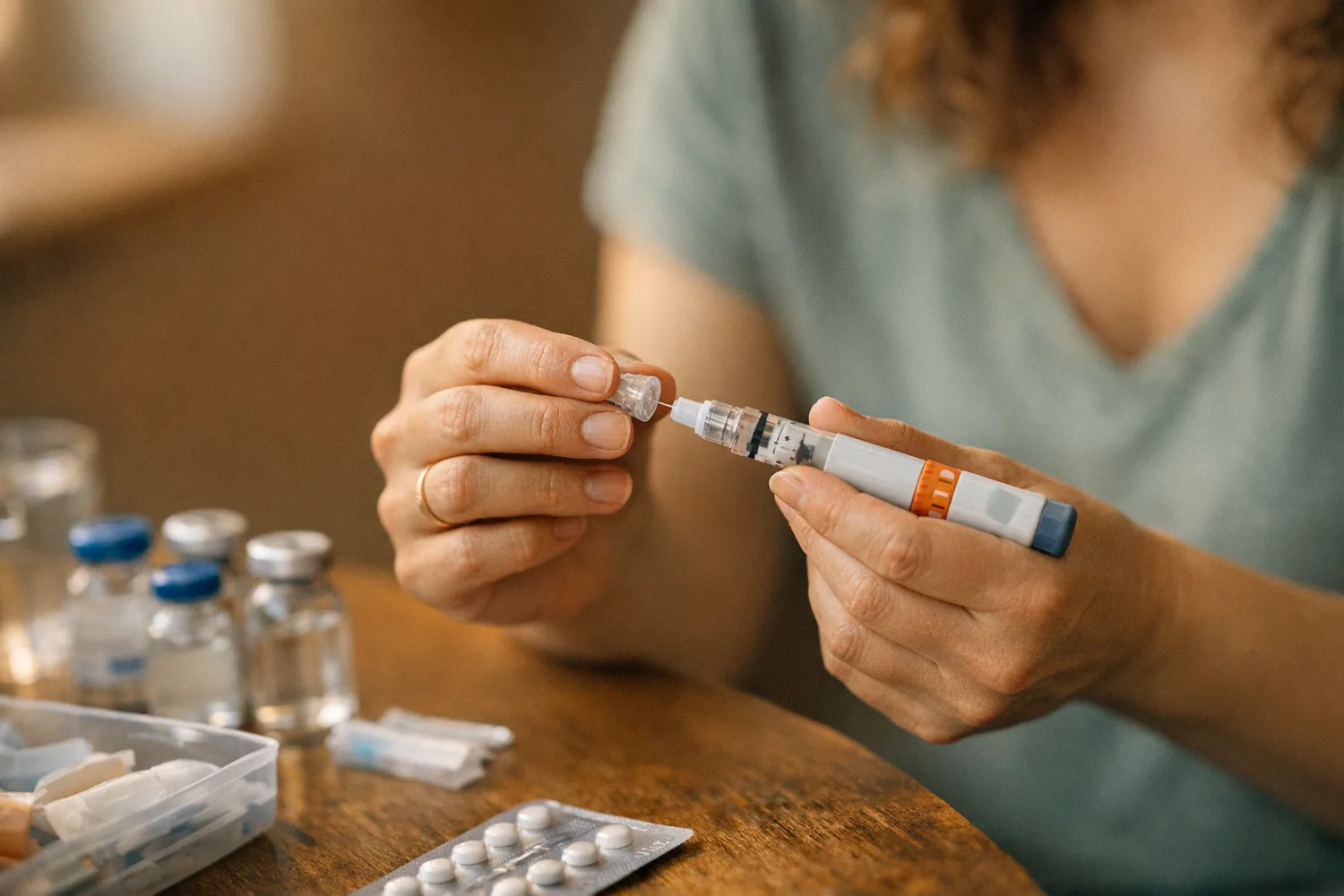
Many couples long for a baby, and sometimes nature just needs a little nudge. That is exactly where hormone treatment comes in.
Targeted hormone stimulation can help many couples have the child they hope for. But hormone treatment is not a miracle cure. It takes patience, understanding, and the right medical support.
Here you will find everything you need to know about fertility drugs and hormone treatment when you are trying to conceive. From the first pills to a positive pregnancy test.
When hormone treatment makes sense
Hormone treatment is not an option for everyone who wants to conceive. Whether it is really the right solution should always be checked thoroughly beforehand.
Cycle disorders and ovulation problems
The most common reason for hormone stimulation is irregular cycles. If you do not ovulate or only ovulate sporadically, hormones can help.
Typical signs are cycles shorter than 21 days or longer than 35 days. Periods that stop completely also point to ovulation problems. Many of those affected never know exactly when they ovulate.
Polycystic ovary syndrome (PCOS) is a classic example. Here, the ovaries produce too many male hormones. The result: Ovulation is suppressed. Treatment for getting pregnant with PCOS can target this specifically.
Poor follicle maturation and low hormone levels
Sometimes the egg sacs (follicles) do not mature properly. This shows up on an ultrasound check or in blood hormone measurements.
Low FSH levels or a weak LH surge can be indications. Stimulation can also become worthwhile when anti-Müllerian hormone (AMH) is low.
In women over 35, egg quality declines more often. Here, gentle stimulation can improve the chances. You can find more about this in our article on getting pregnant from age 35.
Preparing for assisted reproduction
Hormone treatment is not always the first step. Often it prepares the body for further treatments.
For an IUI (insemination), stimulation is usually mild, with the aim of getting one to two mature eggs. IVF or ICSI needs more eggs. Here, stimulation is stronger.
Giving hormones also makes the cycle easier to plan. This is important for coordinating the timing of treatment.

Overview of medications: clomiphene, letrozole, gonadotropins
The choice of hormones depends on your individual situation. Each medication has its strengths and areas of use.
Clomiphene: the classic for getting started
Clomiphene was the first-choice medication for a long time. It blocks estrogen receptors in the brain and so stimulates the body’s own hormone production.
Treatment is simple: You take pills for five days, usually from cycle day 3 to 7. The dose is between 50 and 150 mg daily.
Clomiphene works well in women who ovulate rarely. In a large study of women with PCOS, ovulation occurred in 48.3% of cycles on clomiphene. Within up to five cycles, 27.4% of the women became pregnant, and 19.1% had a baby.
Advantages of clomiphene:
- Simple to take as a pill
- Inexpensive
- Few side effects
- Good ovulation rates
Disadvantages:
- Sometimes impairs the uterine lining
- Cervical mucus can become thicker
- Multiple pregnancies possible (5% to 10%)
Letrozole: the modern alternative
In Germany, letrozole is approved only for the treatment of breast cancer after menopause. When trying to conceive, it is used off-label, and according to the German prescribing information it is actually ruled out for women before menopause. It is available by prescription only and is given only after a doctor has informed you about the treatment. A pregnancy must be ruled out beforehand. Letrozole inhibits estrogen production and thereby stimulates ovulation.
It is taken much like clomiphene: five days, usually 2.5 to 7.5 mg daily. The side effects differ: In the large PCOS study, fewer women on letrozole had hot flashes than on clomiphene (20.3% versus 33.0%), but more had fatigue (21.7% versus 14.9%) and dizziness (12.3% versus 7.6%).
Studies show that letrozole is even more successful than clomiphene in women with PCOS. In the study mentioned, 27.5% of the women had a baby with letrozole and 19.1% with clomiphene. The 2023 international PCOS guideline therefore recommends letrozole as the first choice for inducing ovulation.
Advantages of letrozole:
- Hot flashes less common than with clomiphene
- In PCOS, more births than with clomiphene
- First choice for inducing ovulation according to the international PCOS guideline
Disadvantages:
- Off-label use: not approved for fertility treatment, and according to the prescribing information actually ruled out before menopause
- Fatigue and dizziness more common than with clomiphene
- Somewhat more expensive than clomiphene
- Less long-term experience
Multiples: In studies, there is no definite difference compared with clomiphene. In the Cochrane review of women with PCOS, the rate of multiples was 1.6% with letrozole and 2.2% with clomiphene, and the difference was not robust (Franik 2022). In the large PCOS study as well, the difference in twins was not significant (Legro 2014).
Gonadotropins: the heavy hitters
Gonadotropins are the body’s own hormones or their synthetic versions. FSH stimulates follicle growth, and LH triggers ovulation.
These medications are injected (either under the skin or into the muscle). Treatment usually lasts 8 to 14 days and requires close monitoring.
There are various preparations: rFSH (recombinant), hMG (from urine), and GnRH agonists or antagonists for fine-tuning.
Advantages of gonadotropins:
- Direct stimulation of the ovaries
- Individual dose adjustment
- Targeted ovulation possible
- Required for IVF/ICSI
Disadvantages:
- Daily injections
- Expensive
- Risk of overstimulation
- Intensive monitoring required

The process step by step
Hormone treatment follows a clear sequence. Every step is important for success.
Preparation and diagnostics
A thorough examination comes before hormone treatment starts. Blood draws show your hormone levels, and ultrasound shows the condition of your ovaries. Our guide to infertility explains which causes are possible and how the evaluation works.
Important preliminary tests are:
- Hormone profile (FSH, LH, estradiol, AMH)
- Progesterone in the second half of the cycle, about 7 days after ovulation, to confirm ovulation. With a regular cycle, the guidelines disagree: The DACH guideline (the German, Austrian, and Swiss guideline) on the infertility work-up (2026) and the British NICE guideline call for the measurement. The DACH guideline on recurrent miscarriage (2026) and the European professional society ESHRE (weak recommendation) do not consider routine measurement necessary in that case.
- Thyroid levels
- Prolactin
- Ultrasound of the ovaries
- Tubal patency
Your partner also needs a semen analysis. Male factors play a part in 40% of couples.
Starting stimulation
When treatment starts depends on your cycle. With clomiphene or letrozole, you usually begin taking it on cycle day 3.
Gonadotropins often start later, sometimes after pretreatment with the birth control pill or GnRH agonists. This synchronizes your cycle and makes treatment easier to plan.
The first dose is usually chosen conservatively. It is better to start cautiously and increase if needed. Every body reacts differently to hormones.
Monitoring and dose adjustment
During stimulation, check-up appointments every 2 to 3 days are common. Ultrasound measures follicle size, and blood draws show hormone levels.
Ideally, one to two follicles grow to 18 to 20 mm. If there are too many follicles, the cycle is canceled (the risk of multiple pregnancy would be too high).
The hormone levels have to match the follicle size. If estrogen rises too much, overstimulation is a risk. The dose is then reduced or stimulation is paused.
Ovulation trigger and timing
Once the follicles are mature, ovulation is triggered. For this, hCG or a GnRH agonist is injected. Ovulation occurs 36 to 40 hours later.
Timing is critical. If you are trying to conceive naturally, you should have intercourse on the two days after the trigger shot.
With an IUI, the insemination takes place 36 hours after the trigger. With IVF, the eggs are retrieved after exactly 36 hours.
Luteal phase and pregnancy test
After ovulation, the luteal phase begins. After IVF or ICSI, you receive progesterone starting at egg retrieval, usually as a vaginal capsule or gel, less often as an injection. The professional societies recommend this. After an insemination with hormone injections, progesterone may possibly improve the chances, but the evidence is uncertain. After cycles with pills only, such as clomiphene or letrozole, and in a natural cycle, a benefit has not been shown.
In Germany, progesterone is available by prescription only. According to the prescribing information, the vaginal preparations and the injection for luteal phase support are approved for assisted reproduction. Whether insemination falls under this is not clear: According to the international ICMART glossary (2017), it does not, whereas the guideline of the German Medical Association on assisted reproduction (2018) expressly includes it. Ask your doctor’s office about the approval status.
The pregnancy test follows 14 days after the ovulation trigger. Even though the wait is hard, earlier tests are often unreliable.
After a negative result, one cycle is usually paused. The body needs time to recover, and the treatment can be adjusted.
Hormone treatment for IUI vs IVF vs ICSI
Hormone stimulation differs depending on the planned treatment. Each method has its own requirements.
Stimulation for insemination (IUI)
With IUI, the goal is controlled but gentle stimulation. The aim is one to at most two mature follicles.
Treatment usually begins with clomiphene or letrozole. If the response is weak, it switches to low-dose gonadotropins. Monitoring is done by ultrasound.
An IUI only makes sense if the fallopian tubes are open and the sperm is of sufficient quality. You can find more details in our IUI treatment guide.
Typical stimulation protocol for IUI:
- Clomiphene 50 to 100 mg on days 3 to 7
- Or letrozole 2.5 to 5 mg on days 3 to 7
- Ultrasound check from day 10
- Ovulation trigger when follicles are >18 mm
- IUI 36 hours later
IVF stimulation: more eggs needed
IVF requires significantly more eggs (ideally 8 to 15). The stimulation is correspondingly more intensive and takes longer.
An antagonist protocol is usually used. You inject gonadotropins daily and, from day 5 to 6, a GnRH antagonist as well. This prevents premature ovulation.
Monitoring is closer: ultrasound and hormone checks every 1 to 2 days. The dose is individually adjusted to your response.
Typical IVF protocol:
- Gonadotropins from day 2 to 3
- GnRH antagonist from day 5 to 6
- Check-ups every 1 to 2 days
- Egg retrieval when >3 follicles are ≥17 mm
- Embryo transfer 3 to 5 days later
ICSI: similar to IVF
Stimulation for ICSI hardly differs from that for IVF. Here too, several mature eggs are needed for fertilization in the lab.
The only difference: With very poor sperm quality, fewer eggs are sometimes enough. Each one can be fertilized by ICSI.
You can learn more about ICSI cost and the differences from IVF in our detailed comparison.

Success rates by method and age
The chances of success depend on many factors. Your age plays the most important role, but so does the cause of infertility.
Pregnancy rates by age group
The older you are, the lower the chances of success. This is mainly due to declining egg quality.
| Age group | IUI with partner sperm (per insemination) | IVF/ICSI (per embryo transfer) |
|---|---|---|
| up to 29 years | 11.3% (25 to 29 years) | 40% to 43% |
| 30 to 34 years | 10.3% | 38% to 39% |
| 35 to 39 years | 9.7% | 30% to 32% |
| 40 to 44 years | 6.4% | 8% to 24% (depending on age) |
| 45 years and older | no data | approx. 4% |
The values come from the 2024 yearbook of the German IVF Registry (Deutsches IVF-Register, D.I.R.; treatments 2019 to 2023) and report clinical pregnancies. These are averages, and individual factors can greatly affect the outlook.
For ovulation induction with pills and intercourse timed to the cycle, there are no comparable German registry data. In the large PCOS study, over up to five cycles, 27.5% (letrozole) and 19.1% (clomiphene) of the women had a baby.
Factors that affect treatment success
Besides age, there are other important influencing factors:
Duration of infertility: The longer you have been trying unsuccessfully to get pregnant, the lower the chances of success. After one year, they are higher than after five years.
BMI: Being underweight or overweight worsens the outlook. A BMI between 20 and 25 is optimal for fertility.
Smoking status: Smoking significantly lowers the chances of success. Both partners should quit at least three months before treatment starts.
AMH level: Anti-Müllerian hormone indicates the ovarian reserve. Low values mean a poorer outlook, but not hopelessness.
Cumulative success rates
A single treatment attempt is rarely decisive. Most couples need several cycles.
How many women become pregnant after several cycles with pills depends heavily on the cause. In the large PCOS study, within up to five cycles, 41.2% of the women on letrozole and 27.4% on clomiphene became pregnant. With IVF/ICSI, according to the German IVF Registry, the cumulative clinical pregnancy rate is 63.6% after three transfers and 69.0% after four.
The definition of “success” also matters. What counts is not only pregnancies, but live births. Unfortunately, not every pregnancy ends with a healthy baby.
Side effects and risks, including ovarian hyperstimulation syndrome (OHSS)
No treatment is without risks. With hormone therapies, there are both common, harmless side effects and rare but serious ones.
Common side effects
Most patients tolerate hormones well. Still, symptoms can occur:
Typical clomiphene side effects:
- Hot flashes
- Headaches
- Nausea
- Mood swings
- Visual disturbances (rare, but stop taking it immediately!)
Gonadotropin side effects:
- Reactions at the injection site
- Breast tenderness
- Bloated abdomen
- Fatigue
- Irritability
Most symptoms are temporary and subside after the cycle. Visual disturbances with clomiphene are a warning sign. In that case, treatment must be stopped immediately.
Ovarian hyperstimulation syndrome (OHSS)
OHSS is the most feared complication. The ovaries react excessively to the hormones and swell massively.
Mild OHSS symptoms:
- Bloated, tight abdomen
- Weight gain (2 to 7 lb, or 1 to 3 kg)
- Mild nausea
- Pulling sensation in the lower abdomen
Severe OHSS (emergency!):
- Massive weight gain (more than 11 lb, or 5 kg)
- Shortness of breath
- Severe nausea and vomiting
- Reduced urine output
- Dizziness
Severe OHSS can become life-threatening. Fluid collects in the abdominal cavity, the blood thickens, and blood clots (thromboses) are a risk.
The risk is highest in young women with PCOS. That is why these patients are monitored especially closely and treated with lower doses.
Multiple pregnancies
Hormones increase the risk of twins or triplets considerably. With clomiphene, the twin rate is 5% to 10%, and with gonadotropins it is even higher.
Multiples mean higher risks for the mother and the babies:
- Preterm birth
- Low birth weight
- Gestational diabetes
- High blood pressure
- Higher cesarean rate
That is why great care is taken to make sure that not too many follicles mature. If necessary, the cycle is canceled.
Long-term risks
Some women ask about the long-term effects of hormones. The good news: Serious late effects are very rare.
Earlier concerns about ovarian cancer have not been confirmed. A study of more than 50,000 women found no increased risk after hormone treatments.
You can find more on this important topic in our article on long-term effects of hormone treatment for fertility.
Costs in Germany, Austria, and Switzerland
This section applies to Germany, Austria, and Switzerland.
The costs of hormone treatments vary considerably depending on the medication and the country. Here is a detailed overview.
Germany: costs and price differences
In Germany, medication prices vary widely depending on the manufacturer and the pharmacy.
Clomiphene costs:
- Generics: €15 to €25 per cycle
- Brand-name products: €35 to €50 per cycle
- Complete with monitoring: €200 to €300
Letrozole costs:
- Off-label prescription: €20 to €40 per cycle
- Private prescription often required
- With monitoring: €250 to €350
Gonadotropin costs:
- FSH products: €300 to €800 per cycle
- Depending on the dose needed
- Monitoring additionally €300 to €500
- Total cost: €800 to €1,500 per attempt
Medical services are billed under the fee schedule for private patients or the EBM fee schedule for patients with statutory health insurance. Ultrasound checks cost about €30 to €50, and hormone tests €20 to €40 per parameter.
Austria: similar price structure
Costs in Austria are usually somewhat below the German level.
Medication costs in Austria:
- Clomiphene: €12 to €20 per cycle
- Letrozole: €15 to €30 per cycle
- Gonadotropins: €250 to €700 per cycle
Doctor costs:
- Private-practice doctor appointment (Wahlarzt): €80 to €150
- Ultrasound: €25 to €40
- Hormone lab work: €15 to €35 per value
- Complete stimulation cycle: €400 to €1,200
Switzerland: significantly higher costs
As usual, Switzerland is the most expensive country for medical treatment.
Medication costs in Switzerland:
- Clomiphene: CHF 25 to CHF 45 per cycle
- Letrozole: CHF 30 to CHF 50 per cycle
- Gonadotropins: CHF 400 to CHF 1,200 per cycle
Treatment costs:
- Doctor appointment: CHF 150 to CHF 300
- Ultrasound: CHF 80 to CHF 120
- Lab tests: CHF 50 to CHF 100
- Total cost per cycle: CHF 800 to CHF 2,500
Many people in Switzerland therefore have treatment in Germany or Austria. The savings can be considerable.
Insurance coverage and requirements
Reimbursement by health insurance funds is complicated and differs greatly between countries.
Germany: statutory health insurance
For some hormone treatments, statutory health insurance (gesetzliche Krankenversicherung, GKV) pays, for example when a condition such as a cycle disorder is being treated. If stimulation is followed by an insemination, IVF, or ICSI, the rules for assisted reproduction apply: The insurance fund then covers 50% of the approved costs, for up to three attempts in the case of IVF or ICSI.
Basic requirements:
- A doctor’s determination that treatment is necessary
- Sufficient chance of success
- Only the spouses’ own eggs and sperm
- Prior counseling by a doctor who is not the one providing the treatment
Age limit: Both partners must be at least 25 years old. The woman must not yet have reached her 40th birthday, and the man his 50th.
Marriage: The insurance fund pays only for married couples, and there is no minimum length of marriage. Unmarried couples bear the costs themselves, but depending on the German state they can apply for funding from the federal government and the state, and they must do so before treatment begins.
You can find which insurance fund pays how much in our overview What health insurance pays.
Austria: IVF Fund
Austria has one of the most generous systems in Europe. The IVF Fund (IVF-Fonds) bears a large part of the costs of assisted reproduction:
Benefits of the IVF Fund:
- 70% of the costs for up to four attempts (IVF, ICSI, frozen embryo transfers); the couple pays a 30% out-of-pocket share
- Medications are included in the fund rate
- Requirement: tubal factor infertility, endometriosis, PCOS, or male infertility
- Age limit: woman under 40 at the start of the attempt, man under 50 years
- Also for unmarried couples living together and for female couples
- Only at contracted medical facilities in Austria
Important: The fund does not support inseminations (IUI) or hormone treatments without subsequent IVF or ICSI.
Switzerland: mandatory basic health insurance
Switzerland covers only limited benefits:
Reimbursable:
- Inseminations (IUI), at most three cycles per pregnancy
- Fertility preservation before cancer therapy (up to the 40th birthday)
- As with all benefits, a deductible (franchise) and 10% coinsurance apply
Not covered:
- IVF and ICSI, regardless of the cause
- Elective egg freezing without a medical indication
- Additional services
Whether medications for hormone treatment are reimbursed depends on the Specialties List and the indication. It is best to clarify this in advance with your health insurance fund.
Many people in Switzerland take out supplementary insurance or go abroad.
Private health insurance
Private insurers reimburse according to the causation principle: As a rule, the insurance of the person in whom the cause of infertility lies has to pay. Marriage is usually not required, and the individual contract is what counts.
Important: The plan must include fertility treatment. Adding coverage afterward is usually not possible.
Frequently asked questions
How long does hormone treatment take?
A simple clomiphene treatment takes about 18 to 20 days per cycle. You take pills for five days, and monitoring appointments follow until ovulation.
With gonadotropins, the cycle is longer (usually 3 to 4 weeks). The daily injections last 8 to 14 days, and close monitoring is added on top.
According to the prescribing information, clomiphene should be used for no more than six cycles. After that, the protocol should be changed or you should switch to other methods.
Plan realistically for 3 to 6 months for a complete series of hormone therapy. Breaks between cycles are often needed.
Can I work normally during hormone treatment?
Most women can keep working during treatment. But plan flexibly. Monitoring appointments are not always predictable.
With clomiphene or letrozole, only a few appointments are needed. You take the pills at home, and side effects are usually mild.
Gonadotropin treatments are more demanding. You need appointments every 1 to 2 days, often on weekends too. Talk to your employer about flexible working hours.
You give the hormone injections yourself at home. After brief training, this works well. Many women inject in the evening after work.
When should I stop treatment?
Stopping treatment is sometimes necessary, but never easy. Clear medical indications are:
Stop immediately if:
- Visual disturbances on clomiphene
- Signs of severe OHSS
- More than three large follicles (risk of multiples)
- Allergic reactions
Stopping after several cycles:
- No response to the maximum dose
- Repeatedly poor quality of the uterine lining
- Psychological strain too high
- Relationship problems
Never stop on your own. Talk to your doctor about your worries and doubts. Often, solutions or alternative paths can be found.
What happens with overstimulation?
Mild overstimulation is much more common than the severe form. You feel bloated, gain 2 to 4 lb (1 to 2 kg), and have pulling pains in your lower abdomen.
Treating mild OHSS:
- Drink plenty of fluids (electrolyte-rich drinks)
- Physical rest
- Close monitoring
- Symptomatic treatment
Severe OHSS (about 0.2% of stimulations according to the 2024 German IVF Registry) often requires a hospital stay. There, kidney function is monitored, infusions are given, and blood clotting is checked.
Pregnancy worsens OHSS. That is why, in patients at risk, all embryos are usually frozen and only transferred in the next cycle.
Most OHSS cases resolve without lasting effects. Still, this complication has to be taken very seriously. So have the warning signs explained to you in detail.
Hormone treatment is often the first step on the way to the child you hope for. With the right support and realistic expectations, the chances are good.
Every case is different. What worked for your friend does not have to suit you. That is why individual counseling is so important.
If you are thinking about starting hormone treatment, find a specialized fertility clinic near you. Together with the treatment team, you will find the right path there.
Sources
- Letrozole versus clomiphene for infertility in the polycystic ovary syndrome, New England Journal of Medicine, 2014
- Recommendations from the 2023 international evidence-based guideline for the assessment and management of polycystic ovary syndrome, Human Reproduction, 2023
- Yearbook 2024, German IVF Registry (D.I.R.), 2025
- Section 27a SGB V: Assisted reproduction, Federal Ministry of Justice (gesetze-im-internet.de), 2026
- We would like a baby: Information on the IVF Fund, Austrian Ministry of Social Affairs, 2025
- Health Care Benefits Ordinance (Krankenpflege-Leistungsverordnung, KLV), Annex 1, Federal Office of Public Health (BAG), 2026
- Diagnosis and treatment of luteal phase deficiency: a Committee Opinion, Fertility and Sterility 2026;126(4):633-639, ASRM and SREI, 2026
- Fertility problems: assessment and treatment (NG257), Recommendations 1.18.7 and 1.18.8, National Institute for Health and Care Excellence (NICE), March 31, 2026
- Evidence-based guideline: unexplained infertility, Human Reproduction 2023;38(10):1881-1890, ESHRE, 2023
- ESHRE guideline: ovarian stimulation for IVF/ICSI, Update 2025, Human Reproduction 2026;41(4):498-514, ESHRE, 2026
- Luteal phase support for women trying to conceive by intrauterine insemination or sexual intercourse, Cochrane Database of Systematic Reviews (Salang et al.), 2022
- The efficacy and safety of luteal phase support with progesterone following ovarian stimulation and intrauterine insemination: a systematic review and meta-analysis, Frontiers in Endocrinology (Casarramona et al.), 2022
- Prescribing information for vaginal micronized progesterone 200 mg, Sections 4.1 and 4.2, as of 02/2026
- Prescribing information for progesterone injection solution 25 mg, Sections 4.1 and 4.2, as of 11/2023
- The International Glossary on Infertility and Fertility Care, 2017, Human Reproduction (Zegers-Hochschild et al.), 2017
- Guideline on the retrieval and transfer of human germ cells in the context of assisted reproduction, Sections 1.2 and 1.4, German Medical Association (Federal Gazette, BAnz AT, of July 20, 2018, B3), 2018
- Prescription Drug Ordinance (Arzneimittelverschreibungsverordnung, AMVV), Annex 1, Federal Ministry of Justice, accessed 10/2026
- Franik S et al.: Aromatase inhibitors (letrozole) for ovulation induction in infertile women with polycystic ovary syndrome, Cochrane Database Syst Rev 2022, CD010287.pub4
- Prescribing information for letrozole 2.5 mg film-coated tablets, Sections 4.1, 4.3, and 4.6, as of August 2023
- Diagnosis and treatment before medically assisted reproduction treatment, S2k guideline AWMF 015-085, version 2.0, DGGG, OEGGG, and SGGG, as of April 2026
- S2k guideline: Diagnosis and treatment of women with recurrent miscarriage, AWMF 015-050, version 2.0, DGGG, OEGGG, and SGGG, 05/2026