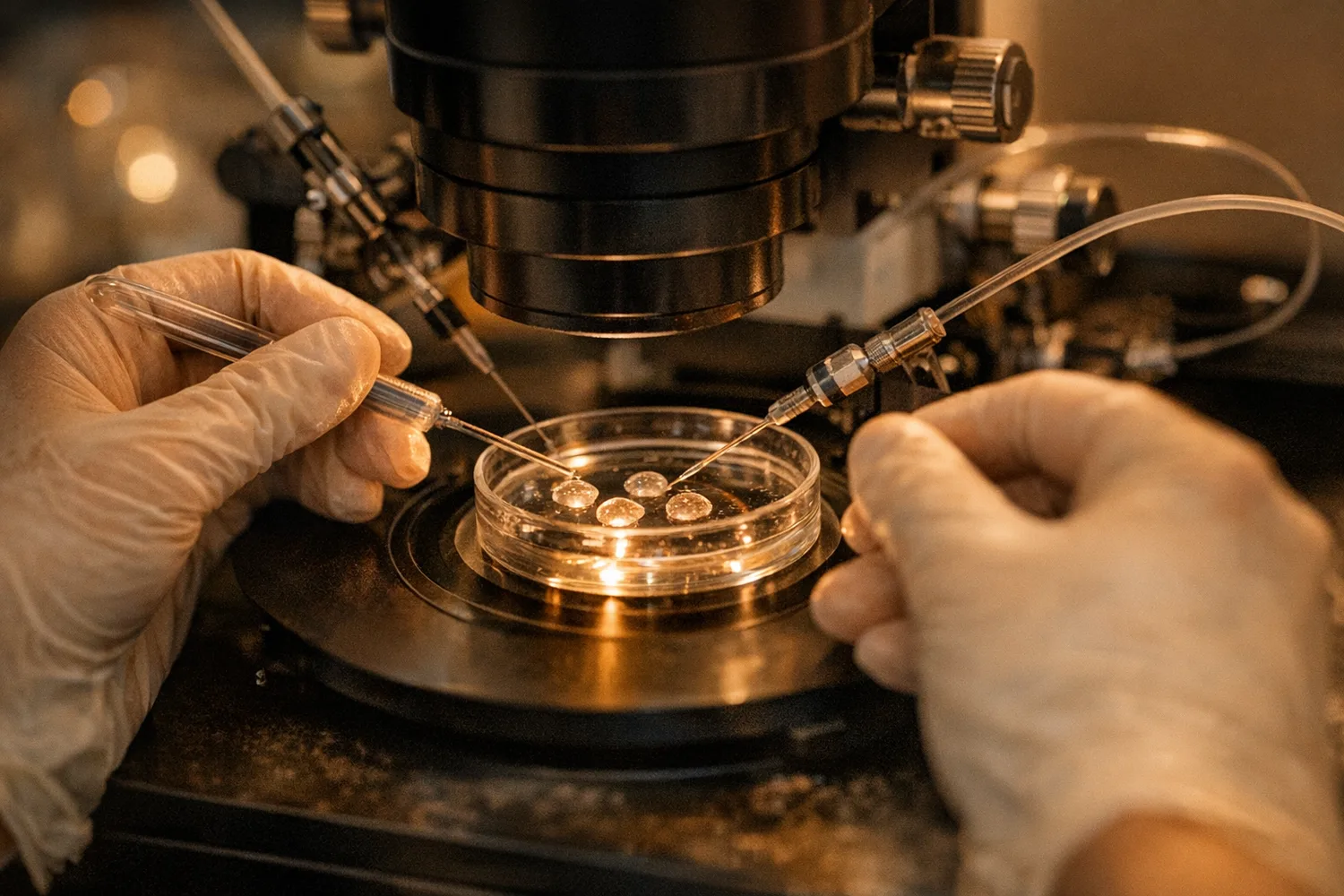
You want to get pregnant, but it is simply not happening? Many women feel the same, and this path can be very frustrating. The good news: There are many ways to support your fertility. They range from medical treatment to simple changes in your lifestyle.
Sometimes even small adjustments can make a big difference. For some women, a change in diet is enough; others need targeted hormone therapy. Every woman is different.
What does fertility mean for women?

Fertility describes your body’s ability to get pregnant and carry a pregnancy to term. That sounds simple, but it is a highly complex process. Your hormone system, your ovaries, fallopian tubes, and uterus have to work together perfectly.
The natural cycle and why it matters
A healthy menstrual cycle is the foundation of your fertility. Every 21 to 35 days, an egg normally matures and is released at ovulation. At the same time, the uterine lining builds up to receive a fertilized egg.
Your fertile days include about the 5 days before ovulation and the day of ovulation itself. Your chances of pregnancy are highest in this window. Why? Sperm can survive in your body for up to 5 days. Our Ovulation Calculator shows you exactly when your fertile days fall, with an optional reminder in your phone calendar.
Factors that affect your fertility

Age is the most important factor. A model by Wallace and Kelsey (2010) estimates that at 30, about 12% of the peak number of eggs remain, and at 40, about 3%, with large differences between individual women. This does not mean that pregnancy becomes impossible. But the likelihood decreases.
Other key factors include:
- Hormonal balance (FSH, LH, estrogen, progesterone)
- Weight (both overweight and underweight)
- Stress and psychological strain
- Medications and medical conditions
- Environmental influences and pollutants
When is fertility considered reduced?
Doctors speak of infertility when no pregnancy has occurred after 12 months of regular, unprotected intercourse (ICMART 2025). From age 35, an evaluation is recommended after just 6 months, and over 40, immediately at a fertility clinic (ASRM 2021; 2026 joint guideline of Germany, Austria, and Switzerland, called the “DACH guideline” here). Natural fertility already declines noticeably from age 35.
Infertility does not mean that pregnancy is impossible. Permanent infertility is called sterility. Many women get pregnant even with reduced fertility, often with the right support. Our guide to infertility explains what causes may be behind it and how the evaluation works.
How can female fertility be improved medically?
Modern reproductive medicine offers many ways to increase your fertility. It always starts with comprehensive diagnostic testing to identify the causes.
Diagnostic testing as the basis of any treatment
A thorough examination shows where the problems lie. This includes:
- Hormone tests (AMH, FSH, LH, thyroid hormones)
- Ultrasound of the ovaries and uterus
- Checking tubal patency
- Cycle monitoring over several months
This diagnostic testing is essential. Targeted help is only possible when it is clear what is not working optimally. A fertility test for women gives you important insights into your individual situation.
Treating hormonal disorders
Hormonal imbalances are common causes of fertility problems. Depending on the criteria used, PMOS (polyendocrine metabolic ovarian syndrome, formerly polycystic ovary syndrome or PCOS) affects 10 to 13% of women of childbearing age. An untreated underactive or overactive thyroid can impair fertility and is treated before pregnancy.
Treatment for PCOS and fertility includes several approaches:
- Metformin to improve insulin resistance (off-label for PCOS in Germany)
- Letrozole (first choice according to the international guideline; off-label in Germany and, according to the prescribing information, actually excluded for women before menopause, so only after your doctor has informed you about this) or clomiphene to trigger ovulation
- Weight loss as the most important basic measure
An underactive thyroid can be treated with targeted hormone therapy, usually with levothyroxine. Levothyroxine is available by prescription only. The situation is different with normal thyroid function and TPO antibodies: In that case, levothyroxine did not improve the chance of having a baby in studies. In a study of 952 such women with infertility or a previous miscarriage, 37.4% with and 37.9% without levothyroxine had a baby (TABLET 2019).
The guidelines do not agree here: The American thyroid guideline ATA 2026, which is endorsed by ESHRE and the European Thyroid Association, advises against levothyroxine when thyroid function is normal and antibodies are present, regardless of the TSH value. The DACH guideline 2026 allows low-dose treatment with TPO antibodies and a TSH above 2.5 mU/l. You can discuss with your doctor what is right for you.
Ovulation induction: supporting ovulation
If your body does not ovulate regularly, ovulation can be triggered with medication. The first step is usually tablets: clomiphene or letrozole. Clomiphene blocks estrogen receptors and thereby stimulates FSH production. For PCOS, letrozole is now considered the first-choice medication.
If tablets do not work, FSH injections are used. This direct hormone administration stimulates the growth of the follicles. The treatment is more involved and requires close monitoring to avoid overstimulation.
Why does fertility decline with age?

Age is the most important factor for your fertility. Every woman is born with all the eggs she will ever have. That number declines continuously. So does the quality of the remaining eggs.
The biological background of aging
According to the US professional society ACOG, 1 to 2 million eggs are present at birth, 300,000 to 500,000 remain at puberty, and about 25,000 at age 37 (ACOG 2025). The AMH level (anti-Müllerian hormone) reflects the number of maturing follicles, not their quality, and it declines with age. Our AMH Chart shows how values are distributed by age.
At the same time, the risk of chromosomal changes in the baby rises. The information for insured people from the Federal Joint Committee (Gemeinsamer Bundesausschuss, G-BA) on the blood test for trisomies gives 52 cases of Down syndrome (trisomy 21) per 10,000 pregnancies in pregnant women aged 35 to 39, and 163 in those over 40. You can find values for each year of age in the article Getting pregnant from age 35 to 45.
Effects on chances of pregnancy
How many women get pregnant within a year also depends on what is counted. The calculation model by Leridon (2004) counts only conceptions that lead to a birth: When starting at age 30, that is about 75% in the first year, at 35 about 66%, and at 40 about 44%. If you count every positive pregnancy test, the figures are higher: According to the British NICE guideline, 82% of couples get pregnant within a year when the woman is 35 to 39 years old. In a US cohort of women with no known infertility, 54% of those aged 40 to 41 had a positive test after 12 cycles (Steiner and Jukic 2016). You can find figures for each year of age in the article Getting pregnant from age 35 to 45.
From age 35, professional societies recommend a medical evaluation if pregnancy has not happened after 6 months, and for women under 35 after 12 months (ASRM 2021). Over 40, the DACH guideline (2026) recommends an immediate evaluation at a fertility clinic.
Options at an advanced age
Even over the age of 35 or 40, you have good chances of getting pregnant. Treatment options today are very successful:
Elective egg freezing as a precaution: Freezing eggs at a young age preserves their quality. Some women already use this option preventively.
More intensive stimulation treatments: In older women, higher hormone doses are often used to mature several eggs at the same time.
Genetic testing: Preimplantation genetic testing (PGT) can help identify embryos with certain genetic abnormalities. In Germany, however, it is permitted only in narrow exceptional cases after approval by an ethics committee.
Medical treatment options for increasing fertility
Depending on the cause of your fertility problem, various medical treatments are available. Treatment usually starts with the gentlest methods and increases in intensity if needed.
Hormone treatment: the first step
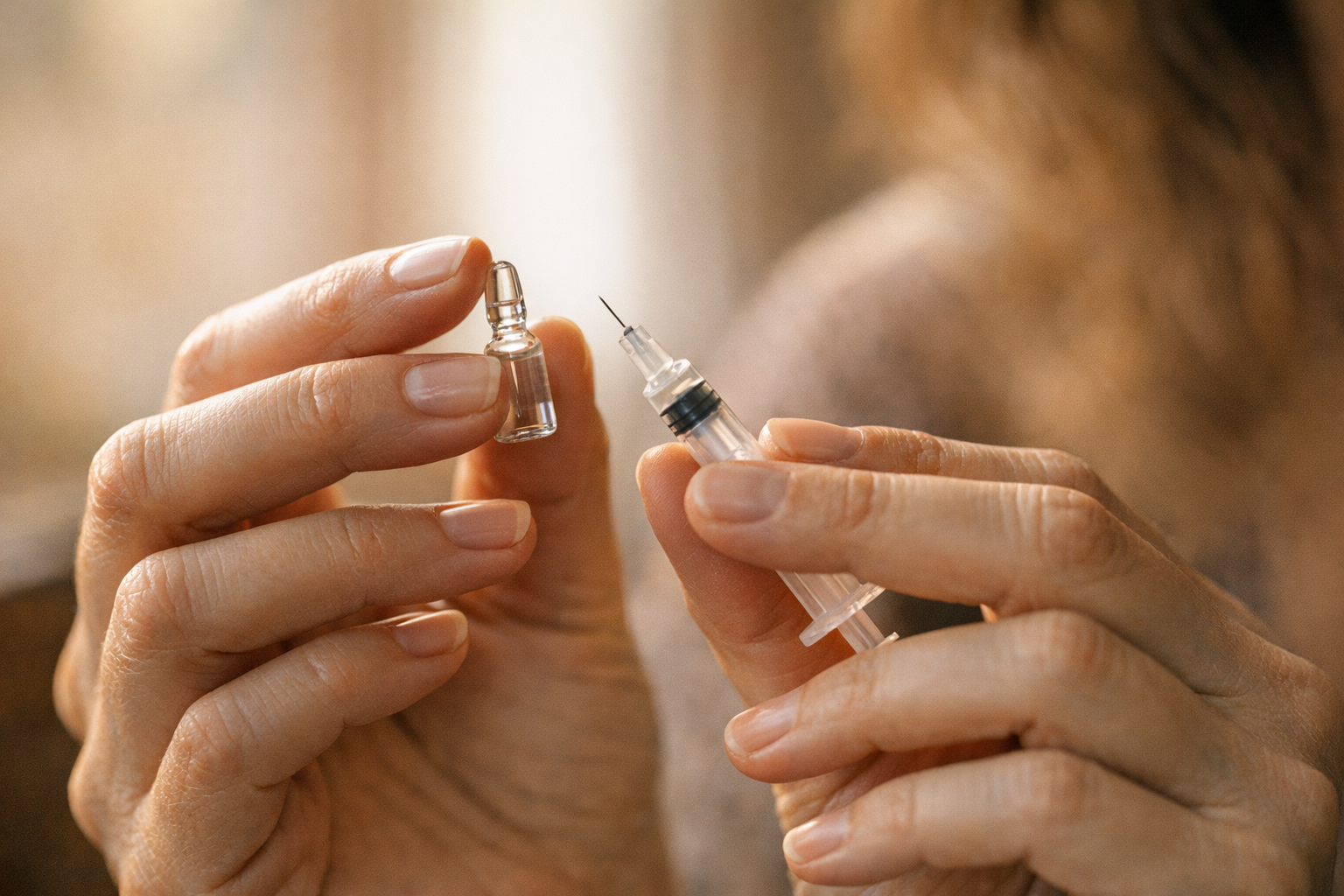
Hormone treatment for fertility is often the first medical approach. Clomiphene or letrozole tablets are easy to take and can trigger ovulation in women with ovulation disorders.
If tablets are not enough, FSH injections are used. This treatment is more involved and requires close monitoring:
- Follitropin alfa or follitropin beta (prescription only) stimulate the ovaries directly. The combination with lutropin alfa is approved for women with severe LH and FSH deficiency
- Close ultrasound monitoring tracks follicle growth
- An hCG trigger shot brings on ovulation at the optimal time
For context: With an insemination after FSH stimulation, the clinical pregnancy rate according to the German IVF Registry (Deutsches IVF-Register, D.I.R.) is 14.5% per insemination (partner sperm, stimulation with recombinant FSH, 2020 to 2024).
Intrauterine insemination (IUI)
IUI is a gentle intermediate step before IVF. Prepared sperm are placed directly into the uterus. This bypasses possible problems in the cervix and shortens the sperm’s path to the egg.
When does IUI make sense?
- Mild male fertility problems
- Cervical factors (problems with the cervix)
- Unexplained infertility
- After several stimulated cycles without success
According to the German IVF Registry, the clinical pregnancy rate of IUI with partner sperm is around 10% per insemination (2022 to 2024). Usually, up to 3 attempts are made before switching to IVF.
In vitro fertilization (IVF) and ICSI
IVF is the most established method of assisted reproduction. Eggs are retrieved, combined with sperm in the lab, and the resulting embryos are later placed in the uterus.
IVF process at a glance:
- Hormonal stimulation (8 to 12 days)
- Egg retrieval
- Fertilization in the lab
- Embryo culture (3 to 5 days)
- Embryo transfer
ICSI (intracytoplasmic sperm injection) is a further development of IVF. A single sperm is injected directly into the egg. This method helps especially with severe male fertility problems.
Success rates per embryo transfer (clinical pregnancy, fresh cycles 2019 to 2023, German IVF Registry):
| Woman’s age | IVF success rate | ICSI success rate |
|---|---|---|
| under 30 | 43.1% | 40.4% |
| 30 to 34 | 39.0% | 38.2% |
| 35 to 39 | 31.9% | 30.2% |
| 40 | 24.1% | 21.8% |
| 41 to 44 | 17.1% | 8.1 to 14.7% |
| 45 and older | no data | 3.8% |
The live birth rate per transfer is considerably lower in each case, at around 22.5% across all age groups.
Surgical procedures
Sometimes surgery is needed to improve your fertility:
Laparoscopy (abdominal endoscopy):
- Removal of ovarian cysts
- Treatment of endometriosis
- Releasing adhesions
- Checking tubal patency
Hysteroscopy (uterine endoscopy):
- Removal of fibroids or polyps
- Correction of uterine malformations
- Treatment of adhesions in the uterus
These procedures are usually minimally invasive. Recovery time is short. The chances of success are good.
Supportive measures through diet and lifestyle
Besides medical treatment, diet and lifestyle play an important role in your fertility. It is worth optimizing these basics.
The most fertility-friendly diet
A Mediterranean diet is considered favorable for fertility. Observational studies suggest that women who eat this way are more likely to get pregnant, including during IVF treatment. However, this is not firm proof of a causal effect.
What does the most fertility-friendly diet include?
- Plenty of vegetables and fruit (5 servings a day)
- Whole grains instead of white flour
- High-quality fats (olive oil, nuts, avocado)
- Fish 2 to 3 times a week
- Legumes as a protein source
- Little red meat and processed food
These foods fit well into a fertility-friendly diet:
Foods rich in folic acid:
- Leafy green vegetables (spinach, kale)
- Legumes (lentils, chickpeas)
- Citrus fruits
- Whole grain cereals
Antioxidant powerhouses:
- Berries of all kinds
- Dark chocolate (70% cocoa)
- Green tea
- Walnuts
Weight and fertility
Your body weight has an enormous influence on your fertility. Both being overweight and being underweight can disrupt your cycle.
BMI and fertility:
- At a BMI of 30 or above, it probably takes longer to get pregnant, according to the British NICE guideline.
- In a study of 3,029 couples undergoing infertility evaluation, in which the woman ovulated, at least one fallopian tube was open, and the semen analysis was normal, the chance of an ongoing spontaneous pregnancy within 12 months fell by about 4% (relative) per BMI point above a BMI of 29 (van der Steeg 2008).
- With a BMI below 18.5 and cycle disorders, gaining weight helps, according to NICE.
According to NICE, a structured program of diet and exercise leads to more pregnancies than weight loss advice alone. The often-cited 5% to 10% weight loss comes from the 2018 PCOS guideline. There, it referred to general improvements in PCOS, not specifically to fertility, and it no longer appears in the 2023 version (Teede 2018).
Reducing stress for better fertility
Chronic stress can affect hormonal balance. Very severe stress can throw the cycle off.
Tried-and-true stress reduction methods:
- Meditation (10 to 15 minutes daily)
- Yoga or gentle exercise
- Enough sleep (7 to 8 hours)
- Relaxation techniques
- Maintaining social connections
Relaxation does not replace treatment, but it can make the path easier.
Avoiding harmful factors
Certain substances and habits significantly harm your fertility:
Smoking: According to older observational studies, women who smoke are more likely to have infertility (odds ratio 1.6), reach menopause 1 to 4 years earlier, and need almost twice as many attempts with IVF (ASRM 2024).
Alcohol: In observational studies, moderate consumption of 3 to 13 drinks per week is associated with a longer time to pregnancy (DACH guideline 2026). Avoiding alcohol at the time of conception is recommended; the British NICE guideline justifies this with protecting the unborn baby.
Caffeine: Less than 200 mg of caffeine a day, about 2 cups of coffee, does not appear to impair fertility, while more than 500 mg lowers it (DACH guideline 2026). NICE finds no consistent association.
Environmental toxins: Pesticides, plasticizers, and heavy metals disrupt the hormone system. Organic foods and cosmetics low in harmful substances can reduce exposure.
Using dietary supplements wisely
It is worth taking a sober look at dietary supplements. The benefit is firmly established mainly for folic acid:
Folic acid (400 µg daily): Lowers the risk of neural tube defects in the baby. Start from the time you begin trying to conceive, at the latest 4 weeks before conception, and continue until the end of week 12 of pregnancy. If you start later, take 800 µg. The same dose applies if you are overweight (Healthy Start network, Gesund ins Leben, 2026; NICE NG247).
Vitamin D: Especially in winter, many people do not get enough. If the body’s own production is lacking, the German Nutrition Society (DGE) gives 20 µg (800 IU) per day as an estimated value. Higher doses only after consulting a doctor. Whether sufficient levels improve implantation is not firmly established.
Omega-3 fatty acids: For example from fatty saltwater fish. A direct benefit for fertility is not firmly established.
Coenzyme Q10: Discussed mainly before IVF. For healthy people, a benefit is not established, according to the German Federal Institute for Risk Assessment (BfR). In Germany, dietary supplements may contain up to 100 mg per day and carry a notice that they are not suitable for pregnant women.
Vitamins for fertility, however, should be used in a targeted way and after a blood test. Too much can be harmful.
Exercise and physical activity in the right dose
Regular exercise improves your fertility. The right amount is what matters.
Ideal for fertility:
- 150 minutes of moderate exercise per week
- 2 to 3 strength training sessions
- Yoga or Pilates for flexibility
- Walks in nature
Too much exercise can be harmful: Extreme endurance sports or very intense training can suppress ovulation. Female professional athletes often have cycle disorders.
Frequently asked questions
Which foods increase fertility the most?
Certain foods can actually have a positive effect on your fertility. First on the list are leafy greens rich in folic acid, such as spinach and kale. Folate is needed for cell division.
Legumes such as lentils and chickpeas provide plant-based protein and stabilize your blood sugar level. This is especially important with PCOS. Fatty saltwater fish such as salmon and mackerel supply you with important omega-3 fatty acids.
Walnuts, avocados, and olive oil contain healthy fats that support your hormone production. Berries provide plenty of antioxidants. Whole grain products stabilize your insulin level.
On the other hand, avoid highly processed foods, trans fats, and excessive sugar. These can promote inflammation and disrupt your hormonal balance.
When should I seek professional help?
As a general rule: If you have regular unprotected intercourse and have not become pregnant after a year, you should see a specialist.
If you are already over 35, this time is shortened to 6 months. That is because your fertility declines significantly faster from this age. Every month is then more valuable. Over 40, the DACH guideline (2026) recommends that you be evaluated at a fertility clinic right away.
There are also warning signs for which you should make an appointment right away: very irregular or absent cycles, very severe pain during your period, or known conditions such as PCOS or endometriosis.
Even if your partner already has fertility problems, or you are simply worried, early counseling makes sense. An examination brings clarity. It can take away many of your fears.
Can home remedies and natural methods really help?
Yes, natural methods can certainly support your fertility, though with realistic expectations. They do not replace medical treatment for serious problems, but they can be a valuable addition.
Chasteberry (Vitex agnus-castus) is often taken for a mild luteal phase defect. There are no reliable studies showing that it increases the chance of pregnancy. It should not be taken during pregnancy. The article Luteal phase defect explains what is behind a luteal phase defect.
Cycle teas made with lady’s mantle, yarrow, and raspberry leaf can bring your cycle into balance. Some women swear by them. Scientifically, however, the effect is not clearly established.
Relaxation techniques such as meditation, yoga, or acupuncture can help reduce stress. A direct effect on fertility, however, is not established.
Do not rely on home remedies alone if you have been trying to get pregnant for a while. A combination of natural methods and medical care is usually the most successful.
How do costs differ in Germany, Austria, and Switzerland?
This section applies to Germany, Austria, and Switzerland.
The costs of fertility treatment vary considerably across Germany, Austria, and Switzerland (the DACH region), both in treatment costs and in reimbursement by health insurance funds.
Germany: Statutory health insurance funds cover 50% of the costs for up to 3 IVF or ICSI attempts. Requirements: The couple is married, both partners are at least 25, and the woman has not yet reached her 40th birthday and the man has not yet reached his 50th. For people with private health insurance, reimbursement depends on the contract and on which partner the cause lies with.
IVF costs about €3,500 to €6,500 per cycle including medication, and ICSI about €4,500 to €7,000. Hormone treatments are usually fully reimbursed.
Austria: The IVF Fund (IVF-Fonds) covers 70% of the costs for a maximum of 4 attempts, medication included. The woman must be younger than 40 at the start of an attempt, her partner younger than 50. The 30% out-of-pocket cost is about €970 to €1,330 per attempt, depending on age, method, and clinic. The requirements are one of the fund’s indications (for example endometriosis, PCOS, fallopian tube or male infertility) and treatment at an Austrian contracted clinic.
Particularly positive: Unmarried couples in a cohabiting partnership are also eligible for funding.
Switzerland: Mandatory basic health insurance (obligatorische Krankenpflegeversicherung) does not cover any IVF costs. It does pay for diagnostic testing and up to 3 inseminations (IUI) per pregnancy, each subject to the deductible and cost sharing. Couples have to pay for IVF entirely themselves, usually several thousand Swiss francs per cycle, varying widely depending on the clinic.
Some supplemental insurance plans cover part of the costs.
If you are worried about your fertility or have been trying to get pregnant for a while, do not wait too long. Early counseling can show you many options and often lead to success faster. Use our Fertility Clinic Finder to find the right fertility clinic near you. There you will receive individual counseling and a tailored treatment plan.
Sources
- Leridon H: Can assisted reproduction technology compensate for the natural decline in fertility with age? A model assessment, Human Reproduction, 2004
- Steiner AZ, Jukic AMZ: Impact of female age and nulligravidity on fecundity in an older reproductive age cohort, Fertility and Sterility, 2016
- Fertility problems: assessment and treatment (NG257), National Institute for Health and Care Excellence (NICE), March 31, 2026
- Fertility evaluation of infertile women: a committee opinion, Practice Committee of the ASRM, Fertility and Sterility, 2021
- Age, lifestyle, and environment: many factors affect fertility, familienplanung.de (Federal Institute for Public Health), 2026
- How long does it take to get pregnant?, familienplanung.de (Federal Institute for Public Health), 2026
- Optimizing natural fertility: a committee opinion, American Society for Reproductive Medicine (ASRM), 2022
- Human ovarian reserve from conception to the menopause, PLoS ONE (Wallace and Kelsey), 2010
- Yearbook 2024, German IVF Registry (D.I.R.), 2025
- Recommendations from the 2023 International Evidence-based Guideline for the Assessment and Management of Polycystic Ovary Syndrome, Human Reproduction (Teede et al.), 2023
- Folic acid supplement (recommendations for action for professionals), Healthy Start network (Gesund ins Leben), 2026
- Reference values for nutrient intake: vitamin D, German Nutrition Society (DGE), 2021
- Coenzyme Q10: What is known about health risks and what is not?, German Federal Institute for Risk Assessment (BfR), 2023
- Fertility treatment: What is allowed and who pays the costs?, familienplanung.de (Federal Institute for Public Health), 2026
- We would like a baby: Coverage of costs by the IVF Fund, Federal Ministry of Labor, Social Affairs, Health, Care and Consumer Protection (Austria), 2025
- Diagnostic testing and therapy before medically assisted reproduction treatment, S2k guideline AWMF 015-085, version 2.0, DGGG, OEGGG, and SGGG, as of April 2026
- The International Glossary on Infertility and Fertility Care, 2025, Human Reproduction (Zegers-Hochschild et al.), 2026
- Polyendocrine metabolic ovarian syndrome, the new name for polycystic ovary syndrome: a multistep global consensus process, The Lancet 2026;407(10545):2329-2339 (Teede et al.), 2026
- Subclinical hypothyroidism in the infertile female population: a guideline, Fertility and Sterility 2024;121:765-782, ASRM, 2024
- American Thyroid Association 2026 Guidelines for Thyroid Disease in Preconception, Pregnancy, and Postpartum, Thyroid 2026;36(5):481-544 (Korevaar et al.), endorsed by ESHRE and ETA, 2026
- Levothyroxine in Women with Thyroid Peroxidase Antibodies before Conception (TABLET), New England Journal of Medicine (Dhillon-Smith et al.), 2019
- Prescribing information for letrozole 2.5 mg film-coated tablets, section 4.3, as of August 2023
- Product information for Follitropin alfa, section 4.1, European Medicines Agency (EMA), accessed October 2026
- Obesity affects spontaneous pregnancy chances in subfertile, ovulatory women, Human Reproduction (van der Steeg et al.), 2008
- Recommendations from the international evidence-based guideline for the assessment and management of polycystic ovary syndrome, Human Reproduction (Teede et al.), 2018
- Tobacco or marijuana use and infertility: a committee opinion, Fertility and Sterility 2024;121:589-603, ASRM, 2024
- Recommendations by the Healthy Start Network 2026, Geburtshilfe und Frauenheilkunde 2026;86(6):e60-e97 (Alaze-Hagemann et al.), Healthy Start network (Gesund ins Leben), 2026
- Maternal and child nutrition (NG247), recommendations 1.1.4 to 1.1.6, National Institute for Health and Care Excellence (NICE), January 15, 2025
- Agni casti fructus, monograph of the Committee on Herbal Medicinal Products (HMPC), revision 1, European Medicines Agency (EMA), 2018
- Diagnosis and treatment of luteal phase deficiency: a Committee Opinion, Fertility and Sterility 2026;126(4):633-639, ASRM and SREI, 2026
- Vitex agnus castus extract in the treatment of luteal phase defects due to latent hyperprolactinemia, Arzneimittelforschung (Milewicz et al.), 1993
- Randomized trial of a homeopathic combination preparation containing chasteberry in infertility, Complementary Medicine Research (Gerhard et al.), 1998
- Randomized trial of a dietary supplement containing chasteberry, green tea, L-arginine, vitamins, and minerals, Clinical and Experimental Obstetrics and Gynecology (Westphal et al.), 2006
- Vitex agnus castus: a systematic review of adverse events, Drug Safety (Daniele et al.), 2005
- Anticipatory Counseling Regarding Ovarian-Factor Fertility Decline (Committee Statement No. 22), American College of Obstetricians and Gynecologists (ACOG), November 2025
- Blood test for trisomies: The noninvasive prenatal test (NIPT) for trisomy 13, 18, and 21, Federal Joint Committee (G-BA), as of August 25, 2026
- Prescription Drug Ordinance (Arzneimittelverschreibungsverordnung, AMVV), Annex 1, Federal Ministry of Justice, accessed October 2026