This page covers Germany, Austria, and Switzerland.
Intrauterine insemination (IUI for short) is the simplest form of assisted reproduction. Prepared sperm are placed directly into the uterus. No operating room, no anesthesia, no egg retrieval. The procedure itself takes only a few minutes, and you can go home afterward.
In many fertility clinics, IUI is the first treatment step before more involved methods such as IVF or ICSI come into play. As a benchmark, familienplanung.de cites about €370 for an insemination without and €670 with hormone treatment, so the financial risk per attempt is manageable. Honestly, though, the chances of success with intrauterine insemination are limited. According to the German Insemination Registry (DERI), an IUI with the partner’s sperm leads to a clinical pregnancy in only about 10% of cases (2024: 10.3%) and to a live birth in about 6% (2023: at least 6.3%). Whether IUI makes sense for you depends on your diagnosis, your age, and your patience.
Further down, you will find the chances by age from tens of thousands of inseminations at German fertility clinics, split into partner sperm and donor sperm, plus studies covering several cycles and the factors that shift the result.
What is IUI treatment?
In intrauterine insemination, your partner’s semen (or a donor’s) is prepared in the lab. The fastest and most motile sperm are filtered out and concentrated. These sperm are then placed with a thin catheter directly into your uterine cavity, past the cervix, which otherwise acts as a natural barrier.
The idea behind it: The sperm start closer to the egg, and only the most motile ones are used. This is meant to improve the chance of fertilization without interfering with fertilization itself.
IUI comes in two variants:
Without hormonal stimulation (natural cycle): Your natural ovulation is used, sometimes with a trigger shot at the right time. Less expensive, fewer side effects, but also lower success rates: In the German Insemination Registry, the clinical pregnancy rate was 8.6% per insemination (2020 to 2024).
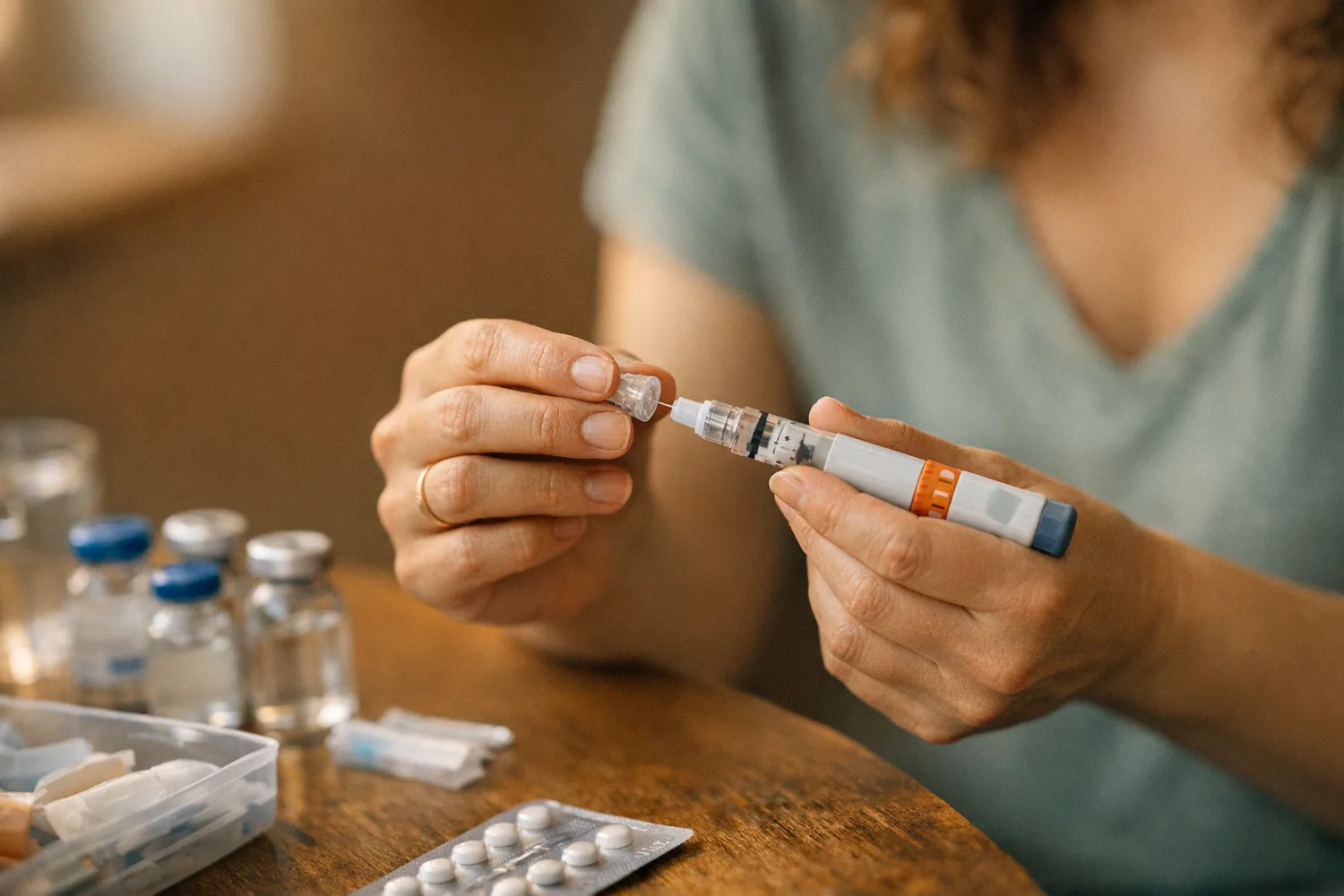
With hormonal stimulation: Pills (clomiphene or letrozole) or low-dose FSH injections stimulate the ovaries. The goal is one or two, at most three, mature follicles (more under What influences the chances). In the registry, the pregnancy rate was 14.5% per insemination with FSH injections, 11.7% with letrozole, and 8.0% with clomiphene alone. These are registry values without random assignment, so the groups are not directly comparable. Stimulation also raises the risk of multiples, though; the figures are under Stimulation and risk of multiples.
You can find an overview of clinics that offer inseminations on our page Insemination (IUI).
Who is IUI suitable for?
IUI does not work for every situation. The treatment is well suited for:
- Mildly reduced semen analysis: If sperm count or motility is slightly below the reference value. What matters is how many motile sperm are left after preparation. There is no universal cutoff; what studies found is under Motile sperm after preparation. What the values in your results mean is explained in the article Semen analysis: good values.
- Cervical factor: The mucus in the cervix hinders sperm transport. IUI bypasses this problem completely.
- Unexplained infertility (idiopathic infertility): All test results are normal, yet it does not work. The European professional society ESHRE recommends IUI with stimulation as the first treatment here (2023 guideline). Note, however: The guideline for statutory health insurance in Germany does not list unexplained infertility as a reason for insemination. So check in advance with your clinic and your insurance fund whether it will pay.
- Mild endometriosis: For endometriosis at stage I or II, the ESHRE guideline (2022) says IUI with stimulation can be done. More under Endometriosis and fertility.
- Donor sperm: Single women or lesbian couples who want to get pregnant with donor sperm. How that works step by step is under Sperm donation: process.
- Erectile or ejaculation disorders: When intercourse at the right time is not possible.
IUI is not suitable with blocked fallopian tubes (at least one must be open) and with severely reduced sperm quality. The values at which studies see the chances impaired are under Motile sperm after preparation. In both cases, IVF or ICSI come into consideration instead. Age also makes things harder: For women aged 40 to 44, the live birth rate in the registry was at least 2.5% per insemination; from age 45, there was no live birth. From age 38, IVF led to markedly more live births than stimulated IUI in the only randomized trial (see IUI vs. IVF).
IUI process, step by step
Step 1: Cycle monitoring
At the start of the cycle, monitoring begins with ultrasound and, depending on the clinic, blood draws. This tracks how your follicles grow. In a stimulated IUI, you take pills such as clomiphene or letrozole in the first days of the cycle, or you inject low-dose FSH. Why FSH products (gonadotropins) should only be used at a low dose and with close monitoring is covered under Stimulation and risk of multiples. How the medications work is explained in the article Hormone treatment for fertility.
Step 2: Triggering ovulation
As soon as the leading follicle is mature, ovulation is usually triggered with an hCG shot. According to the prescribing information for the hCG product Brevactid, ovulation follows about 36 hours after the injection into the muscle. In a French study, the trigger was given as soon as at least one follicle was larger than 16 mm, and insemination took place 36 hours later (Merviel 2010). Your clinic plans the exact timing.

Step 3: Sperm preparation
Your partner provides a sperm sample on the day of the insemination; with donor sperm, a sample from the sperm bank is thawed. The lab separates the motile sperm from the seminal fluid; common methods are density gradient centrifugation and the swim-up technique. The Wiesbaden fertility clinic, for example, worked with washing and swim-up in the large analysis by Schorsch and colleagues (2013). Preparation takes some time, and the clinic will tell you when to come back.
Step 4: Insemination
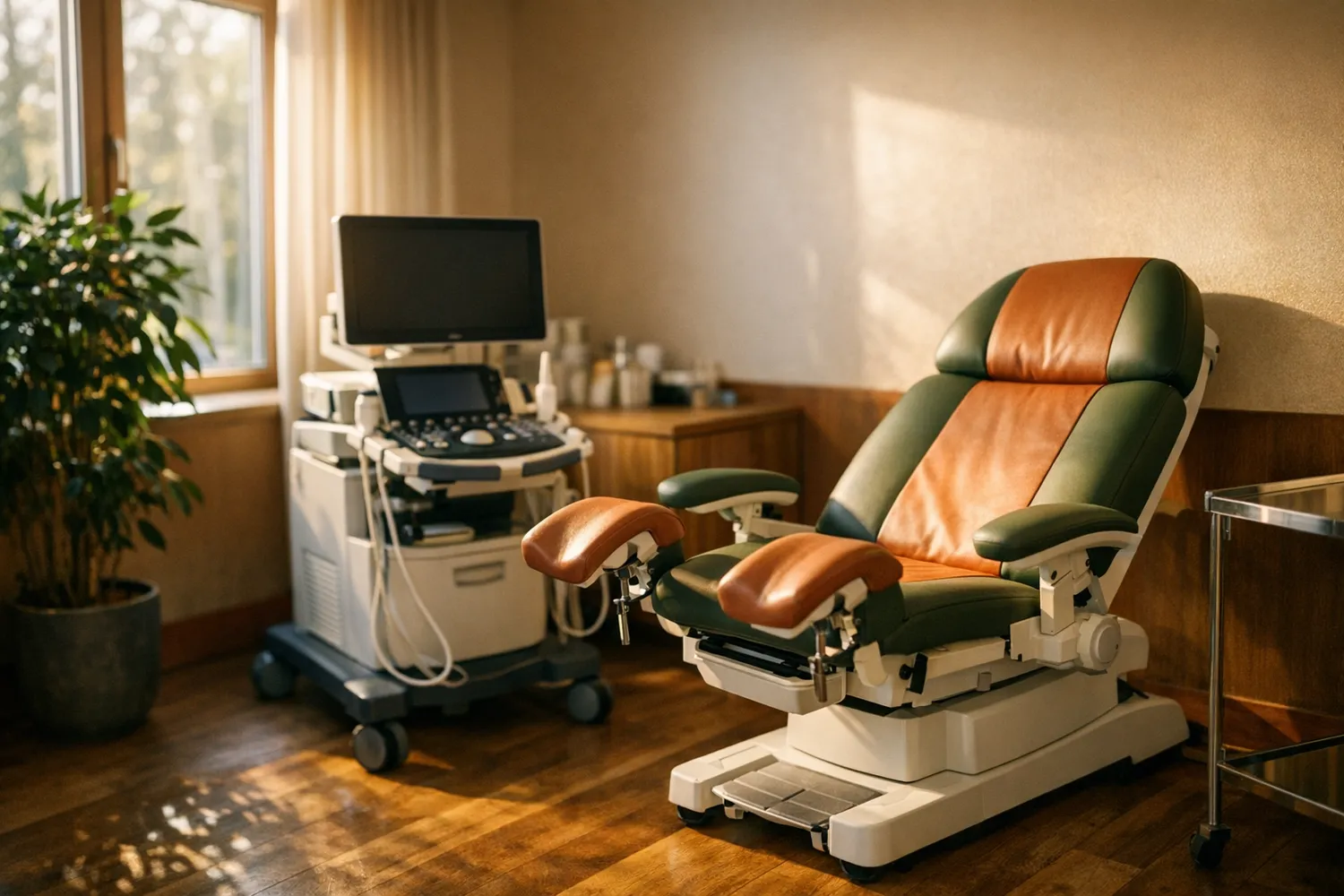
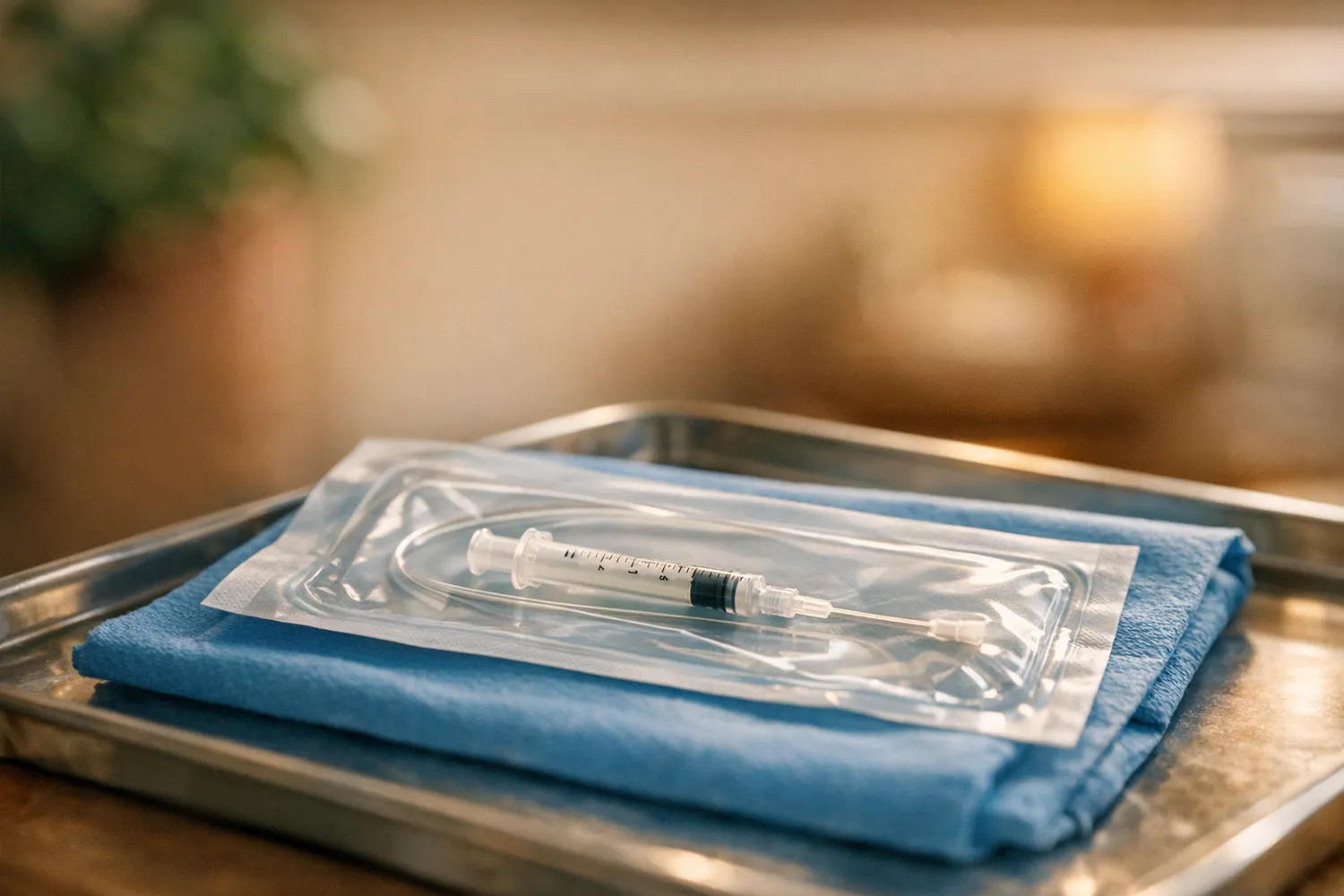
You lie on a gynecological exam chair. A thin, flexible catheter is guided through the cervix, and the prepared sperm are introduced through it. This takes only a few minutes. Many women feel a slight pulling sensation, comparable to a Pap smear. No anesthesia is needed. Whether you should lie still for a short while afterward is covered further down under Do I need to lie down after IUI?.
Step 5: Waiting and testing
After the insemination, you go about your normal daily routine. About two weeks later, a blood test for the pregnancy hormone hCG shows whether it worked. The fertility clinic Kinderwunsch-Zentrum Hannover, for example, advises not testing before day 14 after the insemination.
Do not test too early: If you received a trigger shot containing hCG (for example Ovitrelle or Brevactid), according to the prescribing information it can affect hCG tests in blood or urine for up to 10 days. An early test may then be falsely positive. The UK regulator, the Human Fertilisation and Embryology Authority (HFEA), also advises against testing too early because the result can be misleading.
When a test makes sense, which week of pregnancy you are in after IUI, and when the calculated due date falls is shown by the IVF Due Date Calculator. It has its own mode for insemination. Because the exact hour of ovulation is not known with IUI, the date is an estimate; it is set later by ultrasound.
IUI success rate by age
Here are the numbers as they are, without sugarcoating. So that you read them correctly, here are four terms first:
How to read the numbers
Per insemination means: per insemination actually performed. Cycles that are canceled beforehand are not counted. In stimulated cycles with partner sperm, 88.8% reached insemination in the German registry, so about 11% ended before that.
Clinical pregnancy means: medically confirmed, usually by ultrasound. A positive test that drops again afterward (biochemical pregnancy) does not count.
Live birth per insemination is the figure that counts in the end. In the German registry, it is a lower bound, because for about one in five clinical pregnancies, neither a miscarriage nor a birth is documented.
Cumulative means: added up across several attempts.
Partner sperm: the figures from Germany
The most reliable source for Germany is the German Insemination Registry (DERI). It is kept by the Working Group on Donor Insemination (Arbeitskreis Donogene Insemination); the clinics take part voluntarily, most recently 48 of them. The analysis is published as a special section in the yearbook of the German IVF Registry (Deutsches IVF-Register, D.I.R.). The age analysis combines the years 2019 to 2023:
| Woman’s age | Inseminations | Clinical pregnancy per insemination | Live birth per insemination (at least) | Miscarriages per clinical pregnancy |
|---|---|---|---|---|
| up to 24 | 570 | 8.2% | 5.0% | 21.7% |
| 25 to 29 | 8,289 | 11.3% | 7.5% | 14.5% |
| 30 to 34 | 24,036 | 10.3% | 6.5% | 15.2% |
| 35 to 39 | 21,152 | 9.7% | 5.7% | 22.1% |
| 40 to 44 | 5,940 | 6.4% | 2.5% | 43.5% |
| 45 and older | 388 | 3 pregnancies | no live birth | 3 miscarriages |
Source: German Insemination Registry, D·I·R Yearbook 2024, p. 50, IUI with partner sperm, 2019 to 2023.
What stands out: Between ages 25 and 39, the pregnancy rate per insemination differs only slightly (11.3% versus 9.7%). The share of miscarriages, however, rises markedly, from 14.5% to 22.1%. That is why the live birth rate falls more steeply than the pregnancy rate, from 7.5% to 5.7%. From age 40, it drops to 2.5% per insemination, because the pregnancy rate falls to 6.4% and at the same time 43.5% of pregnancies end in a miscarriage. The youngest group, under 25, does worse than the 25- to 29-year-olds. With 570 inseminations, however, it is small, and the registry gives no reasons.
The values have been stable over the years. The clinical pregnancy rate per insemination was between 9.3% and 10.3% from 2019 to 2024, and the live birth rate per insemination between 5.6% and 6.3% from 2019 to 2023. The average age of the women was 34 years.
Why the live birth rate is a lower bound becomes clear from the annual figures: In 2023, IUI with partner sperm resulted in 1,441 clinical pregnancies, 264 miscarriages, and 871 births. For 306 pregnancies, about 21%, the outcome is not documented. Whether these were ectopic pregnancies, stillbirths, or simply missing reports, the yearbook does not say. The actual live birth rate may therefore be somewhat higher than in the table, but not higher than the pregnancy rate.
The table shows average values for many couples from German clinics. For you personally, the chances may be higher or lower, depending on your test results. Only your doctor can put that into context.
Donor sperm: higher rates per insemination
With donor sperm, the rates are higher in all age groups up to 44. The registry gives no reasons for this.
| Woman’s age | Inseminations | Clinical pregnancy per insemination | Live birth per insemination (at least) |
|---|---|---|---|
| up to 24 | 146 | 11.7% | 9.7% |
| 25 to 29 | 1,481 | 17.7% | 15.4% |
| 30 to 34 | 4,980 | 18.6% | 15.9% |
| 35 to 39 | 5,333 | 15.3% | 11.4% |
| 40 to 44 | 1,752 | 9.4% | 5.7% |
| 45 and older | 101 | 4 pregnancies | no live birth |
Source: German Insemination Registry, D·I·R Yearbook 2024, p. 50, IUI with donor sperm, 2019 to 2023.
In 2024, the clinical pregnancy rate with donor sperm was 16.0% per insemination; in 2023, 14.2% of inseminations led to a live birth. Twins accounted for only 1.8% of births in 2023.
Interesting for planning: With donor sperm, stimulation brought no advantage in the registry. In a natural cycle, the pregnancy rate was 16.3%, and across all stimulated cycles 16.2% per insemination. The rate of multiples was markedly higher with stimulation, though (6.7% versus 1.2%, 2020 to 2023). These, too, are observational data without random assignment. A Belgian study of 1,654 women and 6,630 donor sperm cycles painted a similar picture: Neither the reason for treatment nor the type of stimulation had a significant effect on the live birth rate, but age did (De Brucker 2009). There, 14% of cycles led to a delivery.
The United Kingdom records only inseminations with donor sperm through its regulator, the HFEA; it has no detailed data on partner sperm. In 2023, 14.2% of stimulated and 12.6% of unstimulated donor sperm cycles led to a live birth (270 of 1,902 and 456 of 3,621 cycles). The count is per started cycle, and twins count as one birth. For 2024, the HFEA provisionally reports 16.5% and 11.9%. The 2023 and 2024 reports do not contain a breakdown by age.
What donor sperm means legally and practically is summarized in the guide to sperm donation.
Europe in comparison
The European professional society ESHRE collects the data of national registries through its monitoring consortium EIM. In the latest full report, for the year 2020, 8.8% of inseminations with partner sperm and 12.5% of inseminations with donor sperm led to a delivery. After IUI with partner sperm, the twin rate was 7.9% and the triplet rate 0.4%. Preliminary figures for 2022 are similar (8.6% with partner sperm, 13.3% with donor sperm), but the authors urge caution when interpreting them.
A breakdown by age exists only in the supplementary tables to the 2019 report. There, women up to age 34 reached 9.7% deliveries per cycle with partner sperm, and from age 40, 3.5%. With donor sperm, the figures were 14.4% and 4.6%. We leave out the middle age group because the printed values from the same table cannot be recalculated. Germany, Austria, and Switzerland provide no values in these tables, France and the United Kingdom no delivery figures. The European values are therefore not directly comparable with the German registry data.
IUI success rate over 40

From age 40, the numbers change noticeably. In the German registry, inseminations with partner sperm in women aged 40 to 44 led to a clinical pregnancy in 6.4% and to a live birth in at least 2.5%. In 388 inseminations at age 45 and older, there were three pregnancies, and all ended in a miscarriage. With donor sperm, the values at ages 40 to 44 were 9.4% pregnancies and at least 5.7% live births per insemination; at age 45 and older, there was no live birth in 101 inseminations.
Studies show a similar picture:
- Wiesbaden (Schorsch 2013): In the first three cycles, the pregnancy rates of 40- and 41-year-olds did not differ from those of 35- to 39-year-olds. After more than three inseminations, however, women over 40 had only isolated pregnancies.
- Boston (Dovey 2008, clomiphene and IUI): At ages 41 and 42, 3.6% of started cycles led to a pregnancy, over 42 only 0.8% (one pregnancy among 55 women). The authors see practically no place left for clomiphene and IUI over 42.
- FORT-T (Goldman 2014, randomized): 154 couples, woman aged 38 to 42, unexplained infertility. After two cycles, 21.6% (clomiphene and IUI) and 17.3% (FSH and IUI) of couples were clinically pregnant, with immediate IVF 49.0%. 84.2% of all live births in the study came through IVF.
- France (Merviel 2022): In unexplained infertility, IVF or ICSI was more successful than IUI in all age groups, except in women aged 40 and older. There, the study found no significant difference.
The data are not entirely consistent, but the direction is: Per attempt, the chances from age 40 are markedly lower, and after the third attempt hardly any further pregnancies occur. In Germany, there is also the matter of insurance coverage: Entitlement to coverage ends on the 40th birthday, and the age limit must be met in every treatment cycle (Section 27a of Book V of the German Social Code, SGB V, and no. 9.1 of the guideline of the Federal Joint Committee, G-BA). More on the situation from age 40 is in the article Getting pregnant over 40. How ovarian reserve is measured and what the AMH value says (and what it does not) is shown by the AMH Chart by age.
Over several cycles: cumulative chances
With about 10% pregnancy per attempt, for most couples it is a matter of not one but several cycles. A frequently cited calculation example: Three cycles with a 10% chance each add up to about 27%. This calculation assumes that every insemination has the same chance. As a chance of a live birth, it is too optimistic, because it calculates with the pregnancy rate and leaves miscarriages out.
If you instead calculate with the live birth rates from the registry, you get the following model calculation. It is a calculated upper limit, not a study result: It assumes that every insemination has equally good chances and that no cycle is canceled beforehand. Neither is true in practice.
| Woman’s age | Live birth per insemination (registry) | Calculated after 3 inseminations (upper limit) |
|---|---|---|
| 25 to 29 | 7.5% | 20.9% |
| 30 to 34 | 6.5% | 18.3% |
| 35 to 39 | 5.7% | 16.1% |
| 40 to 44 | 2.5% | 7.3% |
Our own model calculation from the DERI live birth rates (D·I·R Yearbook 2024, p. 50): 1 minus (1 minus rate) to the power of 3.
Real studies that followed couples over several cycles are in a similar range. What matters in each case is who was treated and what was counted:
| Study | Who was treated | Result over several cycles |
|---|---|---|
| Custers 2008, Netherlands | 3,714 couples, 15,303 cycles, male, cervical, or unexplained cause; stimulation in 70% of cycles | Ongoing pregnancy 5.6% per cycle; calculated cumulatively 18% after 3, 30% after 7, and 41% after 9 cycles |
| Schorsch 2013, Wiesbaden | 1,612 women, 4,246 cycles, FSH stimulation, mildly to moderately reduced semen analysis | Pregnancy per cycle in cycles 1 to 6 between 7.8% and 11.2% |
| Dovey 2008, Boston | 1,738 women, 4,199 cycles, clomiphene | Pregnancy per woman across all cycles performed: 24.2% under 35, 18.5% at 35 to 37, 15.1% at 38 to 40 years |
| AMIGOS 2015, USA (randomized) | 900 women, aged 18 to 40, unexplained infertility, up to 4 cycles | Live birth per woman: 32.2% with gonadotropins, 23.3% with clomiphene, 18.7% with letrozole |
| TUI 2018, New Zealand (randomized) | 201 women, unexplained infertility, unfavorable spontaneous prognosis, 3 cycles | Live birth in 31% with IUI and stimulation versus 9% with expectant management |
| INeS 2015, Netherlands (randomized) | 602 couples, woman aged 18 to 38, up to 6 IUI cycles within 12 months | Healthy singleton baby in 47% (stimulated IUI) versus 52% (IVF with single embryo transfer) |
| Malchau 2017, Denmark (registry) | 3,028 couples who started with IUI | Within 5 years: 35% live birth after IUI, 24% after switching to IVF or ICSI, 17% without treatment |
A few notes on this: In Custers, the cumulative values are calculated estimates (life table method). If couples who stopped earlier are counted as not pregnant, the figure after nine cycles was 25%. In Dovey, the women under 35 completed only 2.4 cycles on average. In the TUI trial, of the 31 live births in the IUI arm, 23 arose from an IUI cycle and 8 without treatment. In Schorsch, how a pregnancy was defined is not stated.
There are also long-term data for donor sperm. In the Belgian study by De Brucker (2009), the calculated expected chance of a live birth after up to twelve cycles was 87% (ages 20 to 29), 77% (30 to 34), 76% (35 to 37), 66% (38 to 39), and 52% (40 to 45). These, too, are life table estimates. They assume that women who stop treatment have the same chances as those who continue, and therefore tend to run too high.
At what point do the chances hardly rise any further?
The data are not consistent here, and you should know that.
Points in favor of an early concentration of pregnancies: In a Finnish study of 811 cycles, 97% of pregnancies occurred in the first four cycles (Nuojua-Huttunen 1999). A French analysis of unexplained infertility found the best chances in the first two cycles (Merviel 2022). In the Boston study, the rate per cycle for women who completed only one or two cycles was markedly higher than in cycles 3 to 9 (Dovey 2008).
Points in favor of stable chances over several cycles: In the large Dutch cohort, the rate of ongoing pregnancies was still 4.6% to 6.7% per cycle even in the seventh to ninth cycle. After the sixth cycle, age, diagnosis, stimulation, and cycle number no longer had a significant effect (Custers 2008). In Wiesbaden, the rates per cycle in women under 40 remained in a similar range up to the sixth attempt as at the start; however, markedly fewer women made more than three attempts (Schorsch 2013). This does not hold for women aged 40 and older; see over 40.
How many cycles the guidelines derive from this, and how often the insurance fund pays, is covered under What the guidelines recommend.
What influences the chances
Age is the strongest factor, but not the only one. The following points come from studies and guidelines and describe groups. What applies to you can only be judged by your clinic based on your test results.
Age
With each year of age, the chances fell measurably in the Wiesbaden analysis (odds ratio 0.933 per year, Schorsch 2013). In the Finnish study, women under 40 had markedly better chances than older women (odds ratio 3.24, Nuojua-Huttunen 1999). The age breakdown from the German registry is above.
The Wiesbaden study additionally provides values for the years over 40, for which the registries do not form separate groups:
| Woman’s age | Patients | Pregnancy per cycle | Pregnancy per patient |
|---|---|---|---|
| 25 to 29 | 260 | 12.94% | 28.02% |
| 30 to 34 | 687 | 10.91% | 26.20% |
| 35 to 39 | 658 | 8.84% | 22.19% |
| 40 and 41 | 94 | 9.01% | 21.28% |
| 42 and 43 | 27 | 6.25% | 14.81% |
| over 43 | 12 | 3.45% | 8.33% |
Source: Schorsch et al., Geburtshilfe Frauenheilkd 2013, Table 1. FSH-stimulated IUI with partner sperm in mildly to moderately reduced semen analysis (at least 10 million sperm per ml and at least 35% motility), Wiesbaden 1998 to 2010. The groups from age 42 are very small.
Stimulation and risk of multiples
The German registry shows how differently the stimulation methods perform, in success as well as in multiples:
| Stimulation | Inseminations | Clinical pregnancy per insemination | Rate of multiples per registry |
|---|---|---|---|
| natural cycle | 30,646 | 8.6% | 1.3% |
| clomiphene only | 11,452 | 8.0% | 6.3% |
| letrozole only | 6,044 | 11.7% | 3.4% |
| FSH only (recombinant) | 9,529 | 14.5% | 9.4% |
| FSH and LH (recombinant) | 1,388 | 16.0% | 8.2% |
| all stimulated cycles | 33,739 | 11.2% | 6.8% |
Source: German Insemination Registry, D·I·R Yearbook 2024, p. 51, IUI with partner sperm; pregnancies 2020 to 2024, multiples 2020 to 2023. The yearbook does not state the reference base of the rate of multiples. “All stimulated cycles” also includes cycles with other or missing information on stimulation. No random assignment, so the groups are not directly comparable.
Of all births after IUI with partner sperm, 3.9% were twin births in 2023.
What studies with random assignment show: Stimulated IUI led to more live births than IUI in a natural cycle (odds ratio 2.07; 4 studies, 396 women; ESHRE guideline 2023). IUI in a natural cycle, on the other hand, was not clearly better than expectant management (23% versus 16% live births, not statistically significant). Whether stimulation brings more multiples than a natural cycle is uncertain according to ESHRE; there is only one small study of 39 women on this.
FSH injections (gonadotropins) brought about 30% more live births than clomiphene (relative risk 1.30), but also more than twice as many multiple pregnancies (relative risk 2.17; Wessel 2022, 6 studies, 2,058 women). In two separate secondary analyses, one including only studies with a low starting dose of up to 75 IU and one including only studies with stricter cancellation rules, the difference in multiples was no longer clear. In the second analysis, the advantage in live births was also no longer clear.
How large the risk of multiples can become is shown by the US study AMIGOS (900 women, unexplained infertility): With gonadotropins, 32% of pregnancies were multiples (34 of 107, including 10 triplets), with clomiphene 9%, and with letrozole 13%. ESHRE therefore recommends gonadotropins only at a low dose and with adequate monitoring.
A detail from the German registry shows why a high success rate alone says little: Among the ten most successful clinics with more than 300 inseminations, the clinic with the highest pregnancy rate per insemination (19.8%, 2022 to 2024) also had the highest rate of multiples (22.6%, 2022 to 2023). Across all clinics, the rate of multiples was 4.2% (2022 to 2023). So ask your clinic not only about the pregnancy rate but also about the rate of multiples.
Number of mature follicles
More mature follicles mean more chances, but also more multiples. In a meta-analysis of 14 studies with 11,599 stimulated cycles, the pregnancy rate was 8.4% with one follicle and 15% with several follicles. Compared with one follicle, it rose by 5 percentage points with two follicles, and by 8 percentage points each with three and with four follicles. A fourth follicle therefore brought no further gain. Multiple pregnancies occurred in 0.3% (one follicle) and 2.8% (several follicles) of cycles. The authors’ conclusion: A stimulated IUI should not aim for more than two follicles (van Rumste 2008).
Other studies confirm the advantage of two follicles over one. In a French study of 707 patients, the live birth rate was 9.4% with one mature follicle and 15.2% with two (Monraisin 2016). In a smaller British analysis of 260 cycles, it was 7.6% versus 26% pregnancies (Tomlinson 1996).
ESHRE advises limiting the number of growing follicles to two to three in order to avoid multiples. For patients with statutory health insurance in Germany, the G-BA guideline sets a limit of three matured follicles after gonadotropin stimulation; you will find the exact wording under Insurance coverage in Germany.
Motile sperm after preparation
More important than the semen analysis before treatment is how many motile sperm are available after preparation. A meta-analysis of 16 studies found thresholds between 0.8 and 5 million motile sperm (van Weert 2004). These thresholds mainly identify couples with very low chances. They hardly predict whether it will work at values above them. A review article sees the chances impaired below 1 million motile sperm after preparation and below 5% normally shaped sperm; according to the authors, however, there is no universal threshold (Ombelet 2003). How semen quality can be influenced is covered under Improving sperm quality.
Cause of infertility
The diagnosis matters too. In the study from Amiens, couples had the best chances when the woman was under 30, the cause lay in the cervix or in disturbed ovulation, and the man had at least 5 million motile sperm (Merviel 2010). In the Finnish study, the chances were better in unexplained infertility than in endometriosis (odds ratio 2.79). With donor sperm, on the other hand, the reason for treatment played no significant role (De Brucker 2009).
On endometriosis, the ESHRE guideline (2022) says: At stages I and II, IUI with stimulation can be done. At stages III and IV with open fallopian tubes, the benefit is uncertain, but a stimulated IUI can be considered. Both are weak recommendations. For endometriosis, the British NICE guideline recommends, if expectant management or surgery has not led to success or is not an option, either considering up to four stimulated IUI cycles or offering IVF. According to its rationale, NICE sees stimulated IUI more for women without deep endometriosis and with open fallopian tubes.
How long you have been trying
The longer a couple has been trying, the lower the chances per IUI cycle were in studies. In the Finnish study, couples who had been trying to conceive for six years or less had better chances (odds ratio 2.33); in Tomlinson’s British analysis, duration was likewise a significant factor. What percentage is lost per year cannot be read from these studies. ESHRE names the duration, alongside age, as a criterion for choosing individually between IUI and IVF.
NICE advises, in unexplained infertility, trying for two years in total with regular intercourse before treatment. In that time, the Ovulation Calculator helps you know your fertile days.
What the guidelines recommend
ESHRE (2023), unexplained infertility: IUI with ovarian stimulation is recommended as the first treatment. The recommendation is strong, but the evidence for it is of very low quality. Gonadotropins should be used only at a low dose and with adequate monitoring. Compared with stimulated IUI, IVF is “probably not recommended.” The rationale text mentions three to six stimulated cycles.
NICE NG257 (March 31, 2026), United Kingdom: In unexplained infertility, two years of intercourse in total come first. No ovarian stimulation without further treatment. Afterward, either consider up to four cycles of IUI with gonadotropin stimulation or offer IVF. NICE regards IVF as the most cost-effective first treatment and stimulated IUI as an alternative step before it. Twelve cycles of unstimulated IUI before IVF are recommended by NICE, among others, for people who cannot have vaginal intercourse, or can have it only to a limited extent, because of a diagnosed physical disability or psychosexual disorder. Anyone who is not pregnant after six cycles with donor sperm should, if there is no known cause, be offered six more unstimulated donor sperm IUI cycles before IVF is considered.
Statutory health insurance in Germany: It pays for up to three inseminations after stimulation with gonadotropins and up to eight in a spontaneous cycle. Requirements and diagnoses are under Insurance coverage in Germany.
Do I need to lie down after IUI?
A randomized trial from the Netherlands investigated exactly this (Custers 2009, BMJ). 391 couples with unexplained infertility, cervical factor, or reduced semen quality were randomly assigned to two groups: lying still for 15 minutes after the insemination or getting up immediately. The count was per couple over several treatment cycles.
The result: In the lying-down group, 27% of couples had a live birth, in the get-up group 17%. The authors recommended offering all women 15 minutes of lying down after an IUI.
Later studies do not clearly confirm this. A meta-analysis of four randomized trials with 1,361 couples in total found no established benefit of lying down. For live births, the relative risk was 1.11; the 95% confidence interval ranged from 0.56 to 2.20 and thus also includes the possibility of no effect. The authors currently see no basis for recommending either lying down or getting up immediately (Cordary 2017). A Chinese study with 198 evaluated couples found no difference between women lying down for 15 or 30 minutes after the insemination: 26 of 100 and 23 of 98 couples became clinically pregnant (Mengye 2023).
Whether lying down briefly helps is therefore still open. Custers compared 15 minutes of lying down with getting up immediately, Mengye 15 with 30 minutes. Neither study examined bed rest lasting hours. Your clinic will tell you on site whether it provides for a short period of lying down.
And what about going to the bathroom? In IUI, the sperm are placed directly into the uterine cavity, not into the vagina. The urethra and the uterus are separate pathways, so urinating does not flush the sperm out of the uterus. We are not aware of a study on the right timing for a bathroom visit.
IUI cost and insurance coverage in Germany, Austria, and Switzerland
We keep the cost discussion short here. Clinic prices for self-pay patients, out-of-pocket costs with insurance, and calculation examples are in the article IUI cost. Your out-of-pocket cost in Germany, Austria, or Switzerland is calculated by the fertility treatment cost calculator.
Germany
As a benchmark, familienplanung.de, the portal of the Federal Institute for Public Health, cites about €370 for an insemination without and €670 with hormone treatment. What individual clinics charge self-pay patients may differ; examples are in the cost article.
The statutory health insurance fund covers 50% of the costs that it has approved with the treatment plan (Section 27a SGB V). Requirements: You are married, only your own egg and sperm cells are used, you are both at least 25, the woman is under 40, and the man is under 50. The age limits must be met in every cycle; what counts is the first day of the cycle or the first day of stimulation (G-BA guideline no. 9.1). Unmarried couples pay for IUI themselves; inseminations with donor sperm are likewise self-pay.
How often the insurance fund pays is regulated by the guideline on assisted reproduction of the Federal Joint Committee (Gemeinsamer Bundesausschuss, G-BA, in force since February 9, 2022):
| Type of insemination | Insurance coverage |
|---|---|
| In a spontaneous cycle, including with a trigger shot (hCG) or antiestrogens such as clomiphene (no. 10.1) | up to 8 attempts |
| After hormonal stimulation with gonadotropins, that is, FSH injections (no. 10.2) | up to 3 attempts |
Counted are attempts that were carried out completely, “without a clinically confirmed pregnancy having occurred” (no. 8). If a pregnancy ends without a birth, the attempt does not count. After the birth of a child, there is a new entitlement. For inseminations in a spontaneous cycle, the insurance fund approves up to 8 cycles in a row (no. 9.2).
Two points from the guideline are often overlooked:
The diagnosis must fit. For insemination after gonadotropin stimulation, the guideline lists only “male subfertility, immunologically caused infertility” (no. 11.2). Insemination in a spontaneous cycle is additionally provided for physical causes such as ejaculation disorders and for a disturbed interaction between sperm and cervical mucus (no. 11.1). Unexplained infertility is on the list for neither form. So check in advance with your clinic and your insurance fund whether your diagnosis is recognized.
There is a follicle limit. According to no. 11.2, inseminations after gonadotropin stimulation should “only be carried out, because of the risk of high-grade multiple pregnancies, if no more than three follicles have matured.” This applies “apart from medically justified exceptional cases (for example certain forms of male subfertility).”
Some insurance funds pay more: According to familienplanung.de, “some health insurance funds also cover all costs.” Our health insurance fund comparison shows which ones.
In addition, the federal government funds fertility treatments together with individual states through the federal initiative “Help and Support for Involuntary Childlessness.” According to the Fertility Information Portal (Informationsportal Kinderwunsch) of the Federal Family Ministry, cooperation agreements exist with nine states: Bremen, Hesse, Mecklenburg-Western Pomerania, Lower Saxony, Rhineland-Palatinate, Saarland, Saxony, Saxony-Anhalt, and Thuringia. Lower Saxony is currently not approving new applications; the current conditions for each state are on our page on cost coverage. Only IVF and ICSI are funded. So this funding does not exist for IUI, but it may play a role if you switch to IVF later.
Austria
In Austria, the IVF Fund (IVF-Fonds) does not pay for an insemination. The IVF Fund Act covers only the methods with fertilization outside the body (Section 1 (2) nos. 2 to 4 of the Reproductive Medicine Act, Fortpflanzungsmedizingesetz, FMedG); insemination appears in the act as a separate method under no. 1. For IVF and ICSI, the fund covers 70% of the costs. On coverage and possible costs, the health portal gesundheit.gv.at refers to the respective social insurance carrier. So ask your insurance fund in advance.
In Austria, access to insemination is open to couples in marriage, registered partnership, or cohabiting partnership, including female couples. Single women are excluded (FMedG Section 2). Your clinic will tell you the self-pay price; an estimate is provided by the cost calculator.
Switzerland
In Switzerland, intrauterine insemination is a mandatory benefit of basic health insurance (Grundversicherung); according to the benefits ordinance (KLV Annex 1), it covers “at most three treatment cycles per pregnancy.” IVF, on the other hand, is not paid for by basic health insurance. As with all benefits, you bear the deductible (ordinarily CHF 300 per year) and 10% coinsurance, at most CHF 700 per year. Donor sperm may be used in Switzerland only for married couples, since July 1, 2022 also for married female couples (Art. 3 of the Federal Act on Medically Assisted Reproduction, FMedG). What a cycle costs without insurance is estimated by the cost calculator using clinic prices.
IUI vs. IVF: the comparison
When is IUI worthwhile, and when should you go straight to IVF? Here is the side-by-side comparison with figures from the D·I·R Yearbook 2024:
| Criterion | IUI | IVF |
|---|---|---|
| Cost per cycle | Benchmark €370 without, €670 with hormones (familienplanung.de) | considerably higher, see IVF cost |
| Clinical pregnancy up to 29 | 11.3% per insemination (25 to 29) | 43.1% per transfer |
| Clinical pregnancy 30 to 34 | 10.3% per insemination | 39.0% per transfer |
| Clinical pregnancy 35 to 39 | 9.7% per insemination | 31.9% per transfer |
| Clinical pregnancy at 40 | 6.4% per insemination (40 to 44) | 24.1% per transfer (40-year-olds only) |
| Process per cycle | Monitoring, insemination | Stimulation, egg retrieval, fertilization in the lab, transfer |
| Hormone exposure | None to moderate | High |
| Egg retrieval needed? | No | Yes (under anesthesia) |
| Suitable with blocked fallopian tubes? | No | Yes |
| Rate of multiples per registry | 6.8% stimulated, 1.3% in a natural cycle (2020 to 2023, reference base not stated in the yearbook) | 8.0% (2023, all fresh and thawed cycles), with single embryo transfer and a good prognosis 1.6% |
The IUI values come from the German Insemination Registry (2019 to 2023), the IVF values from the German IVF Registry (conventional IVF, 2019 to 2023). The reference bases differ. “Per transfer” means that cycles without a transfer are missing. A fairer comparison is per egg retrieval: There, the clinical pregnancy rate with IVF was 32.2% (up to 29), 30.3% (30 to 34), and 25.3% (35 to 39). How IVF chances are distributed by age can be looked up in the IVF Calculator.
Even more informative are studies that assign couples to a treatment at random and count across the entire treatment. In the Dutch INeS study (602 couples, woman aged 18 to 38, unexplained or mild male-factor cause, unfavorable spontaneous prognosis), 47% of couples with up to six stimulated IUI cycles had a healthy singleton baby within 12 months, with IVF and single embryo transfer 52%. The difference was not statistically conclusive. The ESHRE guideline (2023) assesses the evidence accordingly for women under 38: There, IVF without prior treatment did not bring a higher live birth rate than stimulated IUI (relative risk 1.01; 3 studies, 925 women). From 38, it looks different: In the only randomized trial, the live birth rate after IVF was a little over twice as high (relative risk 2.15; 154 women).
How many attempts the guidelines consider reasonable is under What the guidelines recommend. Several unsuccessful cycles also add up financially; what that means for you is calculated by the cost calculator. All details on IVF costs can be found here.
When to switch from IUI to IVF?

A switch to IVF or ICSI usually comes up when:
- Several IUI cycles were unsuccessful. The guidelines name three to six (ESHRE) or up to four stimulated cycles (NICE). In the Finnish study, 97% of pregnancies occurred in the first four cycles. At the latest then, it is worth reassessing the strategy with the clinic. Statutory health insurance pays for inseminations after stimulation with FSH injections only up to three times anyway.
- You are 38 or older. In this age group, the live birth rate after IVF in the only randomized trial was a little over twice as high as after stimulated IUI (see above). In the FORT-T study with women aged 38 to 42, after two cycles with immediate IVF, more than twice as many couples were pregnant as with IUI; the figures are under over 40. The registry values per insemination and per transfer by age are shown in the comparison table.
- The semen analysis worsens. If only very few motile sperm are left after preparation, the IUI chances fall. The thresholds studies name for this are under Motile sperm after preparation. ICSI then comes more into question; the differences are explained in ICSI vs. IVF.
- Endometriosis is diagnosed. For endometriosis at stage III or IV, the benefit of IUI is uncertain according to the ESHRE guideline (2022). If the fallopian tubes are open, a stimulated IUI can still be considered. What the British NICE guideline recommends for endometriosis is under Cause of infertility.
- New findings emerge, such as blocked fallopian tubes. IUI is then no longer possible.
For the insurance fund in Germany, the sequence matters. In unexplained infertility, it pays for IVF only if “all diagnostic and other therapeutic options of infertility treatment have been exhausted.” With reduced semen quality in the man, this applies when inseminations after stimulation “do not promise success or have been unsuccessful” (G-BA guideline no. 11.3). Check in advance with your clinic and your insurance fund what this means for you.
Overview: what guidelines and data say
| Situation | What guidelines and studies say for this group |
|---|---|
| Unexplained infertility, woman under 38 | ESHRE: stimulated IUI as first treatment; IVF brought no higher live birth rate in studies (relative risk 1.01) |
| Unexplained infertility, woman 38 or older | IVF led to markedly more live births in the only randomized trial (relative risk 2.15) |
| Mildly reduced semen analysis | IUI possible if enough motile sperm are present after preparation; the insurance fund pays for up to 3 stimulated inseminations or 8 in a spontaneous cycle |
| Donor sperm without a known cause | NICE: after 6 unsuccessful donor sperm cycles, 6 more unstimulated IUI before IVF |
| Blocked fallopian tubes | IUI not possible, IVF |
| Woman aged 40 or older | Registry: at least 2.5% live birth per insemination; hardly any more pregnancies after the third attempt (Schorsch 2013); not covered by statutory health insurance in Germany |
The table summarizes results for groups. You decide together with your doctor which path is right for you.
An IUI that does not work is not a failure. It is also a diagnostic step. You learn how your body responds to stimulation, and the treatment team gains information for a possible IVF. So even an unsuccessful cycle yields insights.
Not sure which path is right for you? Our Fertility Clinic Finder helps you narrow down the right treatment in just a few minutes.
Frequently asked questions
Is IUI treatment painful?
Usually not. Many women describe a slight pulling in the lower abdomen, comparable to period cramps. The catheter is thinner than a drinking straw. No anesthesia, no numbing. Afterward, you can go home; whether you should lie still for a short while beforehand is covered in the section Lying down. Light spotting afterward is possible.
What are the chances of success with IUI per attempt?
With partner sperm in Germany, about one in ten inseminations leads to a clinical pregnancy: 11.3% at ages 25 to 29, 10.3% at 30 to 34, 9.7% at 35 to 39, and 6.4% at 40 to 44. At least 7.5%, 6.5%, 5.7%, and 2.5% of inseminations lead to a live birth (German Insemination Registry, 2019 to 2023). With donor sperm, the values are higher, at 18.6% pregnancies per insemination at ages 30 to 34. The complete tables are above.
What are the chances with IUI over 40?
Markedly lower than at younger ages. In the German registry, inseminations with partner sperm in women aged 40 to 44 led to a clinical pregnancy in 6.4%, but 43.5% of those pregnancies ended in a miscarriage. A live birth occurred in at least 2.5% of inseminations; from age 45, there was no live birth in 388 inseminations. In a Wiesbaden analysis, women over 40 became pregnant only in isolated cases after the third attempt. Statutory health insurance in Germany no longer pays from the 40th birthday. More under IUI over 40.
How many inseminations does it take to get pregnant?
That can only be said for groups. In a large Dutch study of 3,714 couples, the chance of an ongoing pregnancy was calculated at 18% after three, 30% after seven, and 41% after nine cycles. In the randomized AMIGOS trial, after up to four stimulated cycles, 18.7% to 32.2% of women, depending on the medication, had a baby. In a Finnish study, 97% of pregnancies occurred in the first four cycles; other studies still found similar rates per cycle in later cycles. The details are under cumulative chances.
How many IUI attempts should you try?
The guidelines do not entirely agree. The European ESHRE sees three to six stimulated cycles as the first treatment for unexplained infertility; since 2026, the British NICE guideline has recommended considering up to four stimulated cycles with gonadotropins or offering IVF directly. Statutory health insurance in Germany pays for up to three inseminations after stimulation with FSH injections and up to eight in a spontaneous cycle. From age 40, the data show hardly any pregnancies after the third attempt. If several cycles have not worked, it is worth talking to your clinic about IVF.
How many IUI attempts does the health insurance fund pay for?
In Germany, the statutory health insurance fund pays 50% for up to eight inseminations in a spontaneous cycle (also with a trigger shot or clomiphene) and up to three after stimulation with FSH injections. Requirements are marriage, your own egg and sperm cells, both at least 25, the woman under 40, and the man under 50. A pregnancy that does not lead to a birth does not count as an attempt. In Austria, the IVF Fund does not pay for insemination; the social insurance carrier provides information on subsidies. In Switzerland, basic health insurance covers at most three treatment cycles per pregnancy, minus the deductible and coinsurance. Details under Costs and insurance coverage.
Do I need to lie down after IUI?
That has not been settled. In a Dutch study of 391 couples, a live birth was more common after 15 minutes of lying down (27% versus 17%, Custers 2009). A later meta-analysis of four randomized trials with 1,361 couples could not confirm a benefit, however (Cordary 2017). Longer bed rest was not examined in the Dutch study. You can go to the bathroom; the sperm are in the uterus and are not flushed out when you urinate. More under Lying down.
Can I do IUI with donor sperm?
Yes. IUI with donor sperm (donor insemination) is permitted in Germany, Austria, and Switzerland, though with restrictions: In Austria and Switzerland, single women have no access; in Switzerland, donor sperm is reserved for married couples, and since July 2022 also for married female couples. According to the German Insemination Registry, the pregnancy rate with donor sperm in 2024 was 16.0% per insemination. The cost of the donor sperm comes on top; what sperm banks charge is under Sperm donation cost. Donor sperm IUI is not paid for by statutory health insurance. Compare clinics that offer donor IUI.
How high is the risk of multiples with IUI?
It depends mainly on the stimulation. According to the German Insemination Registry, the rate of multiples was 1.3% in a natural cycle, 6.8% across all stimulated cycles, 9.4% with FSH injections, 6.3% with clomiphene, and 3.4% with letrozole (2020 to 2023, reference base not stated in the yearbook). With IVF, the rate of multiples in 2023 was 8.0%, and with single embryo transfer in the group with a good prognosis 1.6%. The reason: In IUI, you cannot control how many eggs are fertilized. After gonadotropin stimulation, an IUI covered by the insurance fund should therefore take place only if no more than three follicles have matured, apart from medically justified exceptions. If more develop, your clinic will discuss with you how to proceed in that cycle.
What can I do myself to improve the IUI success rate?
You do not control the biggest influencing factors, age and diagnosis. What you can do yourself belongs to general preparation for a pregnancy; we have not evaluated studies specifically on IUI for this. First, folic acid; dose and timing are in the article Folic acid when trying to conceive. Second, aim for a normal weight. Third, stop smoking. It is best to give up alcohol completely during treatment cycles. Whether lying down briefly after the insemination helps is not settled; more under Lying down.
Can IUI success be increased medically?
Some levers lie with the clinic, and there are studies on them. Stimulation increased the live birth rate compared with a natural cycle (odds ratio 2.07), FSH injections more than clomiphene (relative risk 1.30), each time with more multiples, though. Compared with one mature follicle, the pregnancy rate with two follicles was 5 percentage points higher, and with three or four 8 percentage points higher; the risk of multiples rose as a result. Which strategy suits you is decided by your doctor based on your test results. Details under What influences the chances.
When do you switch from IUI to IVF?
Typical reasons are several unsuccessful cycles (ESHRE: three to six, NICE: up to four stimulated), an age of 38 or older, very few motile sperm after preparation, advanced endometriosis, or blocked fallopian tubes. From age 38, IVF led to markedly more live births in a randomized trial (relative risk 2.15). Details under When to switch from IUI to IVF?.
IUI or IVF: which is better for us?
Per attempt, IVF is considerably more successful, but it is also more involved, more expensive, and requires an egg retrieval. Over the whole treatment, the gap is smaller: In the INeS study (women aged 18 to 38, unexplained or mild male-factor cause), 47% of couples with stimulated IUI had a healthy singleton baby within 12 months, and 52% with IVF and single embryo transfer. From age 38, the data point more toward IVF; with blocked fallopian tubes, only IVF comes into question. Our Fertility Clinic Finder gives a first orientation; the decision is made by you together with your clinic.
How many couples remain childless despite assisted reproduction?
For couples who start with IUI, there are data from the Danish registry (Malchau 2017, 3,028 couples): Within five years, 35% had a child after IUI, 24% after switching to IVF or ICSI, and 17% without treatment. Added together (our own calculation), that means about three out of four couples had a child within five years, and about one in four did not. The share depends strongly on the woman’s age. Across all couples in Denmark who had started treatment, whether with IUI or with IVF or ICSI, 80% of women under 35 had a child within five years, 60% of women aged 35 to 39, and 26% of women aged 40 and older, with spontaneous pregnancies included. The authors point out that the rates are probably lower in countries that do not pay for fertility treatment nationwide as Denmark does.
What does an insemination cost?
As a benchmark, familienplanung.de cites about €370 without and €670 with hormone treatment. Married couples with statutory health insurance pay half with an approved treatment plan. Clinic prices, out-of-pocket costs, and the rules in Austria and Switzerland are in the article IUI cost.
Conclusion
IUI is a gentle and comparatively inexpensive entry into fertility treatment. The chance per attempt, at about 10% clinical pregnancy and about 6% live birth (registry value, more of a lower bound), is considerably smaller than with IVF or ICSI, however, and it falls with age, markedly from 40. Over several cycles, the chances add up: After three cycles, a calculated 18% of couples in a large Dutch study reached an ongoing pregnancy. IUI makes the most sense with a mildly reduced semen analysis, cervical factor, unexplained infertility, mild endometriosis, or donor sperm. If no pregnancy has occurred after several attempts, or you are 38 or older, it is worth looking at IVF or ICSI.
Sources
Registries and statistics
- D·I·R Yearbook 2024: special section German Insemination Registry (DERI), pp. 49 to 51, and IVF data pp. 25 and 33, J Reproduktionsmed Endokrinol 2025;22(5), German IVF Registry, 2025
- Fertility treatment 2024: trends and figures, Human Fertilisation and Embryology Authority (HFEA), June 16, 2026
- Fertility treatment 2024: underlying dataset, Table 4 (Donor insemination), HFEA, 2026
- Fertility treatment 2023: trends and figures, HFEA, June 26, 2025
- Fertility treatment 2023: quality and methodology report, HFEA, 2025
- European IVF Monitoring Consortium (EIM) for ESHRE, Smeenk J et al.: ART in Europe, 2020: results generated from European registries by ESHRE, Hum Reprod 2025;40(11):2038-2055
- European IVF Monitoring Consortium (EIM) for ESHRE: ART in Europe, 2019: results generated from European registries by ESHRE, with supplementary tables S17 and S18, Hum Reprod 2023;38(12):2321-2338
- de Neubourg D et al.: O-159, preliminary EIM data on ART in Europe 2022, Hum Reprod 2025;40(Suppl 1), ESHRE
Guidelines
- Romualdi D et al.: Evidence-based guideline: unexplained infertility, Hum Reprod 2023;38(10):1881-1890, ESHRE, 2023
- ESHRE Guideline Unexplained Infertility, guideline PDF with evidence section (pp. 27, 79, and 83 to 85), ESHRE, 2023
- Becker CM et al.: ESHRE guideline: endometriosis, Hum Reprod Open 2022(2):hoac009, ESHRE, 2022
- NICE guideline NG257: Fertility problems, assessment and treatment, recommendations 1.36 to 1.38, National Institute for Health and Care Excellence, March 31, 2026
- NICE NG257: Rationale and impact, National Institute for Health and Care Excellence, March 31, 2026
Studies
- Custers IM et al.: Intrauterine insemination: how many cycles should we perform?, Hum Reprod 2008;23(4):885-888
- Custers IM et al.: Immobilisation versus immediate mobilisation after intrauterine insemination: randomised controlled trial, BMJ 2009;339:b4080
- Cordary D et al.: Immobilization versus immediate mobilization after intrauterine insemination: A systematic review and meta-analysis, J Gynecol Obstet Hum Reprod 2017;46(10):747-751
- Mengye Y et al.: 15 and 30 min of immobilization after IUI: a randomized control trial, Hum Fertil (Camb) 2023;26(5):1354-1360
- Schorsch M et al.: Success Rate of Inseminations Dependent on Maternal Age? An Analysis of 4246 Insemination Cycles, Geburtshilfe Frauenheilkd 2013;73(8):808-811
- Dovey S et al.: Clomiphene citrate and intrauterine insemination: analysis of more than 4100 cycles, Fertil Steril 2008;90(6):2281-2286
- Nuojua-Huttunen S et al.: Intrauterine insemination treatment in subfertility: an analysis of factors affecting outcome, Hum Reprod 1999;14(3):698-703
- Malchau SS et al.: The long-term prognosis for live birth in couples initiating fertility treatments, Hum Reprod 2017;32(7):1439-1449
- Diamond MP et al.: Letrozole, Gonadotropin, or Clomiphene for Unexplained Infertility (AMIGOS), N Engl J Med 2015;373(13):1230-1240
- Farquhar CM et al.: Intrauterine insemination with ovarian stimulation versus expectant management for unexplained infertility (TUI), Lancet 2018;391(10119):441-450
- Bensdorp AJ et al.: Prevention of multiple pregnancies in couples with unexplained or mild male subfertility (INeS), BMJ 2015;350:g7771
- Goldman MB et al.: A randomized clinical trial to determine optimal infertility treatment in older couples: the Forty and Over Treatment Trial (FORT-T), Fertil Steril 2014;101(6):1574-1581
- De Brucker M et al.: Cumulative delivery rates in different age groups after artificial insemination with donor sperm, Hum Reprod 2009;24(8):1891-1899
- Wessel JA et al.: Ovarian stimulation strategies for intrauterine insemination in couples with unexplained infertility: a systematic review and individual participant data meta-analysis, Hum Reprod Update 2022;28(5):733-746
- van Rumste MM et al.: The influence of the number of follicles on pregnancy rates in intrauterine insemination with ovarian stimulation: a meta-analysis, Hum Reprod Update 2008;14(6):563-570
- Tomlinson MJ et al.: Prognostic indicators for intrauterine insemination (IUI): statistical model for IUI success, Hum Reprod 1996;11(9):1892-1896
- Monraisin O et al.: Evaluation of intrauterine insemination practices: a 1-year prospective study in seven French assisted reproduction technology centers, Fertil Steril 2016;105(6):1589-1593
- Merviel P et al.: Predictive factors for pregnancy after intrauterine insemination (IUI): an analysis of 1038 cycles and a review of the literature, Fertil Steril 2010;93(1):79-88
- Merviel P et al.: Should intrauterine inseminations still be proposed in cases of unexplained infertility? Retrospective study and literature review, Arch Gynecol Obstet 2022;305(5):1241-1254
- van Weert JM et al.: Performance of the postwash total motile sperm count as a predictor of pregnancy at the time of intrauterine insemination: a meta-analysis, Fertil Steril 2004;82(3):612-620
- Ombelet W et al.: Semen quality and intrauterine insemination, Reprod Biomed Online 2003;7(4):485-492
Professional and patient information
- Insemination, familienplanung.de / Federal Institute for Public Health, as of January 7, 2026
- Prescribing information Brevactid 5,000 IU, sections 4.4 and 5.1, as of February 2024
- Ovitrelle: Summary of product characteristics, section 4.4, European Medicines Agency (EMA), accessed 2026
- Intrauterine insemination (IUI), Human Fertilisation and Embryology Authority (HFEA), accessed 2026
- Frequently asked questions on fertility treatment, Kinderwunsch-Zentrum Hannover, accessed 2026
Law and cost coverage
- Section 27a of Book V of the Social Code (SGB V): Assisted reproduction, Federal Ministry of Justice, 2026
- Guidelines on assisted reproduction, nos. 8 to 11, Federal Joint Committee (G-BA), in force since February 9, 2022
- Financial support, Fertility Information Portal of the BMBFSFJ, 2026
- Funding check: funding in the German states, Fertility Information Portal of the BMBFSFJ, 2026
- IVF Fund Act, Federal Legal Information System (RIS), 2026
- Reproductive Medicine Act (FMedG), Federal Legal Information System (RIS), 2026
- Fertility disorders: diagnosis and therapy, gesundheit.gv.at, last updated July 11, 2024
- KLV Annex 1: Benefits of mandatory basic health insurance, edition July 1, 2026, Federal Office of Public Health (BAG), 2026
- Cost sharing for insured persons residing in Switzerland, Federal Office of Public Health (BAG), 2026
- Federal Act on Medically Assisted Reproduction (FMedG), Fedlex, 2025